
History Optional PYQs Topic-wise for UPSC Mains (1995–2026) are listed below unit by unit, in the order of the official syllabus. Click any topic to open all its previous year questions.
Want full papers instead? Open the History Optional year-wise question papers (1995–2026) for Paper 1 and Paper 2.
Paper 1, Section A – Ancient India
Paper 1, Section B – Medieval India

Preparing for Prelims too?
Our UPSC Prelims Topic-wise PYQ eBook covers every Prelims question with detailed explanations, so you can see exactly where UPSC asks from.
View the BookDownload Free SamplePaper 2, Section A – Modern India
Paper 2, Section B – World History
Map question and earlier-syllabus questions
| Unit | Topic (click to open PYQs) | Link |
|---|---|---|
| Map | Map Questions Year-wise (1995–2026) | Click here → |
| Map | Map Places Index A–Z | Click here → |
| Other | Earlier-Syllabus Questions | Click here → |
How this collection is organised
- Every question from 1995 to 2026 is placed under its unit and, where a unit has many questions, under the topics of that unit.
- Inside each topic, questions run from the latest year to the oldest, so recent trends are visible first.
- A question that spans two topics is listed under each of them.
- Each question ends with a code such as [2024/10m/150w/5e] – year, marks, word limit (when UPSC set one) and question number.
- Marks for 1995–2008 follow the standard pattern of those papers (60 marks per question, 20 per short note, 4 per map place), since they were not printed against each question.
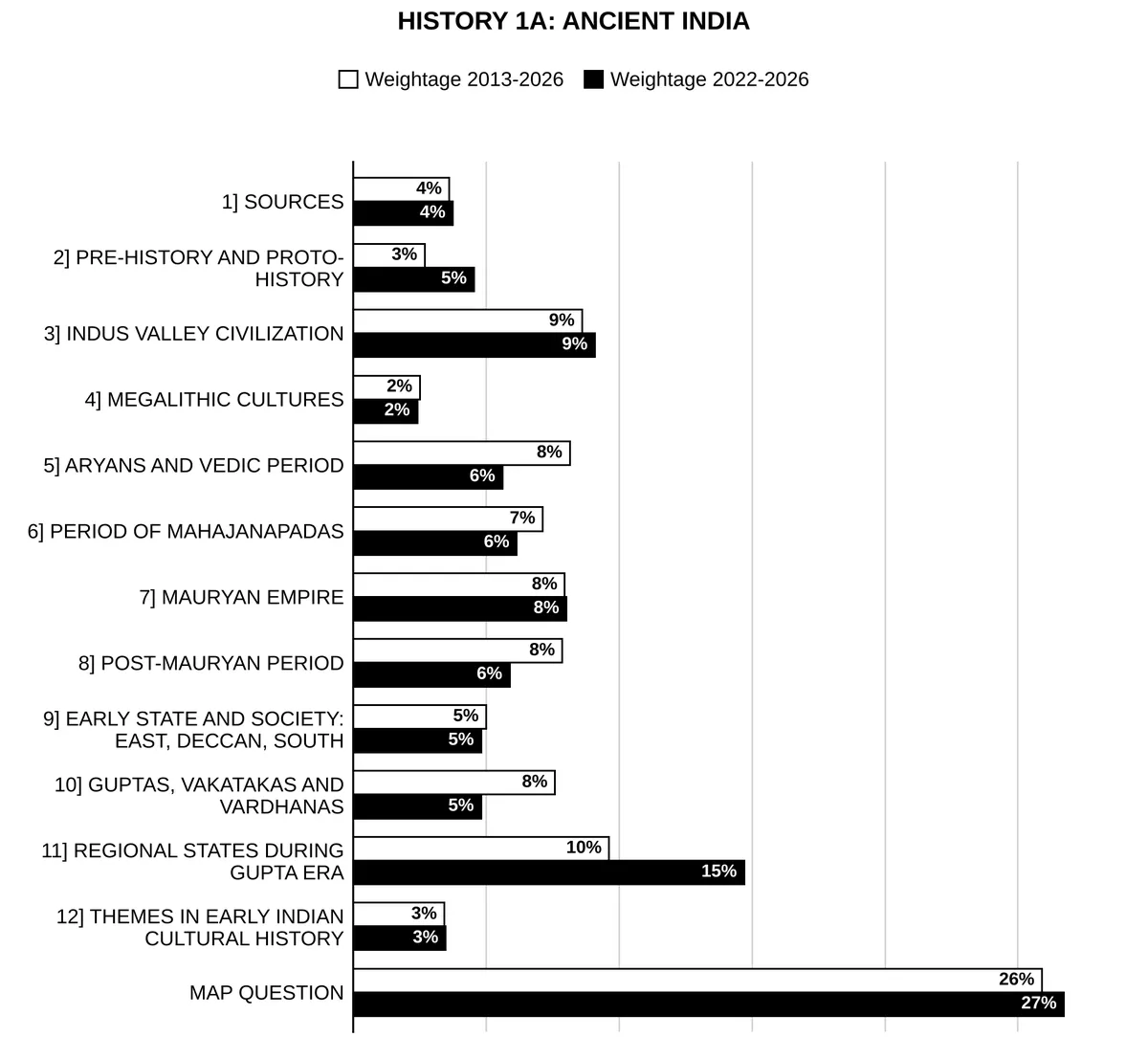
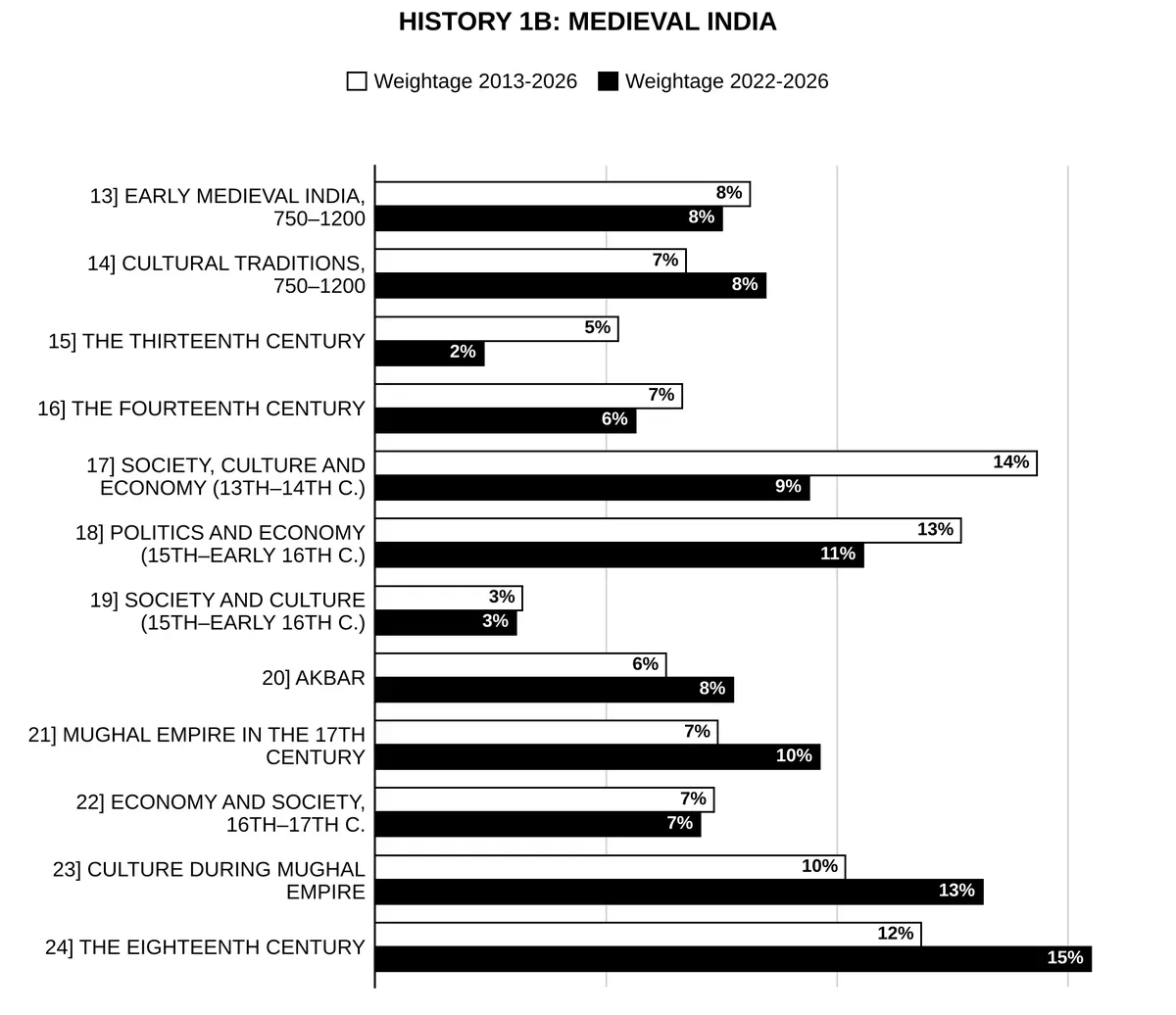
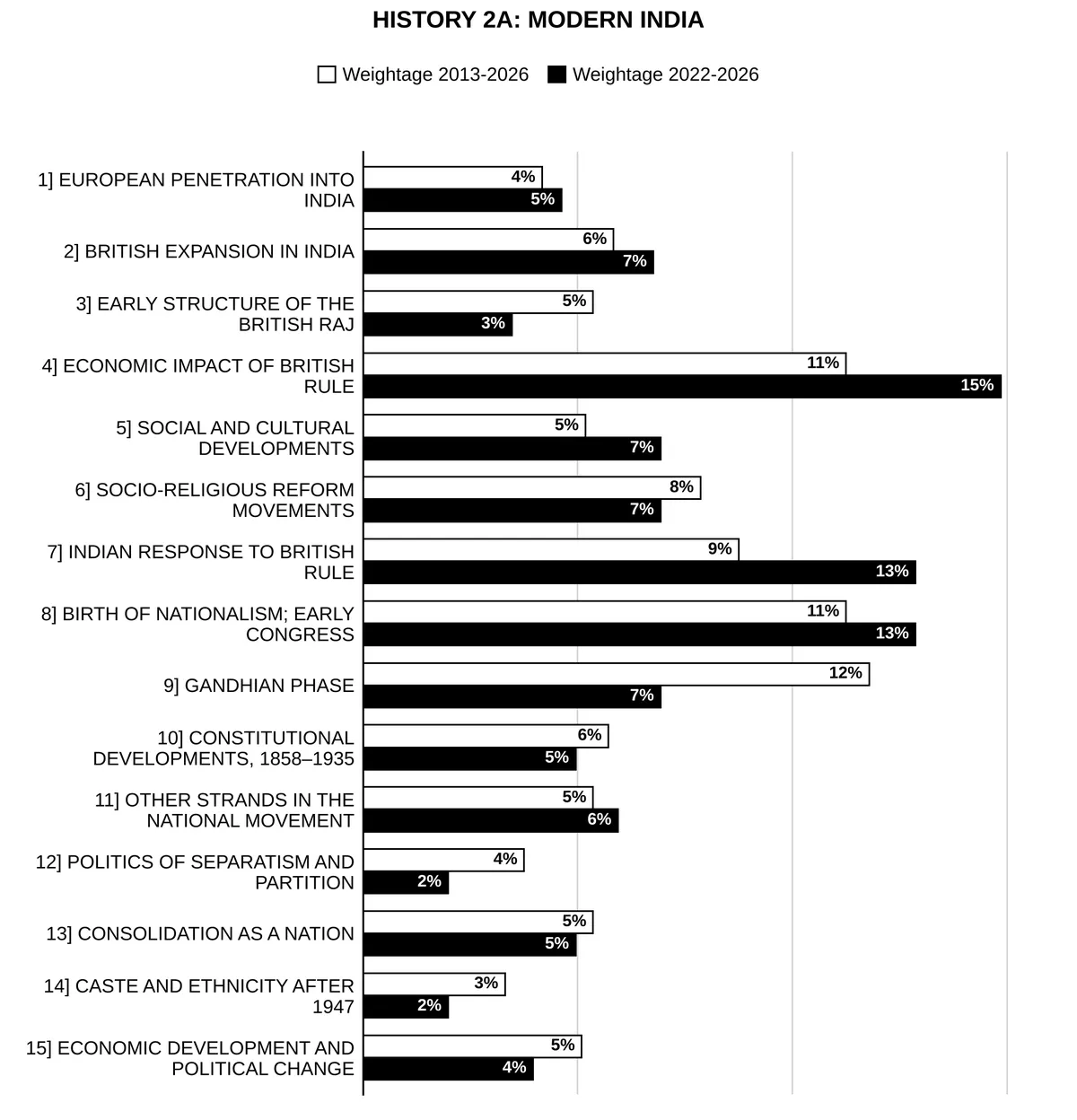
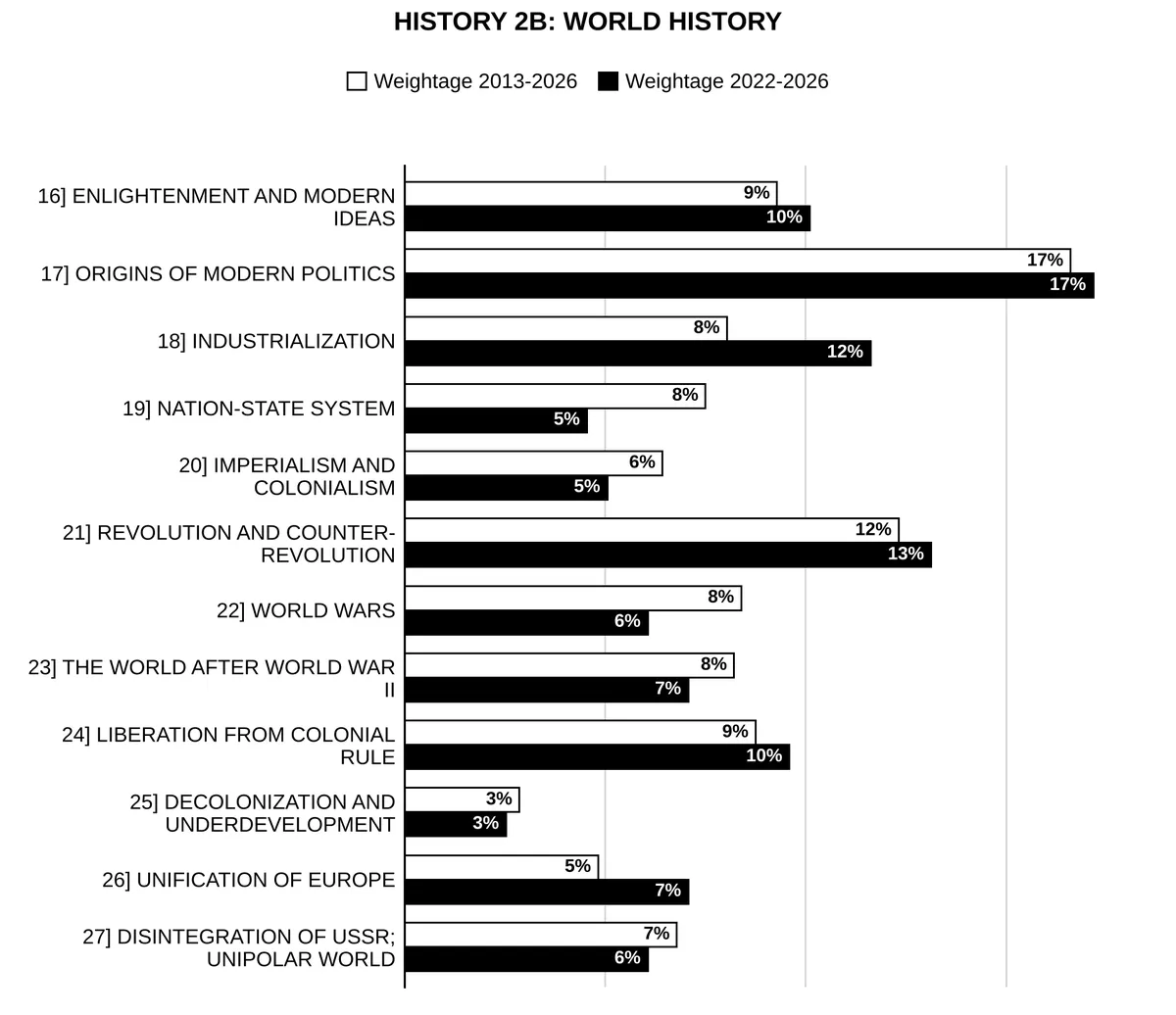
- Weightage graphs show each unit’s share of marks for 2013–2026 and for 2022–2026; a question under two topics has its marks split equally.
- Questions from topics no longer in the syllabus (Renaissance, Reformation, New Deal and similar) are kept on a separate earlier-syllabus page.
Insights and totals
Together the 51 unit pages and the earlier-syllabus page hold 1569 question entries (1558 across the units and 11 from the earlier syllabus). The compulsory map question has two pages of its own: 32 year-wise questions with 700 places or hints, and an A–Z index of 349 places.
Ancient India has 306 question entries across 12 units. By share of marks, Regional States during Gupta Era leads over 2013–2026 (10%) and also in 2022–2026 (15%). The map question alone carries about 27% of Section A marks.
Medieval India has 433 question entries across 12 units. By share of marks, Society, Culture and Economy in the 13th and 14th Centuries leads over 2013–2026 (14%) and The Eighteenth Century in 2022–2026 (15%).
Modern India has 427 question entries across 15 units. By share of marks, Gandhian Phase of the National Movement leads over 2013–2026 (12%) and Economic Impact of British Colonial Rule in 2022–2026 (15%).
World History has 392 question entries across 12 units. By share of marks, Origins of Modern Politics leads over 2013–2026 (17%) and also in 2022–2026 (17%).
Collection at a glance
| Topic-wise question entries (1995–2026) | 1569 |
| Units covered | 51 (Paper 1: 24, Paper 2: 27) |
| Earlier-syllabus questions | 11 |
| Map questions | 32 years, 700 places / hints |
| Ancient India (Paper 1, Section A) | 306 |
| Medieval India (Paper 1, Section B) | 433 |
| Modern India (Paper 2, Section A) | 427 |
| World History (Paper 2, Section B) | 392 |
Frequently Asked Questions
How many History Optional PYQs are there from 1995 to 2026?
The topic-wise collection lists 1569 question entries (1558 across the 51 units and 11 from the earlier syllabus), plus 32 map questions with 700 places or hints. A question that spans two topics is listed under each.
Which History Optional unit has the most questions?
Origins of Modern Politics has the most entries, with 68.
Are History Optional PYQs arranged by year as well?
Within every unit and topic the questions run from the latest year to the oldest, and the map question has a separate year-wise page.