
Here are all 159 Pharmacology questions asked in UPSC Medical Science Optional Paper I from 1995 to 2026, arranged under the 5 topics of the official syllabus. Within each topic the latest questions come first.
Each question ends with a code such as [2024/15m/3b] – the year, the marks, the word limit (where UPSC set one) and the question number in the paper.
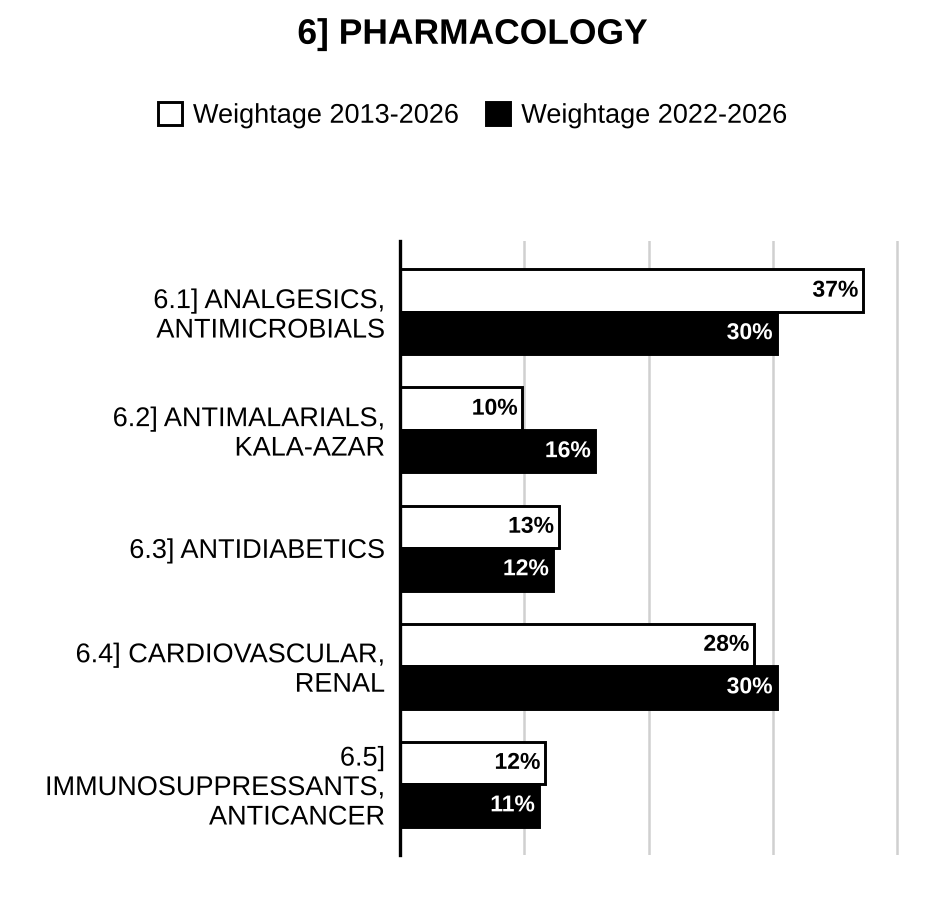
6.1] Analgesics and antimicrobials
61 questions
Elaborate the mechanism of action of antimicrobial resistance. [2026/5m/6b(i)]
Name the third-generation Cephalosporins. State their therapeutic indications and side effects. [2026/5m/6b(ii)]
Briefly describe the advantages of Liposomal Amphotericin-B over conventional Amphotericin-B. [2026/5m/7c(i)]
Enumerate the topical antifungal drugs along with their indication and side effects. [2025/5m/5a(i)]
Name antihelmintic drugs used in treatment of neurocysticercosis and also mention their side effects. [2025/5m/5a(ii)]
Name the drugs, doses and duration of treatment after post-exposure prophylaxis of HIV. [2025/5m/8c(ii)]
Discuss the antiviral spectrum and therapeutic uses of acyclovir. [2024/5m/5a(i)]
Explain why albendazole is termed as broad-spectrum oral antihelminthic. [2024/5m/6b(ii)]
Discuss how excess dose of paracetamol causes acute hepatocellular toxicity and how you will manage the condition. [2024/5m/7c(ii)]
State the therapeutic indications, drug interactions and side effects of the following drugs:
(i) Aspirin [2023/5m/6b(i)]
(ii) Cyclosporine [2023/5m/6b(ii)]
Briefly describe the therapeutic indications and adverse effects of Zidovudine. [2023/5m/8c(ii)]
State the therapeutic indications, drug interactions and side effects of the following drugs: (i) Celecoxib (ii) Chloroquine. [2022/10m/6b]
Discuss the second line drugs used for the treatment of tuberculosis. [2022/10m/7c(i)]
Elaborate the mechanisms of antimicrobial resistance. [2021/10m/7c(i)]
Name the third and fourth generation cephalosporins. Mention their therapeutic indications. [2021/5m/7c(ii)]
Briefly describe the advantages of liposomal amphotericin-B over conventional amphotericin-B. [2021/5m/8c(ii)]
Enumerate various non-selective cycloxygenase inhibitors. Discuss the mechanism of action, therapeutic uses and adverse effects of Aspirin. [2020/15m/6b]
Discuss the mechanism of action and the therapeutic uses of:
(i) Itraconazole [2020/5m/8c(i)]
(ii) Mefloquin [2020/5m/8c(ii)]
Discuss precisely the mechanism of action, side effects and medical uses of the following: (i) Allopurinol (ii) Telmisartan. [2019/10m/8c]
Discuss the adverse effects associated with the use of antimicrobial agents. [2018/10m/5c]
Explain why.
(i) Aspirin should not be administered concurrently with warfarin [2018/5m/7c(i)]
(ii) Patients chronically administered morphine remain constipated. [2018/5m/7c(ii)]
(iii) Imipenem, a beta lactam antibiotic is used in combination with cilastatin. [2018/5m/7c(iii)]
Discuss acute paracetamol poisoning emphasizing on mechanism of toxicity and its treatment. [2017/10m/5c]
Describe the mechanism of action of sulfonamides. Also describe which methods bacteria employ to develop resistance to it. [2017/15m/6b]
Discuss briefly the mechanism of action, uses and side effects of the following: (i) Griseofulvin (ii) Sulfonylurea (iii) Gentamicin. [2017/15m/8c]
Discuss the mechanism of COX-2 inhibitor induced cardiovascular toxicity. [2016/10m/5c]
Discuss the pharmacotherapy of methicillin-resistant Staphylococcus aureus infection. [2016/15m/6b]
Explain why– (i) artemether is used in combination with lumefantrine; (ii) liposomal amphotericin-B is preferred over conventional formulation of the drug in the treatment of systemic mycosis; (iii) low-dose aspirin is used for the prevention of re-infarction. [2016/15m/7c]
Discuss the pharmacotherapy of gout. Describe the rationale of the use of colchicine during acute attack of gout. [2015/10m/150w/5c]
Write the mechanism of analgesic effect of morphine. Mention the adverse reactions of morphine and the antidotal treatment in its poisoning. [2014/15m/6b]
Write the general mechanism of action of antimicrobial drugs. Discuss the mechanism of action and adverse reactions of penicillins. [2014/15m/7c]
Name the folate antagonists used in treatment of bacterial infections and malignancy. Discuss their mechanism of action also. [2013/20m/4a]
Write notes on:–.
(i) Discuss the pharmacological strategies available for the post-myocardial infarction management. [2013/7.5m/7b(i)]
(ii) Discuss the first-line antimycobacterial drugs with special reference to their mechanism of action, side effects and development of resistance. [2013/7.5m/7b(ii)]
Explain why: (i) Clonidine is not preferred as antihypertensive in patients of coronary heart disease. (ii) Amiloride is a good choice as diuretic than thiazides in digitalised patient. (iii) Prolonged therapy with ketoconazole produces endocrine adverse reactions. (iv) Racemic mixture of dobutamine is used to treat acute congestive heart failure. [2012/12m/5c]
Write about the clinical status (use) of the following drugs: (i) Tamoxifen (ii) Cis-platinum (iii) Griseofulvin (iv) Chloramphenicol. [2010/12m/5e]
Aspirin and Paracetamol. [2010/15m/7a]
Enumerate the drugs used in Ascariasis and describe their mechanism of action and adverse effects. [2009/20m/7b]
Describe the mechanism of action of Retro-viral drugs in different stages of HIV replication. What are their toxicities? [2007/20m/5c]
What are newer quinolones? Describe their mechanism of action and development of resistance to them. What are the advantages of newer quinolones over the older quinolones? [2007/20m/7a]
What drugs are used in resistant staphylococcal infection? Discuss the mode of action and toxicity of cefpirome. [2007/20m/7b]
Give examples of non-steroidal anti-inflammatory agents. Mention the advantages and adverse effects of selective COX-2 inhibitors as anti-inflammatory agents. [2006/20m/7a]
Name the alkaloids of opium. Mention actions, therapeutic uses and contraindications of opioid analgesics. [2005/20m/7a]
Discuss about the pharmacological actions, therapeutic uses and side effects of Diazepam, Metronidazole and Rifampin. [2005/20m/7b]
What is aminoglycoside antibiotics? Write about the pharmacological actions, resistance, pharmacokinetics, uses and adverse effects of streptomycin. [2005/20m/7c]
Give an account of mechanism of action, therapeutic uses and side affects of antifungal drugs with special reference to griseofulvin ointment. [2004/20m/7b]
Critically discuss about the pharmacological actions, uses and side affects of Ibuprofen, Frusemide and Chloroquine. [2004/20m/7c]
Discuss the antibacterial spectrum, therapeutic uses and adverse effects of Ciprofloxacin. [2003/20m/7c]
What are the antiamoebic drugs? Discuss briefly the treatment of acute intestinal, chronic intestinal and hepatic amoebiasis. [2002/20m/7c]
Write indications, contraindications and adverse effects of metronidazole. [2001/20m/7b]
Give indications, contraindications and side effects of rifampin. [2000/12m/200w/5d]
Classify non-narcotic analgesics. [2000/20m/8a]
Discuss the mechanism of action, dosage and toxicity of doxycycline. [2000/20m/8b]
Describe the mechanism of action, dosage and adverse reactions of dapsone. [2000/20m/8c]
Describe the mechanism of action and adverse effects of narcotic analgesics. [1999/20m/6a]
Describe the mechanism of action, dosage and toxicity of ampicillin. [1999/20m/6b]
Discuss adverse effects of the following drugs. (i) Chloroquin (ii) Metronidazole (iii) Methotrexate (iv) Aspirin. [1999/20m/6c]
Mention the dosage, route of administration, metabolism, toxic effects and pharmaco-kinetics of Ibuprofen. [1997/20m/200w/1d]
Write short notes on aspirin. [1997/20m/6a]
Explain briefly the mode of action of cefotaxime [?]. [1997/20m/6b]
Describe the mode of action and therapeutic use of Rifampicin with doses in adult patients. Mention its important adverse effects. [1996/20m/6c]
Describe in brief various therapeutic uses of acetylsalicylic acid. Give its possible mechanism of action as antithrombotic agent. [1995/20m/200w/1e]
What do you understand by luminal antiamoebic agents? Describe the spectrum of antiamoebic action of metronidazole, its side effects and contraindications. [1995/60m/6]
6.2] Antimalarial and anti-kala-azar drugs
17 questions
Discuss the management of complicated Plasmodium falciparum malaria. [2026/5m/8c(i)]
Describe the therapeutic indications and side effects of Primaquine. [2026/5m/8c(ii)]
Enumerate the advantages of artemisinin-based combination therapies in the treatment of malaria. [2025/5m/7c(iii)]
Explain why primaquine is used for radical cure of malaria. [2024/5m/6b(i)]
Discuss the management of complicated Plasmodium falciparum malaria. [2023/10m/7c(i)]
State the therapeutic indications, drug interactions and side effects of the following drugs: (i) Celecoxib (ii) Chloroquine. [2022/10m/6b]
Discuss the artemisinin-based combination therapies for the treatment of malaria. [2021/5m/8c(i)]
Discuss the mechanism of action and the therapeutic uses of:
(i) Itraconazole [2020/5m/8c(i)]
(ii) Mefloquin [2020/5m/8c(ii)]
Explain why:
(i) Fungal infections have been on the rise over the past few decades. [2019/5m/7c(i)]
(ii) Sudden withdrawal of Clonidine causes rebound hypertension. [2019/5m/7c(ii)]
(iii) Artemether-Lumefantrine combination for treatment of malaria should be administered with fatty food. [2019/5m/7c(iii)]
Explain why– (i) artemether is used in combination with lumefantrine; (ii) liposomal amphotericin-B is preferred over conventional formulation of the drug in the treatment of systemic mycosis; (iii) low-dose aspirin is used for the prevention of re-infarction. [2016/15m/7c]
Explain why: (i) Frusemide should not be co-administered with aminoglycoside antibiotics (ii) Sulfadoxine and pyrimethamine combination is used in the treatment of malaria (iii) Propranolol is contraindicated in chronic obstructive pulmonary disease. [2015/15m/7c]
Classify antimalarial drugs. Discuss the common side effects of chloroquine administration. What are the other therapeutic uses of chloroquine? [2011/12m/5c]
Discuss the mechanism of action of the following drugs: (i) Rosiglitazone (ii) Chloroquine (iii) Cyclosporin (iv) Lovostatin. [2010/12m/5d]
Give mechanism of action, therapeutic uses of chloroquine. [2001/20m/7c]
Discuss adverse effects of the following drugs. (i) Chloroquin (ii) Metronidazole (iii) Methotrexate (iv) Aspirin. [1999/20m/6c]
Discuss the mechanism of antimalarial action, therapeutic uses and adverse effects of Chloroquine. [1998/20m/6c]
Write the mechanism of action, side effects and therapeutic uses of chloroquine. Describe its doses in clinical cure of malaria. [1996/20m/6a]

Preparing for Prelims too?
Our UPSC Prelims Topic-wise PYQ eBook covers every Prelims question with detailed explanations, so you can see exactly where UPSC asks from.
View the BookDownload Free Sample6.3] Antidiabetic drugs
16 questions
Elaborate the therapeutic indications, mechanism of action and side effects of Metformin. [2026/5m/7c(iii)]
Explain why beta blockers should not be given to diabetes patients who are on oral hypoglycaemic agents. [2025/5m/6b(i)]
Discuss in brief the mechanism of action and the therapeutic uses of Exenatide. [2025/5m/7c(ii)]
Elaborate the advantages and disadvantages of Sodium-Glucose Cotransporter-2 (SGLT-2) inhibitors in the management of diabetes mellitus. [2024/5m/7c(iii)]
Discuss the therapeutic indications and adverse effects of Insulin. [2023/5m/7c(ii)]
Elaborate the mechanism of action of Metformin. [2022/5m/8c(i)]
Discuss about the longer acting insulin analogues. How are they different from insulin preparations? Mention the therapeutic uses and adverse effects of insulin. [2021/10m/5c]
Enumerate various oral antidiabetic drugs. Discuss the mechanism of action, therapeutic uses and adverse effects of Glibenclamide. [2020/10m/5c]
What are different classes of oral hypoglycaemic drugs used in the management of diabetes mellitus? Discuss the mechanism of action, side effects and clinical uses of sulphonyl urea. [2019/15m/6b]
Discuss precisely the mechanism of action, clinical uses and side effects of the following: (i) Spiranolactone (ii) Metformin. [2018/10m/8c]
Discuss briefly the mechanism of action, uses and side effects of the following: (i) Griseofulvin (ii) Sulfonylurea (iii) Gentamicin. [2017/15m/8c]
Discuss briefly the mechanism of action, uses and side effects of the following: (i) Sitagliptin (ii) Clonidine (iii) INH. [2015/15m/8c]
Explain why:–.
(i) Aspirin should not be administered around the full-term pregnancy period. [2013/2.5m/5c(i)]
(ii) Thiazide diuretics alone are first-line drugs for treating mild (stage I) essential hypertension and also potentiate other antihypertensive drugs’ effect when used in combination with them to treat stage II and III hypertension. [2013/2.5m/5c(ii)]
(iii) Low molecular weight heparin (LMWH) preparations are preferred over conventional heparin for anticoagulant indication. [2013/2.5m/5c(iii)]
(iv) Metformin is a first-line orally effective drug for treating Type II diabetes mellitus. [2013/2.5m/5c(iv)]
A 55 year old male with prior history of diabetes mellitus presented to emergency with nausea, vomiting, abdominal pain, dehydration and altered sensorium. On examination, his random blood sugar was 350 mg%, with ketonuria and low bicarbonate level. (a) Outline the treatment of this patient. (b) Outline longterm treatment of this patient. (c) Discuss the brief rationality of the proposed treatment schedule. (d) What precautions should be taken by the patient while on long term treatment? [2011/20m/6b]
Discuss the mechanism of action of the following drugs: (i) Rosiglitazone (ii) Chloroquine (iii) Cyclosporin (iv) Lovostatin. [2010/12m/5d]
What are insulin analogues? Describe their mechanism of action and advantages over regular insulin. [2009/15m/5d]
6.4] Cardiovascular and renal drugs
44 questions
State the therapeutic indications, drug interactions and side effects of Furosemide. [2026/5m/5a(ii)]
Briefly describe the therapeutic indications and adverse effects of Thiazides. [2026/5m/7c(ii)]
Explain why beta blockers should not be given to diabetes patients who are on oral hypoglycaemic agents. [2025/5m/6b(i)]
Describe the role of nitrates, their route of administration and their side effects while being used in the management of angina pectoris. [2025/5m/7c(i)]
Enumerate the drugs used in the management of hypertensive crisis. Also describe the route of administration and their side effects. [2025/5m/8c(i)]
State the role of diuretics in the management of hypertension. [2024/5m/7c(i)]
Describe briefly the pharmacological characteristics of natriuretic peptides and their clinical uses. [2024/5m/8c(ii)]
Enumerate various classes of antihypertensive drugs. Briefly discuss the role of calcium channel blockers in the treatment of hypertension. [2023/10m/5a]
Elaborate the mechanism of action of Potassium-sparing diuretics. [2023/5m/8c(i)]
Discuss about angiotensin II receptor blocker (ARB). How are they different from angiotensin converting enzyme (ACE) inhibitors? Write the pharmacotherapy of hypertensive emergency. [2022/10m/5c]
Discuss the role of aldosterone antagonists as vasodilators. [2022/5m/7c(ii)]
Briefly describe the therapeutic indications and adverse effects of Thiazides. [2022/5m/8c(ii)]
State the therapeutic indications, drug interactions and side effects of the following drugs: (i) Methotrexate (ii) Furosemide. [2021/10m/6b]
Discuss the therapeutic uses and adverse effects of clonidine. [2020/5m/7c(ii)]
Discuss the management of acute myocardial infarction. [2020/5m/7c(iii)]
Explain why:
(i) Fungal infections have been on the rise over the past few decades. [2019/5m/7c(i)]
(ii) Sudden withdrawal of Clonidine causes rebound hypertension. [2019/5m/7c(ii)]
(iii) Artemether-Lumefantrine combination for treatment of malaria should be administered with fatty food. [2019/5m/7c(iii)]
Discuss precisely the mechanism of action, side effects and medical uses of the following: (i) Allopurinol (ii) Telmisartan. [2019/10m/8c]
What are different classes of drugs used in the treatment of hypertension? Discuss the mechanism of action, clinical uses and adverse effects of Sodium nitroprusside. [2018/15m/6b]
Discuss precisely the mechanism of action, clinical uses and side effects of the following: (i) Spiranolactone (ii) Metformin. [2018/10m/8c]
Explain the reasons for the following:
(i) Beta blockers should not be given with Verapamil. [2017/5m/7c(i)]
(ii) Folinic Acid is administered along with Methotrexate. [2017/5m/7c(ii)]
(iii) Thiazides are useful in nephrogenic Diabetes insipidus. [2017/5m/7c(iii)]
Describe the process of thrombolysis. Write briefly about anti-coagulants. [2016/15m/2b]
Discuss briefly the mechanism of action, uses and side effects of the following: (i) Letrozole (ii) Losartan (iii) Metronidazole. [2016/15m/8c]
Discuss the pharmacology of calcium channel blockers. Enumerate the reasons for combining beta blockers with amlodipine. [2015/15m/6b]
Explain why: (i) Frusemide should not be co-administered with aminoglycoside antibiotics (ii) Sulfadoxine and pyrimethamine combination is used in the treatment of malaria (iii) Propranolol is contraindicated in chronic obstructive pulmonary disease. [2015/15m/7c]
Discuss briefly the mechanism of action, uses and side effects of the following: (i) Sitagliptin (ii) Clonidine (iii) INH. [2015/15m/8c]
Discuss the mechanism of the following vasodilator drugs: (i) Nifedipine (ii) Glyceryl trinitrate. [2014/15m/8c]
Explain why:–.
(i) Aspirin should not be administered around the full-term pregnancy period. [2013/2.5m/5c(i)]
(ii) Thiazide diuretics alone are first-line drugs for treating mild (stage I) essential hypertension and also potentiate other antihypertensive drugs’ effect when used in combination with them to treat stage II and III hypertension. [2013/2.5m/5c(ii)]
(iii) Low molecular weight heparin (LMWH) preparations are preferred over conventional heparin for anticoagulant indication. [2013/2.5m/5c(iii)]
(iv) Metformin is a first-line orally effective drug for treating Type II diabetes mellitus. [2013/2.5m/5c(iv)]
Write notes on:–.
(i) Discuss the pharmacological strategies available for the post-myocardial infarction management. [2013/7.5m/7b(i)]
(ii) Discuss the first-line antimycobacterial drugs with special reference to their mechanism of action, side effects and development of resistance. [2013/7.5m/7b(ii)]
Explain why: (i) Clonidine is not preferred as antihypertensive in patients of coronary heart disease. (ii) Amiloride is a good choice as diuretic than thiazides in digitalised patient. (iii) Prolonged therapy with ketoconazole produces endocrine adverse reactions. (iv) Racemic mixture of dobutamine is used to treat acute congestive heart failure. [2012/12m/5c]
Classify antihypertensive drugs. Mention the mechanism of action and side-effects of Angiotensin-converting enzyme inhibitors (ACEI). Mention the advantages of Angiotensin Receptor antagonists. [2011/20m/7b]
Nitroglycerin and Verapamil. [2010/15m/7b]
Prazosin and Atenolol. [2010/15m/7c]
Captopril and Losartan. [2010/15m/7d]
Describe the mechanism of action and adverse effects of drugs used to treat hypertension during pregnancy. [2009/15m/5c]
Describe the mechanism of action and adverse effects of Vasodilators used in Hypertensive Urgency/Emergency. [2009/20m/7a]
Enumerate anti platelets drugs. Describe their mechanism of action and their toxicity. [2007/20m/7c]
Discuss the mechanism of action and therapeutic uses of calcium channel blockers. Mention the advantages of dihydropyridines in the treatment of angina pectoris. [2006/20m/7c]
Classify antihypertensive drugs, and write about their indications and contraindications in various associated disorders. [2005/30m/4a]
Critically discuss about the pharmacological actions, uses and side affects of Ibuprofen, Frusemide and Chloroquine. [2004/20m/7c]
Discuss the therapeutic uses of β-receptor blocking agents. Mention the advantages of cardio-selective β-blockers over non-selective blockers. [2003/20m/7a]
Describe indications, contraindications and adverse effects of ACE inhibitions. [2001/20m/7a]
Classify diuretics. Discuss the dosage and route of administration of Furosemide in different clinical conditions. [1999/20m/200w/1d]
What are the indications, contraindications and adverse reactions of Furosemide? [1998/20m/6b]
How is hypercholesterolaemia harmful? Mention the causes for hypercholesterolaemia and enumerate various measures that are used to decrease serum cholesterol level and give their mechanism of action. [1995/20m/2b]
6.5] Immunosuppressants and anticancer drugs
21 questions
State the therapeutic indications, drug interactions and side effects of Methotrexate. [2026/5m/5a(i)]
Explain why folic acid is given with methotrexate. [2025/5m/6b(ii)]
Doxorubicin is an antibiotic. Enumerate its role in cancer chemotherapy and its adverse effects. [2024/5m/5a(ii)]
Discuss why infliximab is considered as an immunosuppressant. Mention its therapeutic uses. [2024/5m/8c(i)]
State the therapeutic indications, drug interactions and side effects of the following drugs:
(i) Aspirin [2023/5m/6b(i)]
(ii) Cyclosporine [2023/5m/6b(ii)]
State the therapeutic indications, drug interactions and side effects of the following drugs: (i) Methotrexate (ii) Furosemide. [2021/10m/6b]
Discuss the general toxicities of anticancer drugs. [2020/5m/7c(i)]
Discuss general toxicity associated with the use of cytotoxic drugs. [2019/10m/5c]
Explain the reasons for the following:
(i) Beta blockers should not be given with Verapamil. [2017/5m/7c(i)]
(ii) Folinic Acid is administered along with Methotrexate. [2017/5m/7c(ii)]
(iii) Thiazides are useful in nephrogenic Diabetes insipidus. [2017/5m/7c(iii)]
Discuss briefly the mechanism of action, uses and side effects of the following: (i) Letrozole (ii) Losartan (iii) Metronidazole. [2016/15m/8c]
Write down the mechanism of action of Cyclophosphamide and its adverse effects. [2014/10m/5c]
Name the folate antagonists used in treatment of bacterial infections and malignancy. Discuss their mechanism of action also. [2013/20m/4a]
Classify immunosuppressive drugs. Describe in brief the mechanism of action and side effects of cyclosporine. Mention the advantage of serolimus as immunosuppressant. [2012/20m/7b]
Write about the clinical status (use) of the following drugs: (i) Tamoxifen (ii) Cis-platinum (iii) Griseofulvin (iv) Chloramphenicol. [2010/12m/5e]
Describe the mechanism of action and adverse effects of ‘M-phase’ specific anti-cancer drugs. [2009/20m/7c]
Discuss the therapeutic applications of immunosuppressive therapy. Compare the actions of cyclosporine with glucocorticoids as immunosuppressive drug. [2006/20m/7b]
Write about the indications, dosages, side-effects and contraindications of Mitomycin C, Vincristine and Bleomycin. [2002/20m/7b]
Discuss the mechanism of action, therapeutic uses and adverse effects of methotrexate. [2000/12m/200w/5e]
Give mechanism of action, therapeutic uses and adverse effects of Methotrexate. [1998/20m/6a]
Explain therapeutic uses and clinical toxicity of vincristine. [1997/20m/6c]
What are the indications, contra-indications and side effects of Vincristine? [1996/20m/6b]

Strengthen your GS papers
Our UPSC Mains Topic-wise & Year-wise PYQ eBook (2013–2026) maps every GS question to the syllabus, so you know what UPSC asks and how often.
View the BookDownload Free Sample« Previous: Microbiology | Next: Forensic Medicine and Toxicology »
Back to: Medical Science Optional PYQs – Topic-wise | Also see: Medical Science Optional year-wise question papers
Last updated: 31 October 2026