
This is our topic-wise booklist for Statistics Optional, arranged by the official UPSC syllabus for Paper I and Paper II. We have chosen the standard textbooks that UPSC and Indian Statistical Service aspirants rely on, and marked each one so you know what to read fully and what to consult only for specific topics. Statistics questions mix theory with derivations and numericals, so read for concepts and practise problems from the same books.
Use this booklist together with the Statistics Optional syllabus, the topic-wise PYQs and the year-wise question papers. The previous year questions show you which chapters of these books UPSC actually asks from.
Jump to: Paper I: Probability · Paper I: Statistical Inference · Paper I: Linear Inference and Multivariate Analysis · Paper I: Sampling Theory and Design of Experiments · Paper II: Industrial Statistics · Paper II: Optimisation Techniques · Paper II: Quantitative Economics and Official Statistics · Paper II: Demography and Psychometry
Some links on this page are Amazon affiliate links. If you buy through them, we may earn a small commission at no extra cost to you.
Paper I: Probability – Best Books
Sample space, probability measure, random variables, distribution functions, expectation and moments, conditional expectation, convergence, laws of large numbers, central limit theorems, generating functions and standard distributions.
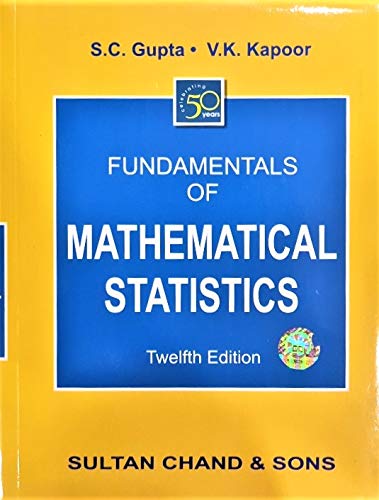
Fundamentals of Mathematical Statistics by S.C. Gupta and V.K. Kapoor
Core
We recommend this as your base book for probability. Read the chapters on probability, random variables, expectation, generating functions, standard discrete and continuous distributions, and limit theorems, and solve its worked examples.
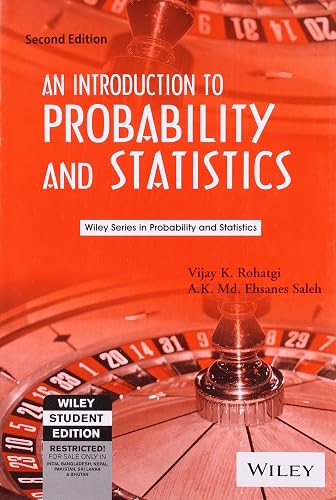
An Introduction to Probability and Statistics by Vijay K. Rohatgi and A.K. Md. Ehsanes Saleh
Core
Use Rohatgi for the rigorous parts of the syllabus: probability as a measure, modes of convergence, the strong law of large numbers and the Lindeberg–Lévy and Liapounov central limit theorems.
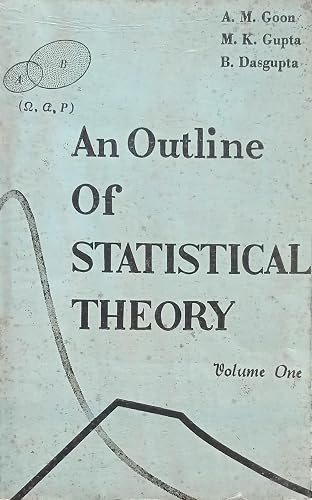
An Outline of Statistical Theory, Volume 1 by A.M. Goon, M.K. Gupta and B. Dasgupta
Alternative
Pick this instead of Gupta and Kapoor if you want a more concise, theory-focused treatment of probability and distributions in the Indian university style.
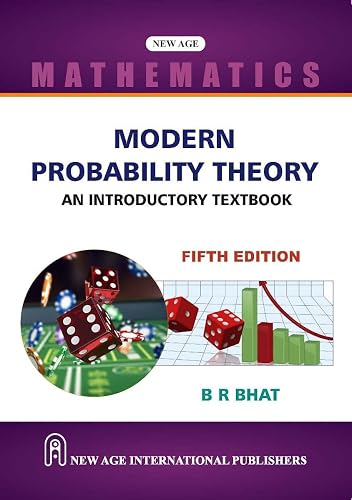
Modern Probability Theory by B.R. Bhat
Reference
Consult Bhat for measure-theoretic proofs of convergence results and the laws of large numbers when Rohatgi’s treatment is not enough.
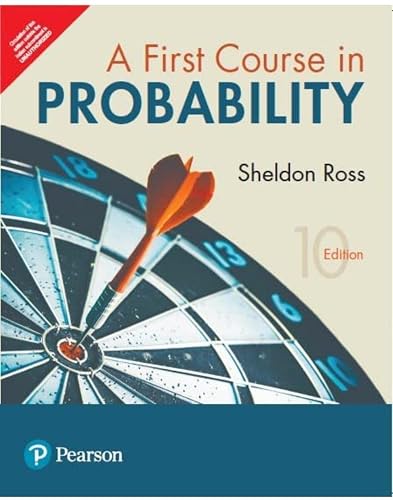
A First Course in Probability by Sheldon Ross
Beginner
If you are not from a statistics background, start here. Ross builds intuition with many examples on random variables, expectation and standard distributions.

Preparing for Prelims too?
Our UPSC Prelims Topic-wise PYQ Book covers every Prelims question with detailed explanations, so you can see exactly where UPSC asks from. Now available as a hard copy and an eBook.
Buy Hard Copy on AmazonBuy eBook (PDF)Paper I: Statistical Inference – Best Books
Properties of estimators, Cramér–Rao inequality, Rao–Blackwell and Lehmann–Scheffé theorems, methods of estimation, interval estimation, Neyman–Pearson lemma, UMP and likelihood ratio tests, non-parametric tests and SPRT.
An Introduction to Probability and Statistics by Vijay K. Rohatgi and A.K. Md. Ehsanes Saleh
Core
We recommend Rohatgi as the core book for inference. Read the chapters on sufficiency and completeness, unbiased estimation, the Cramér–Rao bound, Neyman–Pearson theory, likelihood ratio tests, confidence intervals and non-parametric tests.
Fundamentals of Mathematical Statistics by S.C. Gupta and V.K. Kapoor
Core
Use the estimation, testing of hypotheses, non-parametric and sequential analysis chapters for exam-style worked problems, especially on MLE, UMP tests and Wald’s SPRT with its OC and ASN functions.
An Outline of Statistical Theory, Volume 2 by A.M. Goon, M.K. Gupta and B. Dasgupta
Alternative
Pick this instead of Rohatgi if you prefer a compact Indian text on estimation, testing, non-parametric and sequential methods.
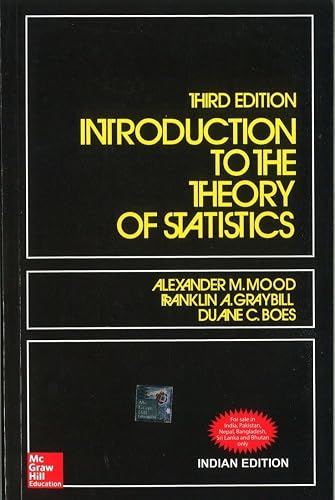
Introduction to the Theory of Statistics by Alexander M. Mood, Franklin A. Graybill and Duane C. Boes
Reference
Consult Mood, Graybill and Boes for clear proofs on sufficiency, UMVUE and likelihood ratio tests, and for harder theoretical problems.
Paper I: Linear Inference and Multivariate Analysis – Best Books
Linear models, Gauss–Markov theorem, ANOVA, multiple and partial correlation, regression and model selection, multivariate normal distribution, Hotelling’s T², Mahalanobis D², Wishart distribution, discriminant analysis, principal components and canonical correlation.
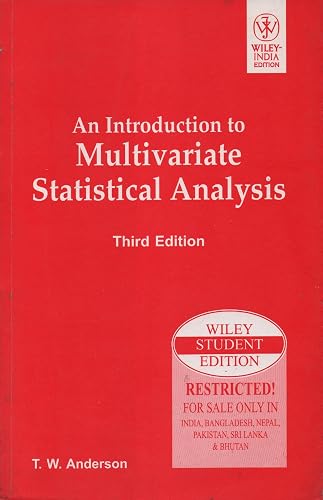
An Introduction to Multivariate Statistical Analysis by T.W. Anderson
Core
We recommend Anderson for the multivariate part. Read the multivariate normal distribution, estimation of the mean vector and covariance matrix, Hotelling’s T², the Wishart distribution, discriminant analysis and principal components.
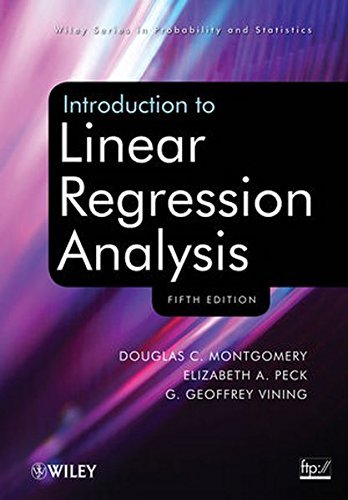
Introduction to Linear Regression Analysis by Douglas C. Montgomery, Elizabeth A. Peck and G. Geoffrey Vining
Core
Use this for the linear models and regression part: least squares, the Gauss–Markov set-up, tests of regression coefficients, residual analysis and variable selection.
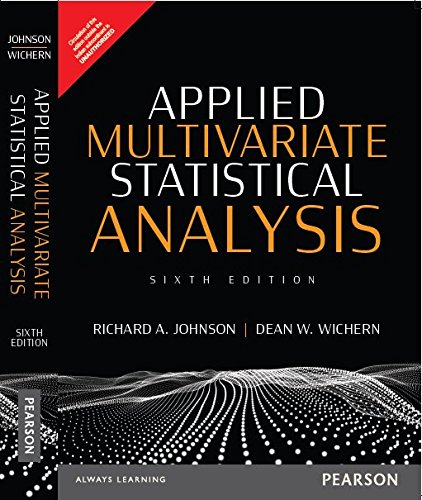
Applied Multivariate Statistical Analysis by Richard A. Johnson and Dean W. Wichern
Alternative
Pick this instead of Anderson if you find Anderson too mathematical. It explains principal components, discriminant analysis and factor analysis with worked examples.
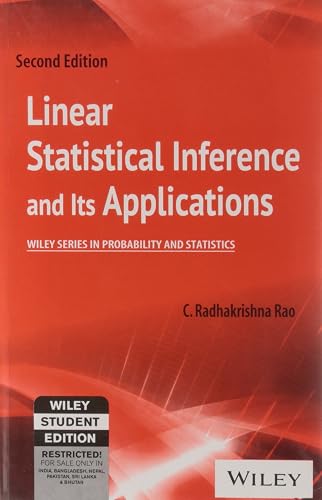
Linear Statistical Inference and Its Applications by C. Radhakrishna Rao
Reference
Consult C.R. Rao for the theory of linear estimation, estimable functions and the Gauss–Markov theorem. It is a dense reference, not a first reading.
Fundamentals of Mathematical Statistics by S.C. Gupta and V.K. Kapoor
Beginner
Start with the chapters on correlation, regression, and multiple and partial correlation before you move to Montgomery and Anderson.
Paper I: Sampling Theory and Design of Experiments – Best Books
SRSWR/SRSWOR, stratified, systematic, cluster, two-stage and PPS sampling, ratio and regression estimators, non-sampling errors, CRD, RBD, LSD, missing plots, factorial experiments, confounding, split-plot and BIBD.

Sampling Techniques by William G. Cochran
Core
We recommend Cochran as the core book for sampling theory. Read simple random, stratified, systematic, cluster and two-stage sampling, ratio and regression estimation, PPS sampling and non-sampling errors.
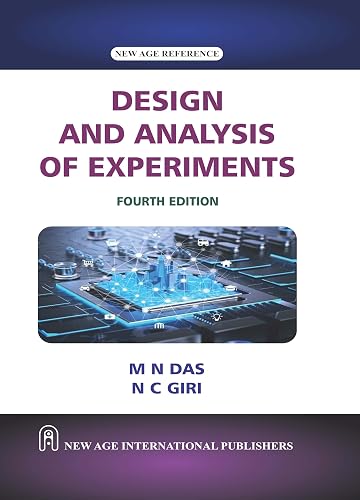
Design and Analysis of Experiments by M.N. Das and N.C. Giri
Core
Use Das and Giri for design of experiments. Read the basic designs, missing plot technique, factorial experiments, confounding, split-plot designs and balanced incomplete block designs.
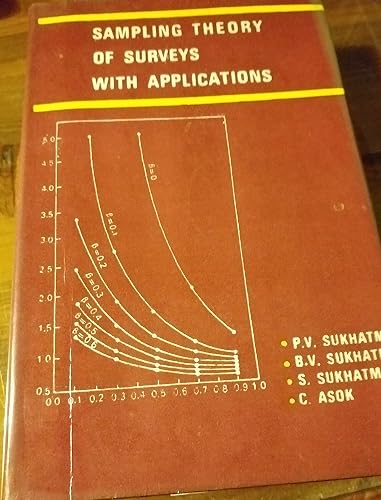
Sampling Theory of Surveys with Applications by P.V. Sukhatme, B.V. Sukhatme, S. Sukhatme and C. Asok
Alternative
Pick this instead of Cochran if you prefer a text grounded in Indian survey practice. It is detailed on multi-stage and PPS sampling and on non-sampling errors.
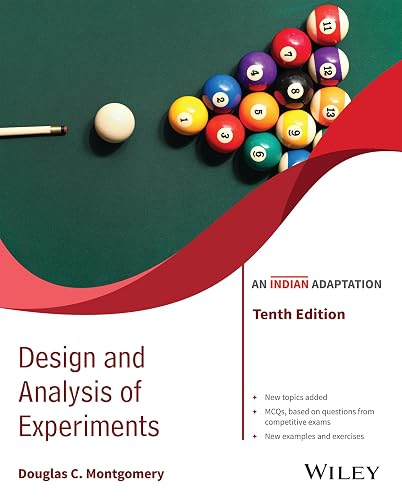
Design and Analysis of Experiments by Douglas C. Montgomery
Alternative
Use Montgomery instead of Das and Giri if you want a modern, example-led treatment of factorial designs and confounding.
Fundamentals of Applied Statistics by S.C. Gupta and V.K. Kapoor
Beginner
If sampling and experimental design are new to you, read the chapters on sample surveys, analysis of variance and design of experiments here first.
Paper II: Industrial Statistics – Best Books
Control charts for variables and attributes, CUSUM charts, acceptance sampling plans with OC, AOQ, ASN and ATI curves, and reliability concepts, failure models and life testing.
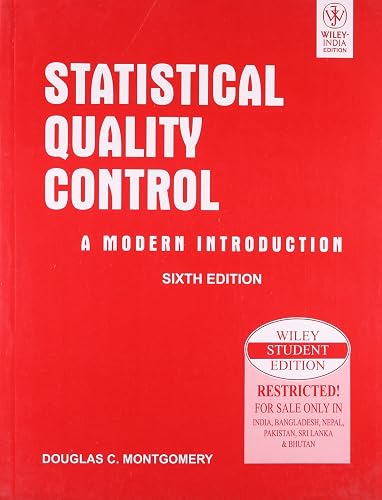
Introduction to Statistical Quality Control by Douglas C. Montgomery
Core
We recommend Montgomery as the core book for SQC. Read the chapters on control charts for variables and attributes, CUSUM charts and acceptance sampling by attributes and variables.
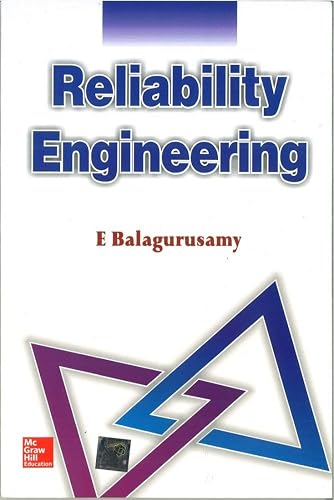
Reliability Engineering by E. Balagurusamy
Core
Use this for the reliability part: hazard rate, failure distributions, reliability of series and parallel systems, and life testing.
Fundamentals of Applied Statistics by S.C. Gupta and V.K. Kapoor
Alternative
Pick the SQC chapter here instead of Montgomery if you want an exam-oriented summary of control charts and sampling plans with solved problems.
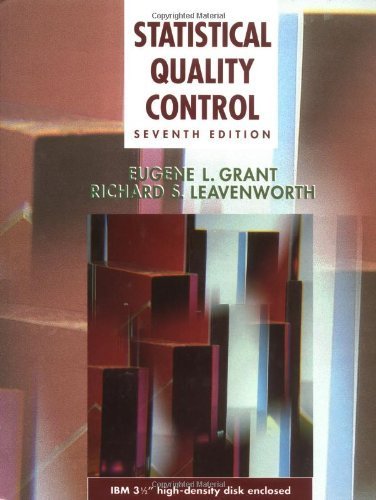
Statistical Quality Control by Eugene L. Grant and Richard S. Leavenworth
Reference
Consult this classic for practical detail on sampling inspection tables and the design of acceptance plans.

Strengthen your GS papers
Our UPSC Mains Topic-wise & Year-wise PYQ Book (2013–2026) maps every GS question to the syllabus, so you know what UPSC asks and how often. Now available as a hard copy and an eBook.
Buy Hard Copy on AmazonBuy eBook (PDF)Paper II: Optimisation Techniques – Best Books
Linear programming, simplex and duality, transportation and assignment problems, game theory, inventory and replacement models, Markov chains, Poisson processes, queueing models and simulation.
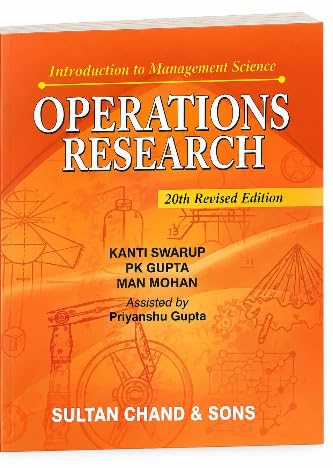
Operations Research by Kanti Swarup, P.K. Gupta and Man Mohan
Core
We recommend this as the core book for the section. Read linear programming, duality, transportation and assignment, game theory, inventory, replacement, queueing and simulation, and practise the numerical examples.
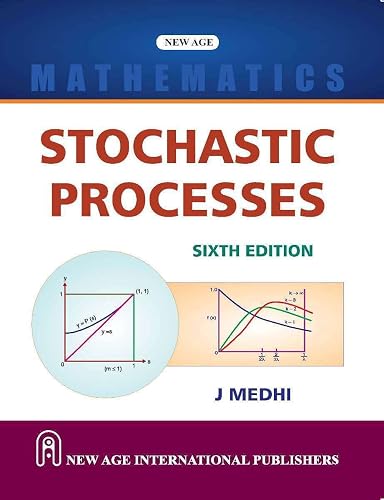
Stochastic Processes by J. Medhi
Core
Use Medhi for Markov chains, the Poisson process, birth–death processes and queueing theory, where UPSC asks derivations.
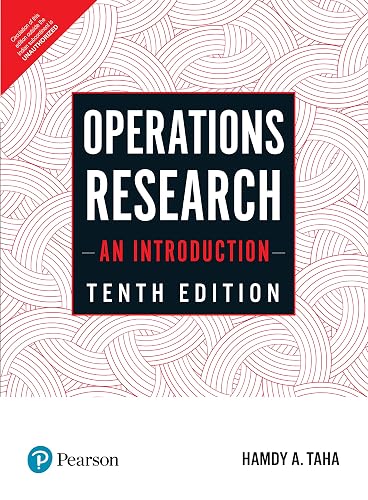
Operations Research: An Introduction by Hamdy A. Taha
Alternative
Pick Taha instead of Kanti Swarup if you prefer a clearer international text on LPP, transportation, inventory and queueing.
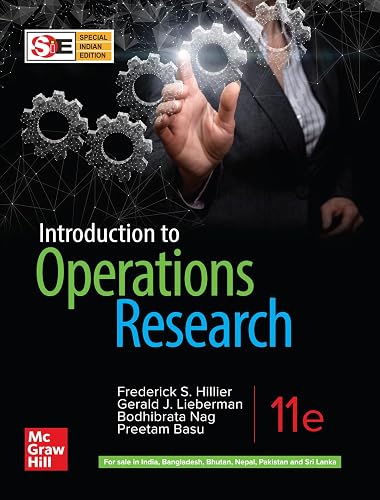
Introduction to Operations Research by Frederick S. Hillier and Gerald J. Lieberman
Reference
Consult Hillier and Lieberman for fuller explanations of Markov decision models, queueing theory and simulation.
Paper II: Quantitative Economics and Official Statistics – Best Books
Time series components and models (including ARIMA), index numbers and their tests, econometrics (GLS, multicollinearity, autocorrelation, simultaneous equations), and the Indian official statistical system.
Fundamentals of Applied Statistics by S.C. Gupta and V.K. Kapoor
Core
We recommend this as the core book for time series, index numbers and official statistics. Read the chapters on analysis of time series, index numbers, demand analysis and the Indian statistical system.
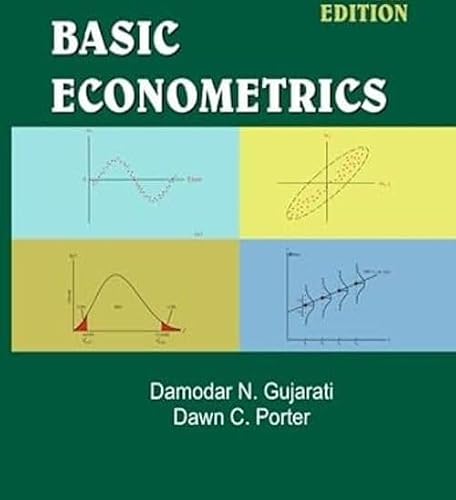
Basic Econometrics by Damodar N. Gujarati, Dawn C. Porter and Sangeetha Gunasekar
Core
Use Gujarati for the econometrics part: the general linear model, GLS, multicollinearity, heteroscedasticity, autocorrelation, simultaneous equations and identification.
Fundamentals of Statistics, Volume 2 by A.M. Goon, M.K. Gupta and B. Dasgupta
Alternative
Pick this instead of Gupta and Kapoor for index numbers and time series if you want a more rigorous Indian text.
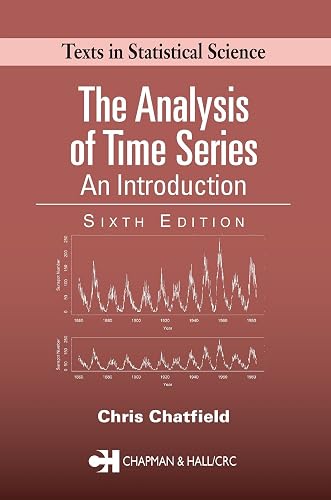
The Analysis of Time Series: An Introduction by Chris Chatfield and Haipeng Xing
Reference
Consult Chatfield for stationarity, autocorrelation, AR, MA and ARIMA models and forecasting when the textbook coverage is thin.
Ministry of Statistics and Programme Implementation (MoSPI) by Government of India
Website
Follow MoSPI for the current structure of the Indian statistical system (NSO, NSS, National Statistical Commission) and for national income, price index and population data methods.
Paper II: Demography and Psychometry – Best Books
Demographic data sources, vital rates and ratios, life tables, population growth curves and projections, stable and stationary populations, and scaling, reliability and validity of tests, IQ, factor analysis and path analysis.
Fundamentals of Applied Statistics by S.C. Gupta and V.K. Kapoor
Core
We recommend the vital statistics and psychological and educational statistics chapters as your main reading. They cover mortality and fertility rates, life tables, reproduction rates, scaling of tests, reliability and validity.
Statistics in Psychology and Education by Henry E. Garrett
Core
Use Garrett for psychometry: standard and T-scores, reliability and validity of tests, item analysis, intelligence measurement and an introduction to factor analysis.
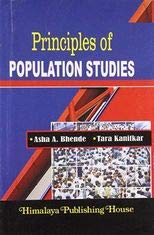
Principles of Population Studies by Asha A. Bhende and Tara Kanitkar
Reference
Consult this for the Indian context of demography: census and registration data, population theories, growth and projections.
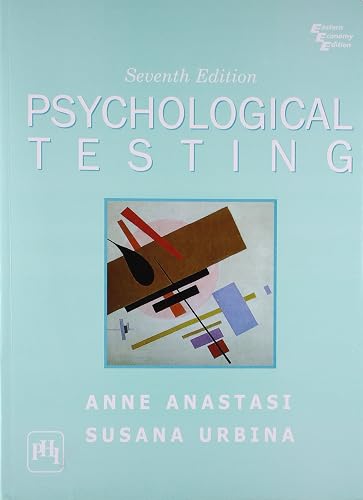
Psychological Testing by Anne Anastasi and Susana Urbina
Reference
Consult Anastasi for the concepts of test construction, reliability, validity and norms when you need fuller explanations than Garrett.
Census of India by Office of the Registrar General and Census Commissioner, India
Website
Use the Census and Sample Registration System pages for the sources of Indian demographic data and the latest vital rates you can quote in answers.
How to use this Statistics Optional booklist
- Build Paper I on Gupta and Kapoor for problems and Rohatgi for rigour; read the two side by side for probability and inference.
- For Paper II, Gupta and Kapoor’s Fundamentals of Applied Statistics covers large parts of three sections, so read it early and add the specialist books section by section.
- Practise derivations that UPSC repeats, such as the Cramér–Rao bound, Neyman–Pearson lemma, variance of stratified estimators, OC and ASN functions of SPRT and M/M/1 queue results.
- Solve numericals on ANOVA, control charts, sampling plans, LPP and life tables regularly; they are frequent and scoring.
- Keep one revision sheet of formulae per section, and update the official statistics notes from MoSPI before Mains.
- Solve UPSC previous year questions topic by topic as you finish each section; Indian Statistical Service papers are useful extra practice.
Some books you find useful may not be on this list. Use them if they fall within the syllabus and help you answer previous year questions – that is the only test that matters. If you spot an outdated edition or a broken link, tell us on the Report an Error page.
FAQs
Which are the best books for Statistics Optional?
Our core picks, section by section – Probability: Fundamentals of Mathematical Statistics (S.C. Gupta and V.K. Kapoor), An Introduction to Probability and Statistics (Vijay K. Rohatgi and A.K. Md. Ehsanes Saleh); Statistical Inference: An Introduction to Probability and Statistics (Vijay K. Rohatgi and A.K. Md. Ehsanes Saleh), Fundamentals of Mathematical Statistics (S.C. Gupta and V.K. Kapoor); Linear Inference and Multivariate Analysis: An Introduction to Multivariate Statistical Analysis (T.W. Anderson), Introduction to Linear Regression Analysis (Douglas C. Montgomery, Elizabeth A. Peck and G. Geoffrey Vining); Sampling Theory and Design of Experiments: Sampling Techniques (William G. Cochran), Design and Analysis of Experiments (M.N. Das and N.C. Giri); Industrial Statistics: Introduction to Statistical Quality Control (Douglas C. Montgomery), Reliability Engineering (E. Balagurusamy); Optimisation Techniques: Operations Research (Kanti Swarup, P.K. Gupta and Man Mohan), Stochastic Processes (J. Medhi); Quantitative Economics and Official Statistics: Fundamentals of Applied Statistics (S.C. Gupta and V.K. Kapoor), Basic Econometrics (Damodar N. Gujarati, Dawn C. Porter and Sangeetha Gunasekar); Demography and Psychometry: Fundamentals of Applied Statistics (S.C. Gupta and V.K. Kapoor), Statistics in Psychology and Education (Henry E. Garrett). Each book above is tagged Core, Alternative, Reference, Beginner or Website, so you know what to read first.
Which book should I start Statistics Optional with?
If you are new to the subject, begin with A First Course in Probability (Sheldon Ross), Fundamentals of Mathematical Statistics (S.C. Gupta and V.K. Kapoor), Fundamentals of Applied Statistics (S.C. Gupta and V.K. Kapoor), and then move to the Core books for each section.
Do I need to read every book on this list?
No. Read the Core books fully, choose only one book wherever we list an Alternative, and use Reference books only for specific topics. Keep your sources few and revise them several times.
Where can I find Statistics Optional previous year questions?
All Statistics Optional PYQs are on our topic-wise PYQs page, and full papers are on the year-wise question papers page. The syllabus page breaks each unit into numbered topics.
Last updated: 2 November 2026