
This is our booklist for Sociology Optional, arranged by the UPSC syllabus: Paper I (Fundamentals of Sociology) and Paper II Sections A, B and C (Introducing Indian Society, Social Structure and Social Changes in India). We tag each book by priority and tell you which chapters to read, so you can stick to a few sources and revise them often.
Use this booklist together with the Sociology Optional syllabus, the topic-wise PYQs and the year-wise question papers. The previous year questions show you which chapters of these books UPSC actually asks from.
Jump to: Paper I: Fundamentals of Sociology · Paper II Section A: Introducing Indian Society · Paper II Section B: Social Structure · Paper II Section C: Social Changes in India
Some links on this page are Amazon affiliate links. If you buy through them, we may earn a small commission at no extra cost to you.
Paper I: Fundamentals of Sociology – Best Books
Sociology as a discipline and science, research methods, sociological thinkers, stratification, work and economic life, politics, religion, kinship and social change.
Sociology: Themes and Perspectives by Michael Haralambos and Martin Holborn
Core
The core book for Paper I. Read the chapters on stratification, power and politics, religion, families, work and methodology; do not read it end to end. It gives you the perspectives (functionalist, Marxist, feminist, interactionist) that every answer needs.
Sociological Theory by George Ritzer and Jeffrey Stepnisky
Core
Our pick for the thinkers unit. Read the chapters on Marx, Durkheim, Weber, structural functionalism (Parsons, Merton) and symbolic interactionism (Mead); read them twice before you make notes.
Sociological Thought by Francis Abraham and John Henry Morgan
Alternative
Pick this or Ritzer for the thinkers. It is simpler and closer to the UPSC list of thinkers, so many students find it easier for a first reading.
Essential Sociology (Vol. I and II) by Nitin Sangwan, Seema and Shruti Jakhar
Alternative
A compact, syllabus-wise book that covers both papers. Use it as a revision and answer-structuring source after your standard reading, not in place of it.
Sociology by Anthony Giddens and Philip W. Sutton
Reference
Consult it for concept clarity and contemporary examples on modernity, globalisation, work, religion and the family. Read topic by topic when Haralambos feels dated.
A Dictionary of Sociology by John Scott
Reference
Keep it for crisp definitions you can use to open answers. Look up terms; do not read it through.
IGNOU ESO-13: Sociological Thought by IGNOU
Reference
Free, well-structured units on the classical thinkers. Use them to fill gaps after Ritzer or Abraham and Morgan.
IGNOU MSO-002: Research Methodologies and Methods by IGNOU
Reference
We recommend these units for research methods, which the main books cover thinly: positivism, objectivity, qualitative and quantitative methods, sampling, variables, reliability and validity.
Introducing Sociology (Class XI) by NCERT
Beginner
Read it first if you are new to the subject. It introduces basic concepts, social institutions and methods.
Understanding Society (Class XI) by NCERT
Beginner
Its chapters on Marx, Durkheim and Weber are a gentle start before Ritzer; the chapters on social change and environment are also useful.

Preparing for Prelims too?
Our UPSC Prelims Topic-wise PYQ Book covers every Prelims question with detailed explanations, so you can see exactly where UPSC asks from. Now available as a hard copy and an eBook.
Buy Hard Copy on AmazonBuy eBook (PDF)Paper II Section A: Introducing Indian Society – Best Books
Perspectives on the study of Indian society (Indology, structural functionalism, Marxist sociology) and the impact of colonial rule.
Indian Sociological Thought by B.K. Nagla
Core
The core book for Section A. Read the chapters on G.S. Ghurye, M.N. Srinivas, Louis Dumont, A.R. Desai and the other Indian perspectives the syllabus names.
Social Background of Indian Nationalism by A.R. Desai
Reference
The classic Marxist reading of colonial India. Read the chapters on economic transformation, new social classes and nationalism for the colonial impact topic.
Handbook of Indian Sociology by Veena Das (ed.)
Reference
A collection of essays by leading scholars. Consult it topic by topic for perspectives and debates; do not read it through.
Homo Hierarchicus by Louis Dumont
Reference
Read the introductory and summary chapters for the structuralist view of caste and the idea of purity and pollution. You need his argument, not the whole book.
IGNOU MSO-004: Sociology in India by IGNOU
Reference
Free units on the growth of sociology in India and the main perspectives. Use them to structure your Section A notes.
Social Change and Development in India (Class XII) by NCERT
Beginner
Read it first for colonialism, structural and cultural change, and social movements in India.
Paper II Section B: Social Structure – Best Books
Rural and agrarian social structure, caste system, tribal communities, social classes, systems of kinship, and religion and society in India.
Indian Society: Themes and Social Issues by Nadeem Hasnain
Core
Our main book for Section B. It covers caste, tribe, kinship, religion and minorities in a form close to the syllabus; read it fully.
Indian Social System by Ram Ahuja
Alternative
Pick this or Hasnain. It is detailed on family, marriage, kinship, caste and class, with plenty of Indian data.
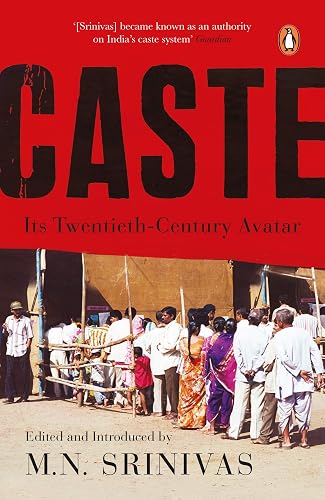
Caste: Its Twentieth Century Avatar by M.N. Srinivas (ed.)
Reference
Read the editor’s introduction and the essays on caste in politics and the economy. It gives you scholars and examples for questions on the changing caste system.
Rural Sociology by S.L. Doshi and P.C. Jain
Reference
Consult it for agrarian class structure, land tenure, peasant studies and land reforms. It serves both the rural structure topic here and rural transformation in Section C.
State, Society and Tribes by Virginius Xaxa
Reference
Read the chapters on the definition of tribe, the tribe-caste continuum and the integration versus isolation debate.
IGNOU ESO-12: Society in India by IGNOU
Reference
Free units on village, caste, tribe, kinship and religion in India. Use them to fill gaps and for short notes.
Indian Society (Class XII) by NCERT
Beginner
Read it first for demographic structure, caste, tribe, family and social inequality in India.

Strengthen your GS papers
Our UPSC Mains Topic-wise & Year-wise PYQ Book (2013–2026) maps every GS question to the syllabus, so you know what UPSC asks and how often. Now available as a hard copy and an eBook.
Buy Hard Copy on AmazonBuy eBook (PDF)Paper II Section C: Social Changes in India – Best Books
Visions of social change, rural and agrarian transformation, industrialisation and urbanisation, politics and society, social movements, population dynamics and challenges of social transformation.
Social Change in Modern India by M.N. Srinivas
Core
A short book that you should read in full, not in summary. It is the source for Sanskritisation, Westernisation, secularisation and the dominant caste.
Modernization of Indian Tradition by Yogendra Singh
Core
Read it for the tradition and modernity debate and the paradigms of social change in India. It gives a framework you can use across Section C.
Social Problems in India by Ram Ahuja
Reference
Consult it for the challenges of social transformation: crisis of development, poverty, violence against women, caste conflicts, ethnic conflicts and illiteracy.
Social Movements in India: A Review of Literature by Ghanshyam Shah
Reference
Our pick for the social movements topic: peasant, Dalit, tribal, women’s and environmental movements, each with its key literature.
IGNOU MSO-003: Sociology of Development by IGNOU
Reference
Free units on development, displacement, globalisation and their social effects. Use them for the crisis of development and industrialisation topics.
Economic and Political Weekly by Sameeksha Trust
Website
Read selectively for current research on caste, gender, agrarian distress, labour and social movements. One recent study cited well can set your answer apart.
Census of India by Office of the Registrar General and Census Commissioner
Website
Use it for data on population, sex ratio, urbanisation and migration in the population dynamics topic.
How to use this Sociology Optional booklist
- Begin with the four NCERTs, then read Haralambos and Ritzer for Paper I before you start Paper II, because Paper II answers draw on Paper I concepts.
- Keep a thinker register: for each thinker note the key concepts, works, criticisms and one Indian application, and revise it every week.
- Use free IGNOU units to fill gaps rather than buying more books; two good books per paper revised three times beat many books read once.
- Link the two papers in your answers, for example Weber’s class, status and party with caste and class in India, or Durkheim’s anomie with urbanisation.
- Collect current examples, data and case studies (Census, NFHS, EPW, news) topic-wise for Paper II and for answer introductions and conclusions.
Some books you find useful may not be on this list. Use them if they fall within the syllabus and help you answer previous year questions – that is the only test that matters. If you spot an outdated edition or a broken link, tell us on the Report an Error page.
FAQs
Which are the best books for Sociology Optional?
Our core picks, section by section – Fundamentals of Sociology: Sociology: Themes and Perspectives (Michael Haralambos and Martin Holborn), Sociological Theory (George Ritzer and Jeffrey Stepnisky); Introducing Indian Society: Indian Sociological Thought (B.K. Nagla); Social Structure: Indian Society: Themes and Social Issues (Nadeem Hasnain); Social Changes in India: Social Change in Modern India (M.N. Srinivas), Modernization of Indian Tradition (Yogendra Singh). Each book above is tagged Core, Alternative, Reference, Beginner or Website, so you know what to read first.
Which book should I start Sociology Optional with?
If you are new to the subject, begin with Introducing Sociology (Class XI) (NCERT), Understanding Society (Class XI) (NCERT), Social Change and Development in India (Class XII) (NCERT), Indian Society (Class XII) (NCERT), and then move to the Core books for each section.
Do I need to read every book on this list?
No. Read the Core books fully, choose only one book wherever we list an Alternative, and use Reference books only for specific topics. Keep your sources few and revise them several times.
Where can I find Sociology Optional previous year questions?
All Sociology Optional PYQs are on our topic-wise PYQs page, and full papers are on the year-wise question papers page. The syllabus page breaks each unit into numbered topics.
Last updated: 2 November 2026