
Here are all 78 Therapeutic Approaches questions asked in UPSC Psychology Optional Paper II from 1995 to 2026, arranged under the 7 topics of the official syllabus. Within each topic the latest questions come first.
Each question ends with a code such as [2024/15m/3b] – the year, the marks, the word limit (where UPSC set one) and the question number in the paper.
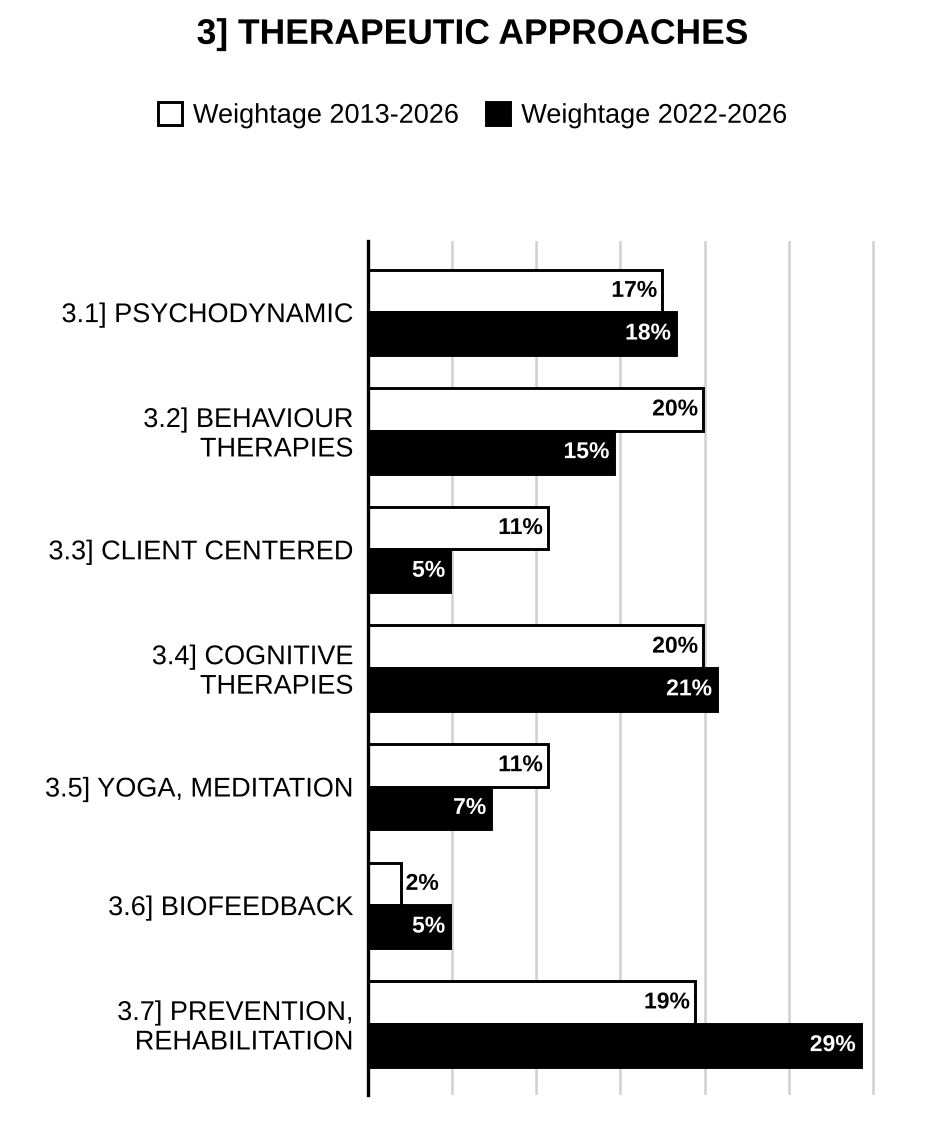
3.1] Psychodynamic therapies
14 questions
Compare and contrast psychodynamic, behavioural and cognitive therapies. Which is more effective in modern clinical practice? [2026/15m/3a]
Which form of psychological treatment is suitable for dealing with unresolved inner conflicts? Explain. [2025/20m/4c]
Write a note on transference versus countertransference in the context of psychodynamic therapies. [2024/10m/150w/1d]
Describe the main tenets of cognitive therapy. Compare it with psychoanalytic therapy. [2021/15m/3b]
Discuss the methods used by a psychoanalyst to bring unconscious motives into conscious. [2021/10m/150w/5c]
Illustrate the basic tenets of psycho-dynamic and client centered therapies. Discuss the effectiveness of these therapies as forms of treatment of mental disorders. [2020/20m/6c]
Discuss the distinctive aspects of modern psychodynamic therapy. How can it be helpful in the treatment of diverse array of disorders? [2018/15m/3b]
Discuss the salient features of psychodynamic therapies and evaluate their role in the prevention of mental illnesses. [2016/20m/3c]
Critically evaluate the strengths and limitations of psychodynamic therapies in the treatment of mental disorders. [2012/12m/150w/1c]
Write a short note on: Psychodynamic therapies. [2005/20m/200w/1c]
Comment on: Describing the important features of client centered therapy, present the similarities and differences between psychoanalytic therapy and client centered therapy. [2002/20m/200w/1b]
Highlight the basic principles of psychodynamic approach in handling behaviour disorders. [1998/20m/200w/1a]
What is the aim of psychoanalytic therapy? Discuss the significance of free association and dream analysis in the process of psychoanalytic therapy. [1997/60m/4]
What is the basic principle of psycho-dynamic approach in handling behaviour disorder? Does it equally qualify as other kinds of therapeutic techniques? [1995/20m/200w/1a]
3.2] Behaviour therapies
14 questions
Explain how behaviour therapy encourages assertive coping. [2025/15m/2b]
Explain the assumptions of behaviour therapy. Discuss various techniques of behaviour therapy to treat phobia. [2023/15m/2b]
Describe the different types of anxiety disorders. What are the behavioural approaches to treat such patients? [2021/20m/4c]
Discuss the efficacy of systematic desensitization in reducing clients’ phobic reactions. Illustrate your answer with suitable example. [2018/15m/2a]
Explain reciprocal inhibition in behaviour therapy and point out its theoretical basis. [2017/20m/2c]
Discuss the efficacy of behaviour therapies in the prevention of mental illnesses. [2016/10m/150w/5a]
Elucidate the learning principles underlying behaviour therapies. Examine the relative efficacy of cognitive therapy and behaviour therapy in helping students overcome social anxiety. [2015/15m/3b]
Discuss the theoretical bases of behaviouristic approaches of psychotherapy. [2014/15m/8a]
Enumerate the different types of phobias encountered in clinical practice. Explain the application of behaviour therapy in handling these phobic disorders. [2010/30m/2a]
Discuss the salient features of behaviour therapy. Comment on its applicability to the Indian Community. [2008/20m/200w/1d]
Compare Cognitive Therapies and Behaviour Therapies. Present behaviour therapy as a method of treatment for anxiety disorders. [2002/60m/3]
Describe the nature and vital role of behaviour therapy in modern clinical treatment of mental disorder. Critically evaluate its effectiveness. [2001/60m/2]
Mention some of the techniques used in behaviour therapy and comment on its applicability. [1997/60m/7]
Evaluate the psychological and behaviouristic theories of neurosis. Do you think the therapies suggested by both the groups are inclusive of each other? [1995/60m/3]
3.3] Client centered therapy
10 questions
Compare directional and non-directional therapies with reference to their effectiveness. [2023/10m/150w/1a]
Illustrate the basic tenets of psycho-dynamic and client centered therapies. Discuss the effectiveness of these therapies as forms of treatment of mental disorders. [2020/20m/6c]
Explain the concept of incongruence in person-centred therapy. [2017/10m/150w/1c]
What is meant by unconditional positive regard? [2014/10m/150w/1b]
What are the necessary conditions required in client-centred therapy? Discuss the therapeutic process involved in it. [2013/15m/200w/4c]
Explain person-centred therapy and state its limitation with suitable examples. [2011/30m/4a]
Explain the nature and advantages of client centered therapy. Critically evaluate its utility in treating various psychological problems. [2008/60m/3]
Write a short note on: Assumptions underlying client-centered therapy and their evaluation. [2007/20m/200w/1c]
Comment on: Describing the important features of client centered therapy, present the similarities and differences between psychoanalytic therapy and client centered therapy. [2002/20m/200w/1b]
Discuss the salient features of client-centered therapy. [1998/60m/2]

Preparing for Prelims too?
Our UPSC Prelims Topic-wise PYQ eBook covers every Prelims question with detailed explanations, so you can see exactly where UPSC asks from.
View the BookDownload Free Sample3.4] Cognitive therapies
14 questions
Compare and contrast psychodynamic, behavioural and cognitive therapies. Which is more effective in modern clinical practice? [2026/15m/3a]
Evaluate the cognitive-behavioural model of depression. [2025/10m/150w/1b]
Evaluate effectiveness of ABCD Model in the treatment of psychological disorders. [2024/15m/2a]
Discuss important concepts of Rational Emotive Behaviour Therapy along with its applications. [2022/15m/4a]
Describe the main tenets of cognitive therapy. Compare it with psychoanalytic therapy. [2021/15m/3b]
How would cognitive therapy explain the cause for clinical depression of a client and what would be the therapeutic approach followed for the treatment? [2019/15m/3b]
Explain the behavioural cognitive therapy by Ellis with the steps involved in it. [2017/15m/3b]
Elucidate the learning principles underlying behaviour therapies. Examine the relative efficacy of cognitive therapy and behaviour therapy in helping students overcome social anxiety. [2015/15m/3b]
What therapy will be most efficacious in case of someone who is suffering from depression? Give reasons in support of your answer. [2014/15m/6a]
Explain the assumptions underlying cognitive therapy. Critically comment on its utility in the treatment of mental disorders. [2012/20m/250w/3a]
Critically evaluate the effectiveness of Beck’s cognitive behaviour therapy in treatment of different types of depressions. [2011/30m/2b]
Compare Cognitive Therapies and Behaviour Therapies. Present behaviour therapy as a method of treatment for anxiety disorders. [2002/60m/3]
How can cognitive therapy help a person develop his cognition? [2000/20m/200w/1d]
Describe Beck’s cognitive behaviour therapy for the treatment of depression. [1999/60m/2]
3.5] Indigenous therapies (Yoga, Meditation)
8 questions
“Therapeutic approaches must be culturally sensitive” — Discuss with examples from indigenous therapies. [2026/15m/2b]
How are indigenous therapies an alternative to classical insight therapies? Discuss. [2020/10m/150w/5b]
How can ‘Ashtanga Yoga’ help in fostering holistic health? Support your answer with research evidence. [2015/10m/150w/5c]
Comment on: Reflect on the possibility of fostering positive mental health through indigenous therapies along with cultural practices. [2013/20m/200w/8a]
In which way, the ‘eastern traditional wisdom’ has contributed to dealing with psychological illnesses? [2010/20m/200w/1b]
Write a short note on: Any two indigenous therapies. [2004/20m/200w/1c]
Examine the significance of indigenous therapies like Yoga and meditation. How effective they are? [2003/20m/200w/1c]
What is stress? Can you suggest some Indian techniques for stress management? Elaborate. [2000/60m/4]
3.6] Biofeedback therapy
2 questions
Explain the nature and significance of biofeedback therapy. [2023/10m/150w/1c]
Discuss the efficacy of biofeedback therapy in the management of mental health. [2011/20m/200w/5b]
3.7] Prevention and rehabilitation of the mentally ill; fostering mental health
16 questions
Discuss the role of prevention and rehabilitation in mental health care. [2026/10m/150w/1e]
Explain spontaneous remission effect in the treatment of patients with mental illness. [2025/10m/150w/1c]
Describe ‘revolving door phenomenon’ in the context of community based mental health services. [2024/10m/150w/1e]
Discuss the various strategies necessary for rehabilitation of mentally ill Indian youth. [2022/15m/2a]
Discuss the challenges to mental health of Indian youth. As a psychologist, suggest ways to foster their mental health. [2022/15m/2b]
Discuss the role of community psychology for handling community mental health problems. [2021/10m/150w/1e]
Why no single form of therapy works best for every problem? How an eclectic approach is an answer to it? [2019/20m/2c]
Discuss the salient features of psychodynamic therapies and evaluate their role in the prevention of mental illnesses. [2016/20m/3c]
Discuss the efficacy of behaviour therapies in the prevention of mental illnesses. [2016/10m/150w/5a]
‘In diagnosis, treatment and prognosis, it is more important to know which person has the disease rather than the disease he has.’ Express your agreement or otherwise with the statement with justifications and discuss its implications for Psychotherapy. [2010/60m/4]
Comment on the limits of psychotherapeutic methods. [2009/20m/2b]
Discuss the psychological significance of ‘group decision’. How can this be applied in fostering mental health in a Community? [2009/60m/4]
Sustaining positive and effective mental health is more dependent on prevention than cure. Do you agree with this statement? Answer with the help of a relevant model and highlight the role of quality of life. [2003/60m/3]
Discussing the various programme towards prevention of mental disorders in the society, present in detail the role of psychologists in rehabilitating the mentally ill persons. [2002/60m/4]
Explain the need of prevention in mental health system. Describe Caplan’s three-fold model of prevention. [2001/60m/4]
Describe the chief features of group therapy and also mention the neurotic behaviour on which it can be used. [1996/20m/200w/1a]

Strengthen your GS papers
Our UPSC Mains Topic-wise & Year-wise PYQ eBook (2013–2026) maps every GS question to the syllabus, so you know what UPSC asks and how often.
View the BookDownload Free Sample« Previous: Psychological Well Being and Mental Disorders | Next: Work Psychology and Organisational Behaviour »
Back to: Psychology Optional PYQs – Topic-wise | Also see: Psychology Optional year-wise question papers
Last updated: 30 October 2026