
This is our booklist for History Optional, arranged by the UPSC syllabus: Paper I (Ancient India; Early Medieval and Medieval India) and Paper II (Modern India; World History). We tag each book by priority and tell you how to use it, so you can keep your sources limited and revise them well.
Use this booklist together with the History Optional syllabus, the topic-wise PYQs and the year-wise question papers. The previous year questions show you which chapters of these books UPSC actually asks from.
Jump to: Paper I: Ancient India (syllabus topics 1–12) · Paper I: Early Medieval and Medieval India (syllabus topics 13–24) · Paper II: Modern India (syllabus topics 1–14) · Paper II: World History (syllabus topics 15–26)
Some links on this page are Amazon affiliate links. If you buy through them, we may earn a small commission at no extra cost to you.
Paper I: Ancient India (syllabus topics 1–12) – Best Books
Sources, prehistory and protohistory, the Indus civilisation, megalithic cultures, the Vedic period, Mahajanapadas, Mauryas, post-Mauryan states, early states of the Deccan and South India, the Guptas, Vakatakas and Vardhanas, regional states and early cultural history.
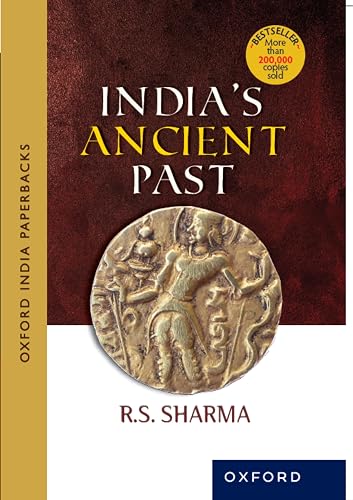
India’s Ancient Past by R.S. Sharma
Core
A compact book where every line counts. Read it two or three times as your base for ancient India, from prehistory to the Guptas.
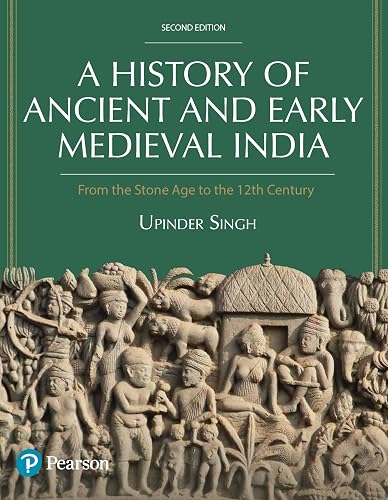
A History of Ancient and Early Medieval India: From the Stone Age to the 12th Century by Upinder Singh
Core
Our main depth book for Paper I up to 1200 CE. It is strong on sources, archaeology, inscriptions, art and maps; read it theme by theme alongside R.S. Sharma rather than in one go.
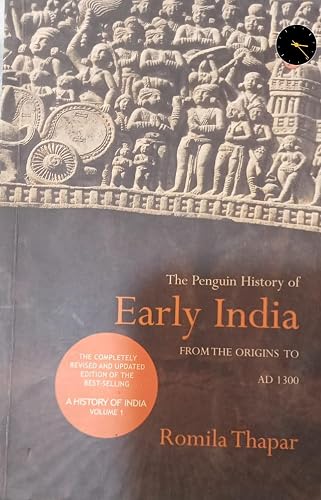
The Penguin History of Early India: From the Origins to AD 1300 by Romila Thapar
Reference
Consult it for historiography and interpretation, especially the Mauryan state, Ashoka’s dhamma and early social history. Quoting her views lifts your answers.
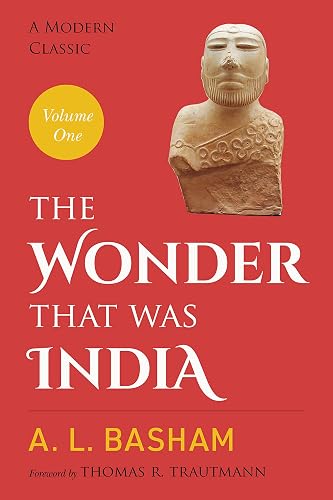
The Wonder That Was India by A.L. Basham
Reference
Read the chapters on religion, art, literature and society for the themes in early Indian cultural history topic.
A History of South India by K.A. Nilakanta Sastri
Reference
Use it for the Sangam age, Satavahanas, Pallavas, Chalukyas, Cholas and Vijayanagara. It covers the South India topics in both ancient and medieval parts.
IGNOU EHI-02: India from the Earliest Times to the 8th Century A.D. by IGNOU
Reference
Free BA units on ancient India. Use them to fill gaps and for short notes on specific topics.
Themes in Indian History Part I (Class XII) by NCERT
Beginner
Read it first. Its chapters on Harappa, early states, kinship and caste, and Buddhist art show how historians use sources, which UPSC values.

Preparing for Prelims too?
Our UPSC Prelims Topic-wise PYQ Book covers every Prelims question with detailed explanations, so you can see exactly where UPSC asks from. Now available as a hard copy and an eBook.
Buy Hard Copy on AmazonBuy eBook (PDF)Paper I: Early Medieval and Medieval India (syllabus topics 13–24) – Best Books
Early medieval India (750–1200), the Delhi Sultanate in the 13th and 14th centuries, regional kingdoms and Vijayanagara, Bhakti and Sufi movements, Akbar and the Mughal Empire, Mughal economy, society and culture, and the 18th century.
Medieval India: From Sultanat to the Mughals (Part I and II) by Satish Chandra
Core
The core text for medieval India. Read both volumes fully; the chapters on Sultanate and Mughal administration, the mansab and jagir systems and the 18th century are asked often.
History of Medieval India by Satish Chandra
Alternative
Pick this single volume if you want a shorter version of the two-part book. It covers 800 to 1700 CE in one place.
The Agrarian System of Mughal India 1556–1707 by Irfan Habib
Reference
Consult it for the land revenue system, zamindars, the jagirdari crisis and peasant revolts. Read the selected chapters only; it is a research monograph.
The Mughal Empire by John F. Richards
Reference
Use it for Mughal expansion, administration and the debate on the decline of the empire.
IGNOU EHI-03: India from the 8th to the 15th Century by IGNOU
Reference
Free units on early medieval India and the Sultanate. Useful for the early medieval topics that the main books cover briefly.
IGNOU EHI-04: India from the 16th to the Mid-18th Century by IGNOU
Reference
Free units on the Mughal Empire, its economy and culture, and the 18th-century regional powers.
Themes in Indian History Part II (Class XII) by NCERT
Beginner
Read it first for travellers’ accounts, Bhakti and Sufi traditions, Vijayanagara and agrarian relations under the Mughals.
Paper II: Modern India (syllabus topics 1–14) – Best Books
European penetration and British expansion, the early structure of the Raj, economic impact of colonial rule, social and religious reform, Indian responses including 1857, the rise of nationalism, the Gandhian phase and other strands, partition, and India after 1947.
From Plassey to Partition and After: A History of Modern India by Sekhar Bandyopadhyay
Core
Our first choice for modern India because it gives you historiography along with events, from 1757 to 1947. Read it fully; it suits analytical questions.
India’s Struggle for Independence by Bipan Chandra and others
Core
The standard book on the national movement from 1857 to 1947. Read it chapter by chapter for the nationalism, Gandhian phase and other strands topics.
India Since Independence by Bipan Chandra, Mridula Mukherjee and Aditya Mukherjee
Core
Use it for the post-1947 topics: integration of princely states, linguistic reorganisation, foreign policy, land reforms, planning and caste and ethnicity.
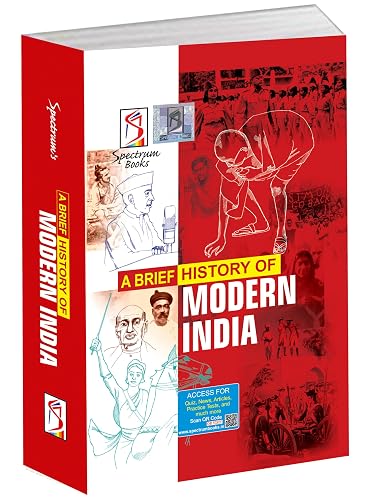
A Brief History of Modern India by Rajiv Ahir
Alternative
A concise, fact-rich book many students use for quick revision. Pick it for revision, not in place of Bandyopadhyay and Bipan Chandra.
Modern India 1885–1947 by Sumit Sarkar
Reference
Consult it for a social-history view of the national movement and for scholars’ interpretations to quote.
India After Gandhi by Ramachandra Guha
Reference
A readable account of India after 1947. Use the chapters on integration, reorganisation of states and the Nehru years.
IGNOU EHI-01: Modern India 1857–1964 by IGNOU
Reference
Free units covering 1857 to the Nehru years. Use them to fill gaps, especially on post-1947 topics.
History of Modern India by Bipan Chandra
Beginner
Based on the old NCERT, it is the best first reading for colonial economy, reform movements and the early national movement.
Themes in Indian History Part III (Class XII) by NCERT
Beginner
Read it for colonialism and the countryside, Gandhi and the national movement, partition and the framing of the Constitution.

Strengthen your GS papers
Our UPSC Mains Topic-wise & Year-wise PYQ Book (2013–2026) maps every GS question to the syllabus, so you know what UPSC asks and how often. Now available as a hard copy and an eBook.
Buy Hard Copy on AmazonBuy eBook (PDF)Paper II: World History (syllabus topics 15–26) – Best Books
The Enlightenment, origins of modern politics, industrialisation, the nation-state system, imperialism and colonialism, revolution and counter-revolution, the world wars, the world after 1945, decolonisation, unification of Europe and the disintegration of the Soviet Union.
Mastering Modern World History by Norman Lowe
Core
The core book for 20th-century topics: the world wars, Russian Revolution, fascism, the Cold War, decolonisation, European unity and the collapse of the Soviet Union.
A History of the Modern World by M.S. Jain and R. Mathur
Core
Use it for the 18th and 19th centuries, which Lowe does not cover: the Enlightenment, American and French revolutions, industrialisation and the unification of Italy and Germany.
History of the World by Arjun Dev and Indira Arjun Dev
Alternative
Based on the old NCERT world history, it is a simpler alternative for revolutions, imperialism, the world wars and liberation movements.
The Age of Revolution: 1789–1848 by Eric Hobsbawm
Reference
Consult it for the ‘dual revolution’ argument linking the French and Industrial Revolutions; a few of his lines make strong introductions.
Europe Since Napoleon by David Thomson
Reference
Use it for 19th-century Europe: nationalism, the unifications, the revolutions of 1848 and the nation-state system.
IGNOU MHI-02: Modern World by IGNOU
Reference
Free MA units on capitalism, industrialisation, nationalism, imperialism and revolutions. Use them for analytical depth.
Themes in World History (Class XI) by NCERT
Beginner
Read the chapters on the Industrial Revolution, displacing indigenous peoples and paths to modernisation first.
How to use this History Optional booklist
- Start with the NCERT Themes in Indian History series, then move to R.S. Sharma, Satish Chandra, Bandyopadhyay and Lowe; add the depth books only for topics the previous year questions favour.
- Practise the Paper I map question every week: mark sites on a blank map of India by period and write two lines on each site’s significance.
- Name historians and their views in your answers (for example Habib on the agrarian crisis or Thapar on Ashoka’s dhamma); this is what separates an optional answer from a GS answer.
- Analyse at least ten years of question papers and group them by syllabus topic before you read, so you know which chapters deserve depth.
- Treat World History as a high-scoring area: it is shorter and its questions repeat around the revolutions, the world wars and decolonisation.
Some books you find useful may not be on this list. Use them if they fall within the syllabus and help you answer previous year questions – that is the only test that matters. If you spot an outdated edition or a broken link, tell us on the Report an Error page.
FAQs
Which are the best books for History Optional?
Our core picks, section by section – Ancient India (syllabus topics 1–12): India’s Ancient Past (R.S. Sharma), A History of Ancient and Early Medieval India: From the Stone Age to the 12th Century (Upinder Singh); Early Medieval and Medieval India (syllabus topics 13–24): Medieval India: From Sultanat to the Mughals (Part I and II) (Satish Chandra); Modern India (syllabus topics 1–14): From Plassey to Partition and After: A History of Modern India (Sekhar Bandyopadhyay), India’s Struggle for Independence (Bipan Chandra and others), India Since Independence (Bipan Chandra, Mridula Mukherjee and Aditya Mukherjee); World History (syllabus topics 15–26): Mastering Modern World History (Norman Lowe), A History of the Modern World (M.S. Jain and R. Mathur). Each book above is tagged Core, Alternative, Reference, Beginner or Website, so you know what to read first.
Which book should I start History Optional with?
If you are new to the subject, begin with Themes in Indian History Part I (Class XII) (NCERT), Themes in Indian History Part II (Class XII) (NCERT), History of Modern India (Bipan Chandra), Themes in Indian History Part III (Class XII) (NCERT), and then move to the Core books for each section.
Do I need to read every book on this list?
No. Read the Core books fully, choose only one book wherever we list an Alternative, and use Reference books only for specific topics. Keep your sources few and revise them several times.
Where can I find History Optional previous year questions?
All History Optional PYQs are on our topic-wise PYQs page, and full papers are on the year-wise question papers page. The syllabus page breaks each unit into numbered topics.
Last updated: 2 November 2026