
This is our booklist for Geography Optional, arranged by the UPSC syllabus: Paper I Section A (Physical Geography), Paper I Section B (Human Geography) and Paper II (Geography of India). For each book we tell you its priority and which chapters matter, so you can keep your sources few and revise them well.
Use this booklist together with the Geography Optional syllabus, the topic-wise PYQs and the year-wise question papers. The previous year questions show you which chapters of these books UPSC actually asks from.
Jump to: Paper I Section A: Physical Geography · Paper I Section B: Human Geography · Paper II: Geography of India
Some links on this page are Amazon affiliate links. If you buy through them, we may earn a small commission at no extra cost to you.
Paper I Section A: Physical Geography – Best Books
Geomorphology, climatology, oceanography, biogeography and environmental geography.
Physical Geography by Savindra Singh
Core
This is our anchor for physical geography. Read the lithosphere, atmosphere and hydrosphere parts in full, because geomorphology and climatology carry the most marks in Paper I; skim the long landform-description chapters only for their diagrams. You do not need his separate Geomorphology or Climatology books on top of this one.
Climatology by D.S. Lal
Alternative
Pick this or the atmosphere part of Savindra Singh, not both. It explains air masses, fronts, jet streams, monsoon mechanism and the Koppen and Thornthwaite classifications with clear figures.
Environmental Geography by Savindra Singh
Reference
Use selected chapters for the environmental geography unit: ecosystems, biodiversity, environmental degradation and conservation. Read it only after the main physical geography book, and only the chapters the syllabus names.
Introducing Physical Geography by Alan Strahler
Reference
Consult it for global examples and high-quality diagrams on plate tectonics, atmospheric circulation and climate change. Do not read it cover to cover; turn to it when a concept in your main book feels thin.
Physical Geography Made Simple by Richard H. Bryant
Reference
A short book we recommend for soils and landform development, where the main texts are brief. Read only those chapters.
Certificate Physical and Human Geography by Goh Cheng Leong
Beginner
Your warm-up before Savindra Singh. Read it twice: once to understand the processes, once to redraw the diagrams by hand. It is too thin for 20-mark answers on its own.
Fundamentals of Physical Geography (Class XI) by NCERT
Beginner
Read this first if you have no geography background. It gives you the vocabulary for geomorphology, climatology and oceanography in plain language.
Down To Earth by Centre for Science and Environment
Website
Follow it for current examples on climate change, disasters, biodiversity and pollution. A few recent facts in your environmental geography answers lift them above textbook answers.

Preparing for Prelims too?
Our UPSC Prelims Topic-wise PYQ Book covers every Prelims question with detailed explanations, so you can see exactly where UPSC asks from. Now available as a hard copy and an eBook.
Buy Hard Copy on AmazonBuy eBook (PDF)Paper I Section B: Human Geography – Best Books
Perspectives in human geography, economic geography, population and settlement geography, regional planning, and models, theories and laws.
Human Geography by Majid Husain
Core
The core text for Section B. Read only the chapters that match the syllabus (perspectives, population, settlements, economic activities); the rest of the book goes well beyond UPSC needs.
Models in Geography by Majid Husain
Core
We recommend this for the models, theories and laws unit: von Thunen, Weber, Christaller, Losch, rank-size rule, Rostow, Myrdal, demographic transition and the heartland and rimland theories. Learn each model with a diagram, its assumptions and one criticism.
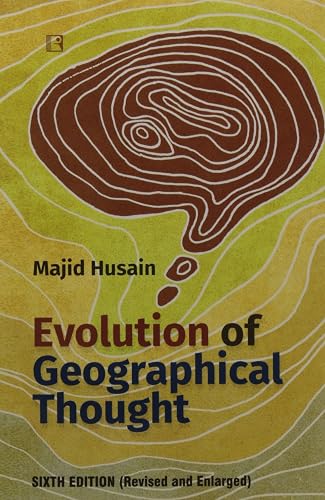
Evolution of Geographical Thought by Majid Husain
Alternative
Pick this or Adhikari for geographical thought. It covers areal differentiation, regional synthesis, dichotomy and dualism, environmentalism, the quantitative revolution, and the radical, behavioural, humanistic and welfare approaches.
Fundamentals of Geographical Thought by Sudeepta Adhikari
Alternative
An alternative to Majid Husain for geographical thought, more readable for some students. Read the chapters on paradigms and modern approaches; skip the long history of classical geographers.
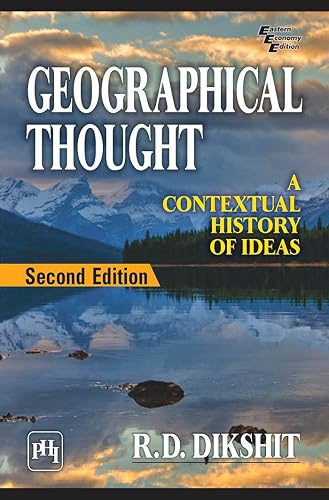
Geographical Thought: A Contextual History of Ideas by R.D. Dikshit
Reference
A dense, scholarly book. Consult it only for specific debates such as positivism versus humanism or the quantitative revolution; do not make it your first reading.
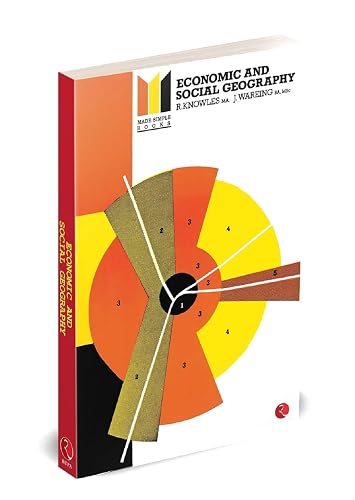
Economic and Social Geography Made Simple by R. Knowles and J. Wareing
Reference
Use it for economic geography: world agriculture types, location of industries, energy, trade and agricultural regions. The chapters are short and exam-friendly.
Geography of Population by R.C. Chandna
Reference
Consult it for population growth and distribution, demographic transition, migration theories and the concept of over- and under-population. Read only the theory chapters.
Regional Planning in India by Mahesh Chand and V.K. Puri
Reference
Useful for both papers: regional concepts, growth pole and growth centre theory, regional imbalances and planning regions. Read the theory chapters for Paper I and the Indian chapters for Paper II.
Fundamentals of Human Geography (Class XII) by NCERT
Beginner
Read it first for the basic ideas of population, economic activities, transport and settlements before you move to Majid Husain.

Strengthen your GS papers
Our UPSC Mains Topic-wise & Year-wise PYQ Book (2013–2026) maps every GS question to the syllabus, so you know what UPSC asks and how often. Now available as a hard copy and an eBook.
Buy Hard Copy on AmazonBuy eBook (PDF)Paper II: Geography of India – Best Books
Physical setting, resources, agriculture, industry, transport and trade, cultural setting, settlements, regional planning, political aspects and contemporary issues, plus the map question.
India: A Comprehensive Geography by D.R. Khullar
Core
Our recommended spine for Paper II. Read the physical setting, climate, soils and natural vegetation chapters in depth; for minerals, agriculture, industry and transport, focus on locations, maps and data rather than every paragraph.
Oxford School Atlas by Oxford University Press
Core
You need an atlas for the compulsory map question in Paper II and for marking places in answers. Keep it on your desk while you read Khullar and locate every place you meet.
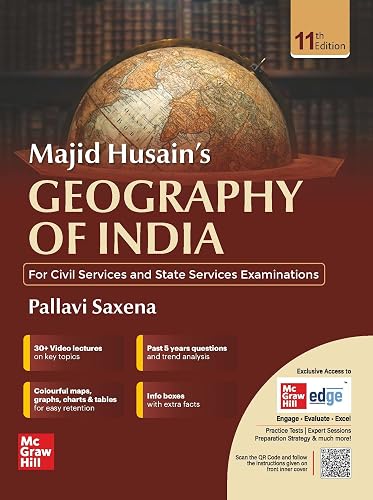
Geography of India by Majid Husain
Alternative
Pick this or Khullar as your main Paper II book. It is more compact and exam-oriented on agriculture, industry, regionalisation and contemporary issues.
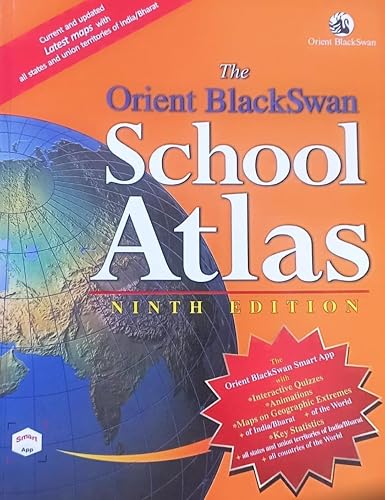
Orient BlackSwan School Atlas by Orient BlackSwan
Alternative
Pick this or the Oxford atlas. Its thematic maps of India (soils, crops, minerals, industries) are clear and useful for the map question.
Urbanisation and Urban Systems in India by R. Ramachandran
Reference
Consult it for the settlements unit: urban hierarchy, functional classification of towns, urban morphology, slums and urban problems. Read the selected chapters only.
Agricultural Geography by Majid Husain
Reference
Use it for agricultural regions, cropping intensity, crop combination, agro-climatic zones and the Green Revolution. Agriculture is a high-weight unit, so this pays off.
India Year Book (latest edition) by Publications Division
Reference
Use the latest edition for updated facts on agriculture, energy, transport, water resources and government schemes. Read the relevant chapters, not the whole book.
India: Physical Environment (Class XI) by NCERT
Beginner
Read it first for the structure, physiography, drainage, climate and natural vegetation of India.
India: People and Economy (Class XII) by NCERT
Beginner
Read it first for population, settlements, resources, agriculture, industry and transport in India.
Economic Survey of India by Ministry of Finance
Website
Read the chapters on agriculture, industry, infrastructure, energy and climate each year. They give you current data and policy examples for Paper II and the contemporary issues unit.
How to use this Geography Optional booklist
- Start with the four NCERTs and Leong, then move to Savindra Singh and Majid Husain; for each unit keep one main book and the previous year questions, not three books.
- Build a diagram bank as you read geomorphology, climatology and the models; almost every Paper I answer should carry at least one labelled diagram or map.
- Practise the Paper II map question every week: mark ten places on a blank map of India and write two lines on why each matters.
- Link Paper I theory with Indian examples in Paper II, for example Christaller with Indian settlement hierarchy or the jet stream theory with the Indian monsoon.
- Keep current data from the Economic Survey and Down To Earth in a separate notebook for the contemporary issues unit and for answer introductions.
Some books you find useful may not be on this list. Use them if they fall within the syllabus and help you answer previous year questions – that is the only test that matters. If you spot an outdated edition or a broken link, tell us on the Report an Error page.
FAQs
Which are the best books for Geography Optional?
Our core picks, section by section – Physical Geography: Physical Geography (Savindra Singh); Human Geography: Human Geography (Majid Husain), Models in Geography (Majid Husain); Geography of India: India: A Comprehensive Geography (D.R. Khullar), Oxford School Atlas (Oxford University Press). Each book above is tagged Core, Alternative, Reference, Beginner or Website, so you know what to read first.
Which book should I start Geography Optional with?
If you are new to the subject, begin with Certificate Physical and Human Geography (Goh Cheng Leong), Fundamentals of Physical Geography (Class XI) (NCERT), Fundamentals of Human Geography (Class XII) (NCERT), India: Physical Environment (Class XI) (NCERT), and then move to the Core books for each section.
Do I need to read every book on this list?
No. Read the Core books fully, choose only one book wherever we list an Alternative, and use Reference books only for specific topics. Keep your sources few and revise them several times.
Where can I find Geography Optional previous year questions?
All Geography Optional PYQs are on our topic-wise PYQs page, and full papers are on the year-wise question papers page. The syllabus page breaks each unit into numbered topics.
Last updated: 2 November 2026