
This is our topic-wise booklist for Chemistry Optional, arranged by the official UPSC syllabus. Paper I covers physical and inorganic chemistry, and Paper II covers organic chemistry and spectroscopy. We have kept to the standard B.Sc. and M.Sc. textbooks that toppers use, and marked each one so you know what to read fully and what to consult only for specific topics.
Use this booklist together with the Chemistry Optional syllabus, the topic-wise PYQs and the year-wise question papers. The previous year questions show you which chapters of these books UPSC actually asks from.
Jump to: Paper I: Atomic Structure and Chemical Bonding · Paper I: Solid, Gaseous and Liquid States · Paper I: Thermodynamics, Phase Equilibria and Solutions · Paper I: Electrochemistry, Chemical Kinetics, Photochemistry, and Surface Phenomena and Catalysis · Paper I: Coordination, Bioinorganic, Main Group and f-Block Chemistry · Paper II: Delocalised Bonding, Reaction Mechanisms and Reactive Intermediates · Paper II: Substitution, Elimination, Addition Reactions and Rearrangements · Paper II: Pericyclic Reactions and Photochemistry · Paper II: Polymers and Biopolymers · Paper II: Synthetic Uses of Reagents · Paper II: Spectroscopy
Some links on this page are Amazon affiliate links. If you buy through them, we may earn a small commission at no extra cost to you.
Paper I: Atomic Structure and Chemical Bonding – Best Books
Heisenberg’s uncertainty principle, Schrödinger wave equation, particle in a box, hydrogen atom orbitals, ionic and covalent bonding, VSEPR, hybridisation, valence bond and molecular orbital theory, and dipole moments.
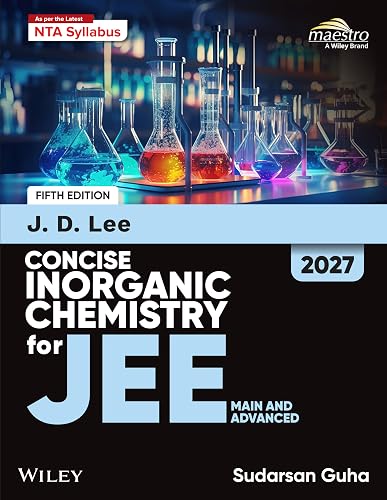
Concise Inorganic Chemistry (adapted by Sudarsan Guha) by J.D. Lee
Core
We recommend J.D. Lee as the core book for chemical bonding. Read the chapters on ionic and covalent bonding, VSEPR, hybridisation, molecular orbital theory of homonuclear and heteronuclear diatomic molecules, and lattice energy.
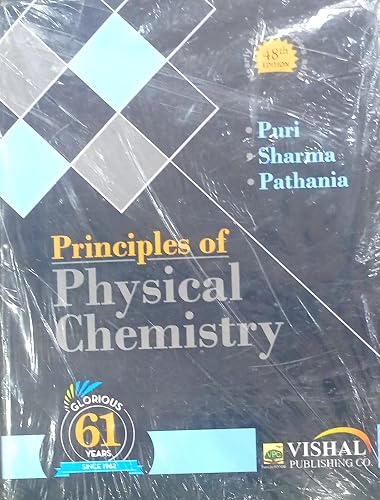
Principles of Physical Chemistry by B.R. Puri, L.R. Sharma and Madan S. Pathania
Core
Read the atomic structure and quantum chemistry chapters for the Schrödinger equation, particle in a box, quantum numbers and the shapes of hydrogen atom orbitals.
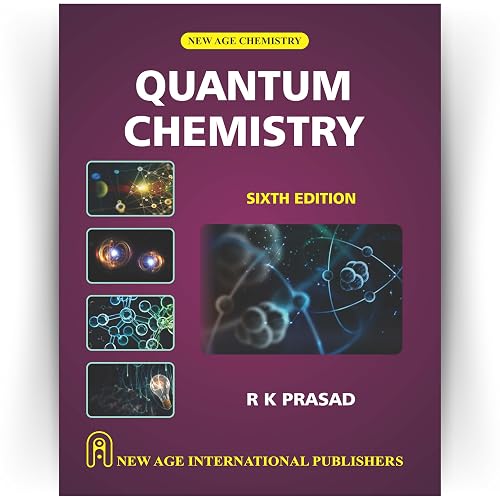
Quantum Chemistry by R.K. Prasad
Reference
Consult this for fuller derivations on the particle in a box, the hydrogen atom and LCAO-MO theory when you need more than Puri, Sharma and Pathania gives.
NCERT Chemistry Class XI, Part I (Structure of Atom; Chemical Bonding and Molecular Structure) by NCERT
Beginner
If you are not from a chemistry background, read these two chapters first to revise quantum numbers, orbitals, VSEPR and basic MO theory. They are free on the NCERT website.

Preparing for Prelims too?
Our UPSC Prelims Topic-wise PYQ Book covers every Prelims question with detailed explanations, so you can see exactly where UPSC asks from. Now available as a hard copy and an eBook.
Buy Hard Copy on AmazonBuy eBook (PDF)Paper I: Solid, Gaseous and Liquid States – Best Books
Crystal systems, Bragg’s law, packing and defects, kinetic theory, real gases and van der Waals equation, transport phenomena, and the liquid state including liquid crystals.
Principles of Physical Chemistry by B.R. Puri, L.R. Sharma and Madan S. Pathania
Core
We recommend this as the core book for the states of matter. Read the chapters on the gaseous, liquid and solid states, including X-ray diffraction, crystal defects, the van der Waals equation, critical constants and viscosity.
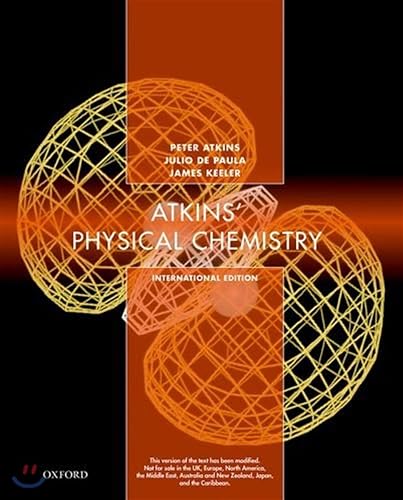
Atkins’ Physical Chemistry by Peter Atkins, Julio de Paula and James Keeler
Alternative
Pick Atkins if you prefer a more rigorous, international textbook. It is strong on real gases and molecular motion in gases.
Solid State Chemistry and Its Applications by Anthony R. West
Reference
Consult West for crystal defects, non-stoichiometry and structures of ionic solids when a question goes beyond the standard textbook level.
Paper I: Thermodynamics, Phase Equilibria and Solutions – Best Books
Laws of thermodynamics, entropy, free energy, Gibbs–Helmholtz equation, chemical potential, Clausius–Clapeyron equation, phase rule, ideal and non-ideal solutions, and colligative properties.
Principles of Physical Chemistry by B.R. Puri, L.R. Sharma and Madan S. Pathania
Core
We recommend the thermodynamics, phase rule and solutions chapters as your main reading. Solve the numericals on entropy, free energy, equilibrium constants and colligative properties.
A Textbook of Physical Chemistry (relevant volumes) by K.L. Kapoor
Alternative
Use the thermodynamics and equilibrium volumes of Kapoor if you want a more detailed and numerical-rich treatment than Puri, Sharma and Pathania.
Atkins’ Physical Chemistry by Peter Atkins, Julio de Paula and James Keeler
Reference
Consult Atkins for clear explanations of chemical potential, partial molar quantities and phase diagrams.
Paper I: Electrochemistry, Chemical Kinetics, Photochemistry, and Surface Phenomena and Catalysis – Best Books
Debye–Hückel theory, galvanic cells, Nernst equation, concentration cells, rate laws, collision and transition state theories, photochemical laws and quantum yield, adsorption isotherms and catalysis.
Principles of Physical Chemistry by B.R. Puri, L.R. Sharma and Madan S. Pathania
Core
Read the chapters on electrolytic conductance, electrochemical cells, chemical kinetics, photochemistry and surface chemistry. Together they cover this whole block at the UPSC level.
Atkins’ Physical Chemistry by Peter Atkins, Julio de Paula and James Keeler
Alternative
Use Atkins instead for kinetics and surface chemistry if you want deeper treatment of reaction dynamics, chain reactions and adsorption.
An Introduction to Electrochemistry by Samuel Glasstone
Reference
Consult Glasstone for detailed derivations on activity coefficients, the Debye–Hückel limiting law, liquid junction potentials and concentration cells.
Chemical Kinetics by Keith J. Laidler
Reference
Consult Laidler for collision theory, transition state theory, unimolecular reactions and chain reactions when a question needs depth.
Paper I: Coordination, Bioinorganic, Main Group and f-Block Chemistry – Best Books
Crystal field and ligand field theory, isomerism, stability of complexes, reaction mechanisms of complexes, metal ions in biology, chemistry of main group elements, and lanthanides and actinides.
Concise Inorganic Chemistry (adapted by Sudarsan Guha) by J.D. Lee
Core
We recommend J.D. Lee as the core book for main group and f-block chemistry. Read the group-wise chapters, the boranes, silicates and interhalogen compounds, and the lanthanides and actinides.
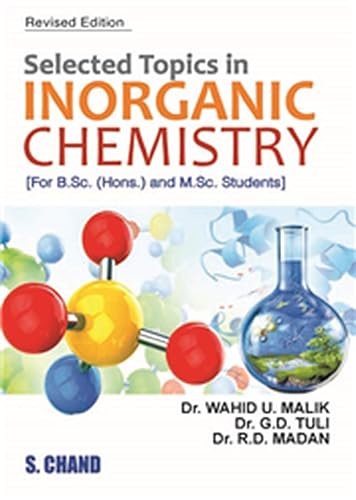
Selected Topics in Inorganic Chemistry by Wahid U. Malik, G.D. Tuli and R.D. Madan
Core
Use this for coordination chemistry. It explains crystal field theory, magnetic and spectral properties, isomerism, stability constants and reaction mechanisms of complexes in an exam-friendly way.
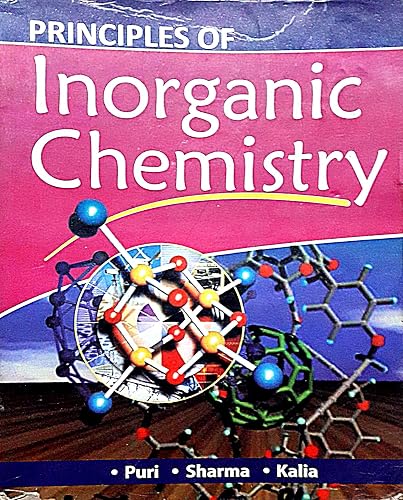
Principles of Inorganic Chemistry by B.R. Puri, L.R. Sharma and K.C. Kalia
Alternative
Pick this instead of J.D. Lee if you want one Indian book that covers main group, transition and f-block chemistry along with coordination compounds.
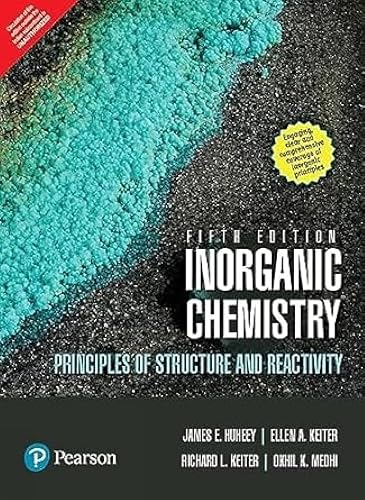
Inorganic Chemistry: Principles of Structure and Reactivity by James E. Huheey, Ellen A. Keiter, Richard L. Keiter and Okhil K. Medhi
Reference
Consult Huheey for bioinorganic chemistry (haemoglobin, myoglobin, cytochromes, metal ions in enzymes) and for deeper ligand field theory.
Paper II: Delocalised Bonding, Reaction Mechanisms and Reactive Intermediates – Best Books
Aromaticity, annulenes and non-benzenoid aromatics, methods of determining reaction mechanisms, and the formation, stability and reactions of carbocations, carbanions, free radicals, carbenes, nitrenes and benzynes.
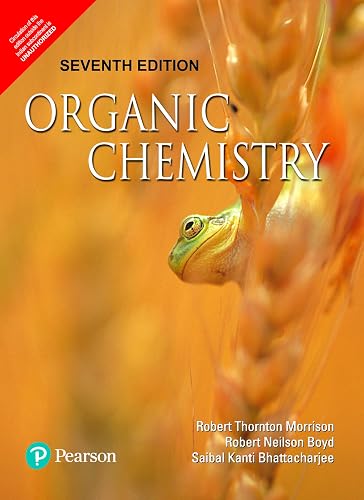
Organic Chemistry by Robert T. Morrison, Robert N. Boyd and Saibal Kanti Bhattacharjee
Core
We recommend Morrison and Boyd as the base text for Paper II. Read the chapters on aromaticity, reactive intermediates and the reactions of each functional group.
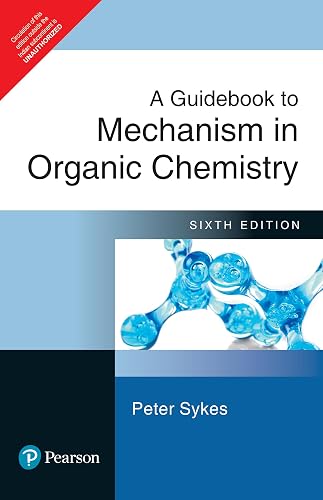
A Guide to Mechanism in Organic Chemistry by Peter Sykes
Core
Read Sykes fully for mechanisms. It is short and covers reactive intermediates, electronic effects and the logic of mechanism determination, which UPSC tests every year.
Organic Chemistry by Jonathan Clayden, Nick Greeves and Stuart Warren
Reference
Consult Clayden when a mechanism is unclear. Its curly-arrow explanations are among the best available, though the book is too long to read fully.
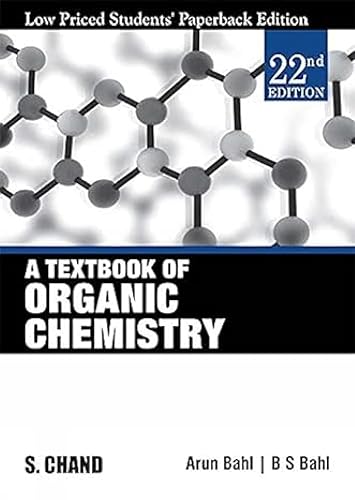
A Textbook of Organic Chemistry by Arun Bahl and B.S. Bahl
Beginner
If you are not from a chemistry background, use Bahl and Bahl first to build basic organic chemistry before moving to Morrison and Boyd.

Strengthen your GS papers
Our UPSC Mains Topic-wise & Year-wise PYQ Book (2013–2026) maps every GS question to the syllabus, so you know what UPSC asks and how often. Now available as a hard copy and an eBook.
Buy Hard Copy on AmazonBuy eBook (PDF)Paper II: Substitution, Elimination, Addition Reactions and Rearrangements – Best Books
SN1, SN2 and SNi mechanisms, neighbouring group participation, aromatic substitution, E1, E2 and E1cB eliminations, addition to C=C and C=O, name reactions and molecular rearrangements.
A Guide to Mechanism in Organic Chemistry by Peter Sykes
Core
We recommend Sykes as the core book here. Read the chapters on nucleophilic substitution, aromatic substitution, eliminations, additions to C=C and C=O, and rearrangements.
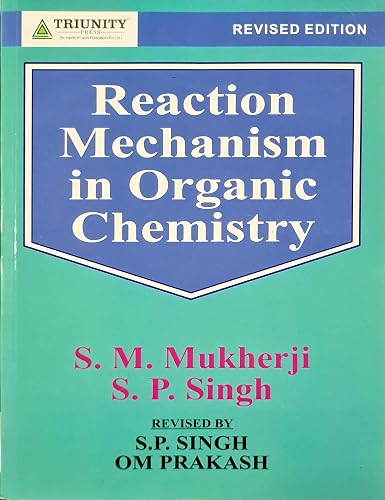
Reaction Mechanism in Organic Chemistry by S.M. Mukherji and S.P. Singh
Core
Use this for named reactions and rearrangements, such as Beckmann, Hofmann, Curtius, pinacol–pinacolone, Favorskii, Fries and Claisen, with mechanisms in exam format.
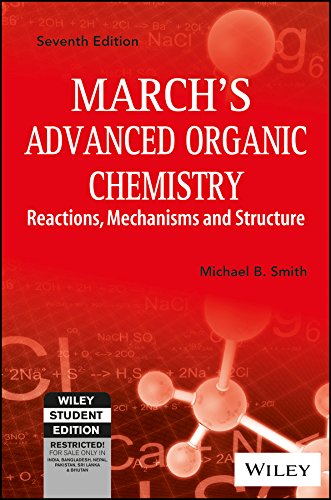
March’s Advanced Organic Chemistry: Reactions, Mechanisms, and Structure by Michael B. Smith and Jerry March
Reference
Consult March only to check the scope or mechanism of a specific reaction. It is a reference work, not a book for reading through.
Paper II: Pericyclic Reactions and Photochemistry – Best Books
Electrocyclic reactions, cycloadditions and sigmatropic shifts, Woodward–Hoffmann rules and FMO approach, and photochemical reactions of organic compounds.
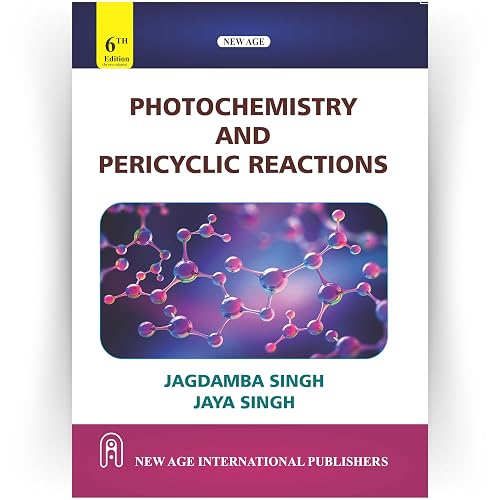
Photochemistry and Pericyclic Reactions by Jagdamba Singh and Jaya Singh
Core
We recommend this as the core book for both topics. It explains Woodward–Hoffmann rules, FMO and correlation-diagram approaches, and organic photochemical reactions with many solved problems.
Organic Chemistry by Jonathan Clayden, Nick Greeves and Stuart Warren
Reference
Consult the chapters on cycloadditions, sigmatropic and electrocyclic reactions for clear orbital pictures that help you write and draw answers.
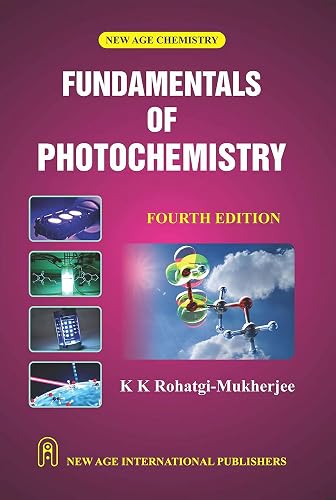
Fundamentals of Photochemistry by K.K. Rohatgi-Mukherjee
Reference
Consult this for the photophysical side: Jablonski diagram, fluorescence, phosphorescence and quantum yield. It also helps with the photochemistry topic in Paper I.
Paper II: Polymers and Biopolymers – Best Books
Natural and synthetic polymers, polymerisation methods, polymer properties and uses, and the structure and chemistry of carbohydrates, proteins, nucleic acids and lipids.
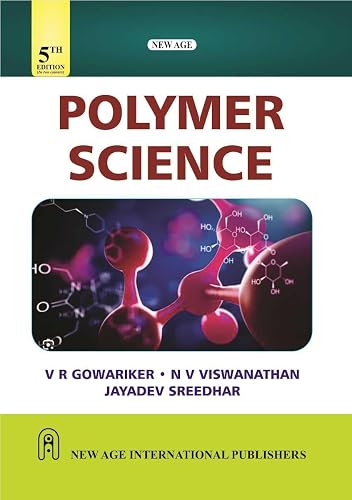
Polymer Science by V.R. Gowariker, N.V. Viswanathan and Jayadev Sreedhar
Core
We recommend this for synthetic polymers. Read polymerisation mechanisms, molecular weight, structure–property relations and the preparation and uses of common polymers.
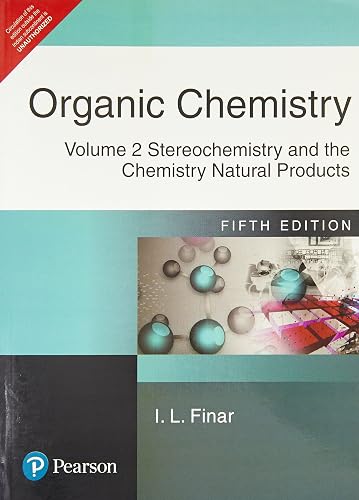
Organic Chemistry, Volume 2: Stereochemistry and the Chemistry of Natural Products by I.L. Finar
Core
Use Finar Volume 2 for biopolymers: the structure of carbohydrates, amino acids and proteins, and nucleic acids.
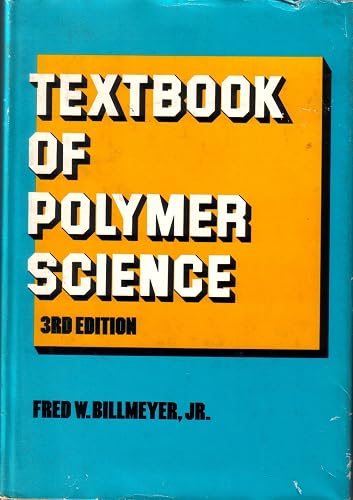
Textbook of Polymer Science by Fred W. Billmeyer
Reference
Consult Billmeyer for polymerisation kinetics and polymer characterisation when Gowariker is too brief.
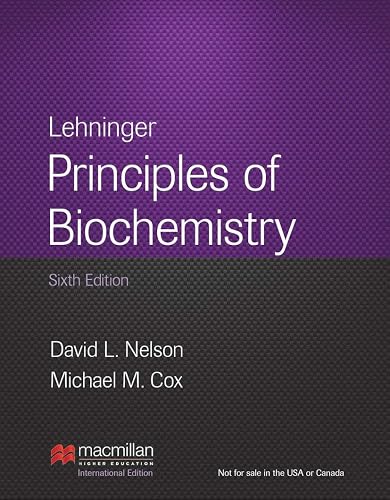
Lehninger Principles of Biochemistry by David L. Nelson and Michael M. Cox
Reference
Consult the chapters on proteins, carbohydrates, nucleic acids and lipids for clear structural diagrams of biopolymers.
Paper II: Synthetic Uses of Reagents – Best Books
Uses of reagents such as OsO4, HIO4, CrO3, Pb(OAc)4, SeO2, NBS, B2H6, Na–liquid NH3, LiAlH4, NaBH4, n-BuLi and MCPBA in organic synthesis.
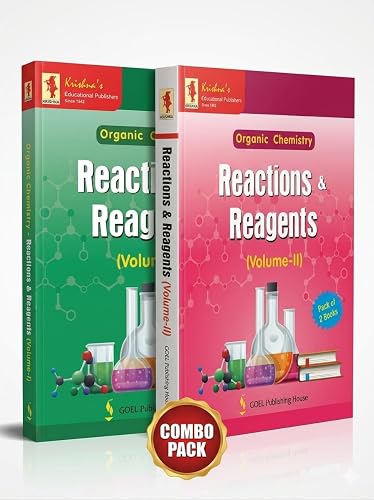
Organic Chemistry: Reactions and Reagents by O.P. Agarwal
Core
We recommend this for the reagents topic. It explains each reagent’s preparation, uses and mechanism in short notes that are easy to revise.
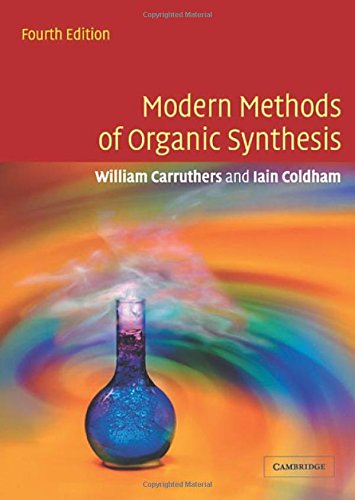
Modern Methods of Organic Synthesis by W. Carruthers and Iain Coldham
Reference
Consult the oxidation and reduction chapters for the selectivity and stereochemistry of reagents such as LiAlH4, borane, OsO4 and peracids.
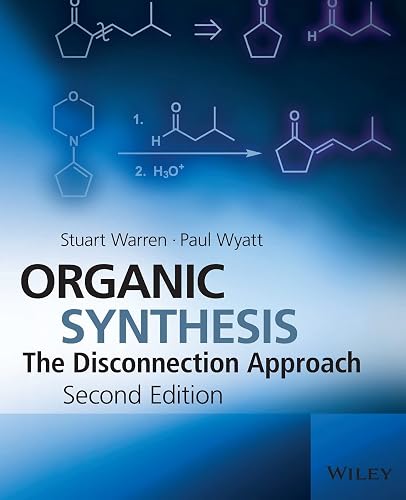
Organic Synthesis: The Disconnection Approach by Stuart Warren and Paul Wyatt
Reference
Consult this if you want practice in planning short syntheses, which helps when UPSC asks you to convert one compound into another.
Paper II: Spectroscopy – Best Books
Principles and applications of rotational, vibrational, electronic (UV-visible), IR, NMR (1H) and mass spectroscopy in structure elucidation.
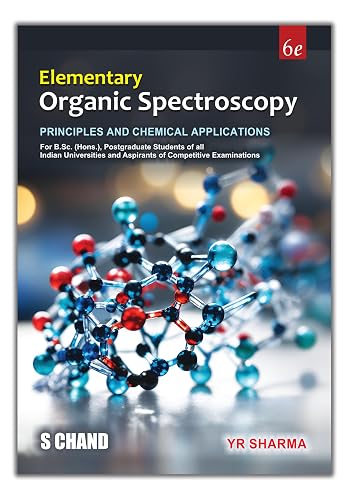
Elementary Organic Spectroscopy by Y.R. Sharma
Core
We recommend this as the core book for spectroscopy. It covers UV, IR, NMR and mass spectra with Woodward–Fieser rules and many solved structure-determination problems.
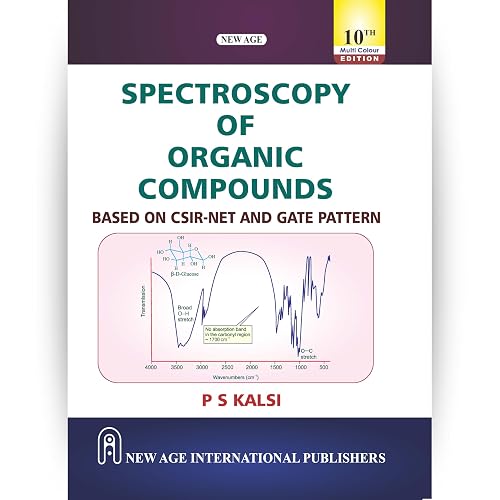
Spectroscopy of Organic Compounds by P.S. Kalsi
Alternative
Pick Kalsi instead of Y.R. Sharma if you want more detail and more problems, especially on NMR and mass fragmentation patterns.
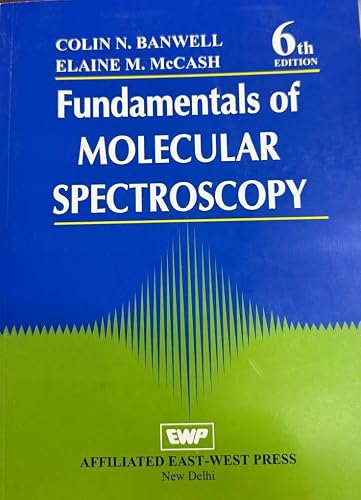
Fundamentals of Molecular Spectroscopy by Colin N. Banwell and Elaine M. McCash
Reference
Consult Banwell for the physical principles of rotational, vibrational and electronic spectra, including selection rules and the Franck–Condon principle.
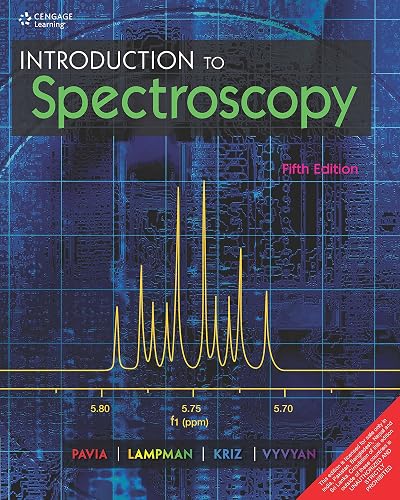
Introduction to Spectroscopy by Donald L. Pavia, Gary M. Lampman, George S. Kriz and James R. Vyvyan
Reference
Consult Pavia for clear spectra and worked problems when you want extra practice on IR and NMR interpretation.
How to use this Chemistry Optional booklist
- Build Paper I around Puri, Sharma and Pathania for physical chemistry and J.D. Lee with Malik, Tuli and Madan for inorganic chemistry; open the references only for specific gaps.
- For Paper II, read Morrison and Boyd for the base and Sykes for mechanisms, then add Mukherji and Singh for named reactions and rearrangements.
- Practise the numericals in thermodynamics, electrochemistry, kinetics and phase equilibria regularly; they are frequent and scoring.
- Write mechanisms with clear curly arrows, intermediates and conditions, and draw structures neatly; most organic marks come from these.
- Make a one-page sheet per reagent and per named reaction for quick revision before Mains.
- Solve UPSC previous year questions topic by topic as you finish each section, and again in timed full papers.
Some books you find useful may not be on this list. Use them if they fall within the syllabus and help you answer previous year questions – that is the only test that matters. If you spot an outdated edition or a broken link, tell us on the Report an Error page.
FAQs
Which are the best books for Chemistry Optional?
Our core picks, section by section – Atomic Structure and Chemical Bonding: Concise Inorganic Chemistry (adapted by Sudarsan Guha) (J.D. Lee), Principles of Physical Chemistry (B.R. Puri, L.R. Sharma and Madan S. Pathania); Solid, Gaseous and Liquid States: Principles of Physical Chemistry (B.R. Puri, L.R. Sharma and Madan S. Pathania); Thermodynamics, Phase Equilibria and Solutions: Principles of Physical Chemistry (B.R. Puri, L.R. Sharma and Madan S. Pathania); Electrochemistry, Chemical Kinetics, Photochemistry, and Surface Phenomena and Catalysis: Principles of Physical Chemistry (B.R. Puri, L.R. Sharma and Madan S. Pathania); Coordination, Bioinorganic, Main Group and f-Block Chemistry: Concise Inorganic Chemistry (adapted by Sudarsan Guha) (J.D. Lee), Selected Topics in Inorganic Chemistry (Wahid U. Malik, G.D. Tuli and R.D. Madan); Delocalised Bonding, Reaction Mechanisms and Reactive Intermediates: Organic Chemistry (Robert T. Morrison, Robert N. Boyd and Saibal Kanti Bhattacharjee), A Guide to Mechanism in Organic Chemistry (Peter Sykes); Substitution, Elimination, Addition Reactions and Rearrangements: A Guide to Mechanism in Organic Chemistry (Peter Sykes), Reaction Mechanism in Organic Chemistry (S.M. Mukherji and S.P. Singh); Pericyclic Reactions and Photochemistry: Photochemistry and Pericyclic Reactions (Jagdamba Singh and Jaya Singh); Polymers and Biopolymers: Polymer Science (V.R. Gowariker, N.V. Viswanathan and Jayadev Sreedhar), Organic Chemistry, Volume 2: Stereochemistry and the Chemistry of Natural Products (I.L. Finar); Synthetic Uses of Reagents: Organic Chemistry: Reactions and Reagents (O.P. Agarwal); Spectroscopy: Elementary Organic Spectroscopy (Y.R. Sharma). Each book above is tagged Core, Alternative, Reference, Beginner or Website, so you know what to read first.
Which book should I start Chemistry Optional with?
If you are new to the subject, begin with NCERT Chemistry Class XI, Part I (Structure of Atom; Chemical Bonding and Molecular Structure) (NCERT), A Textbook of Organic Chemistry (Arun Bahl and B.S. Bahl), and then move to the Core books for each section.
Do I need to read every book on this list?
No. Read the Core books fully, choose only one book wherever we list an Alternative, and use Reference books only for specific topics. Keep your sources few and revise them several times.
Where can I find Chemistry Optional previous year questions?
All Chemistry Optional PYQs are on our topic-wise PYQs page, and full papers are on the year-wise question papers page. The syllabus page breaks each unit into numbered topics.
Last updated: 2 November 2026