
This is our topic-wise booklist for Geology Optional, arranged by the official UPSC syllabus for Paper I and Paper II. We have picked the standard B.Sc. and M.Sc. textbooks used in Indian universities and by CSE aspirants, and marked each one so you know what to read fully and what to consult for specific topics. Geology answers rely on diagrams and Indian examples, so pair the textbooks with GSI and IBM material.
Use this booklist together with the Geology Optional syllabus, the topic-wise PYQs and the year-wise question papers. The previous year questions show you which chapters of these books UPSC actually asks from.
Jump to: Paper I: General Geology · Paper I: Geomorphology and Remote Sensing · Paper I: Structural Geology · Paper I: Palaeontology · Paper I: Indian Stratigraphy · Paper I: Hydrogeology and Engineering Geology · Paper II: Mineralogy · Paper II: Igneous and Metamorphic Petrology · Paper II: Sedimentary Petrology · Paper II: Economic Geology · Paper II: Mining Geology · Paper II: Geochemistry and Environmental Geology
Some links on this page are Amazon affiliate links. If you buy through them, we may earn a small commission at no extra cost to you.
Paper I: General Geology – Best Books
Solar system and meteorites, origin, interior and age of the Earth, volcanoes, earthquakes, island arcs and ridges, continental drift, plate tectonics and isostasy.
A Textbook of Geology by P.K. Mukherjee
Core
We recommend this as your base book for Paper I general geology. Read the chapters on the Earth’s origin and interior, volcanism, earthquakes, plate tectonics and isostasy.
A Textbook of Geology by G.B. Mahapatra
Alternative
Pick this or Mukherjee. It is simple and well illustrated, which suits students new to geology.
Holmes’ Principles of Physical Geology by Arthur Holmes (revised by P. McL. D. Duff)
Reference
Consult this classic for deeper explanations of continental drift, mountain building and isostasy. Use selected chapters, not the whole book.

Preparing for Prelims too?
Our UPSC Prelims Topic-wise PYQ Book covers every Prelims question with detailed explanations, so you can see exactly where UPSC asks from. Now available as a hard copy and an eBook.
Buy Hard Copy on AmazonBuy eBook (PDF)Paper I: Geomorphology and Remote Sensing – Best Books
Geomorphic concepts, weathering, landforms, drainage, coastal geomorphology, geomorphology of India, aerial photos, sensors, Indian remote sensing satellites, GIS and GPS.
Principles of Geomorphology by William D. Thornbury
Core
We recommend this for the geomorphology part. Read the fundamental concepts, weathering, fluvial, coastal and structural landforms, and applied geomorphology.
Remote Sensing and GIS by Basudeb Bhatta
Core
Use this for the remote sensing part. Read the electromagnetic spectrum, sensors and platforms, image interpretation, Indian satellites, GIS and GPS.
Geomorphology by Savindra Singh
Alternative
Pick this or Thornbury. It is easy to read and includes Indian examples and diagrams that help in answers.
Paper I: Structural Geology – Best Books
Geological maps and projections, stress and strain, rock deformation, folds, faults, joints, foliation, lineation, unconformities and deformation-crystallisation timing.
Structural Geology by Marland P. Billings
Core
We recommend this as your main structural geology book. Read folds, faults, joints, foliation and lineation, unconformities and the chapters on geological maps and projections.
Structural Geology by Haakon Fossen
Alternative
Pick this for a modern treatment of stress, strain, strain markers and rock deformation. Its diagrams are clear and easy to reproduce.
Structural Geology: Fundamentals and Modern Developments by S.K. Ghosh
Reference
Consult this for the mechanics of folding and faulting and for the timing of crystallisation relative to deformation.
Paper I: Palaeontology – Best Books
Species concept, mega and microfossils, fossil preservation, uses of microfossils, evolution of Hominidae, Equidae and Proboscidae, Siwalik fauna, Gondwana flora and fauna, index fossils.
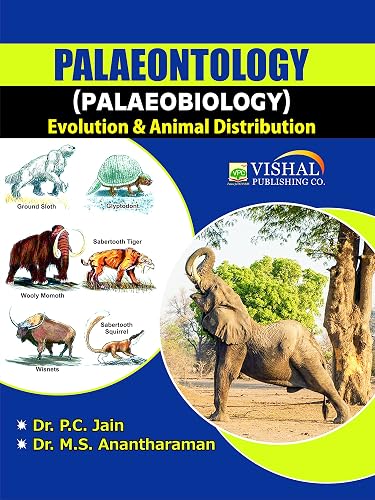
Palaeontology: Evolution and Animal Distribution by P.C. Jain and M.S. Anantharaman
Core
We recommend this as your main palaeontology book. It covers invertebrate and vertebrate fossils, evolution of horses, elephants and hominids, Siwalik fauna and Gondwana flora with Indian context.
Palaeontology: Invertebrate by Henry Woods
Reference
Consult this classic for the morphology of invertebrate groups and index fossils. Use it to draw labelled diagrams.
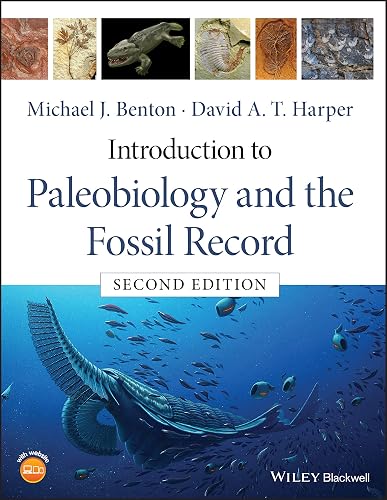
Introduction to Paleobiology and the Fossil Record by Michael J. Benton and David A.T. Harper
Reference
Consult this for the species concept, microfossils and their use in correlation, petroleum exploration and palaeoclimate studies.
Paper I: Indian Stratigraphy – Best Books
Stratigraphic classification, Precambrian and Phanerozoic rocks of India, boundary problems, palaeoclimate and palaeogeography, tectonic framework of India and evolution of the Himalaya.
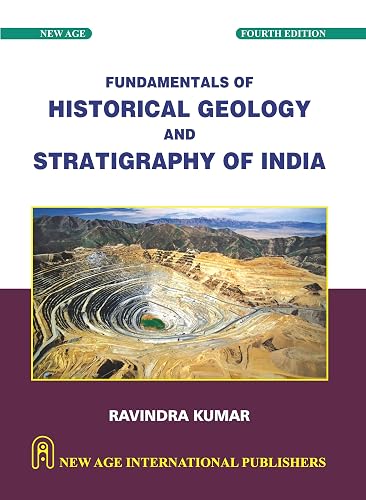
Fundamentals of Historical Geology and Stratigraphy of India by Ravindra Kumar
Core
We recommend this as your main stratigraphy book. Read the principles of stratigraphic classification and each Precambrian and Phanerozoic unit with its lithology, fossils and economic importance.
Geology of India by D.N. Wadia
Alternative
Pick this classic alongside or instead of Ravindra Kumar. It is useful for the Himalaya, the Gondwana and the Deccan Traps.
Geology of India (Vol. 1 and 2) by M. Ramakrishnan and R. Vaidyanadhan
Reference
Consult this for updated facts on cratons, mobile belts and Proterozoic basins. Use it to add current Indian data to your answers.
The Making of India: Geodynamic Evolution by K.S. Valdiya
Reference
Consult the chapters on the tectonic framework of India and the evolution of the Himalaya for analytical answers.
Paper I: Hydrogeology and Engineering Geology – Best Books
Groundwater occurrence and movement, aquifer properties, groundwater chemistry and exploration, recharge and harvesting; engineering properties of rocks, investigations for dams, tunnels, roads and bridges, landslides.
Groundwater Hydrology by David Keith Todd and Larry W. Mays
Core
We recommend this for the hydrogeology part. Read aquifer properties, groundwater movement, well hydraulics, groundwater quality, saline water intrusion and artificial recharge.
A Textbook of Engineering and General Geology by Parbin Singh
Core
Use this for engineering geology. Read engineering properties of rocks, site investigations for dams, tunnels, roads and bridges, landslides and earthquake-resistant design.
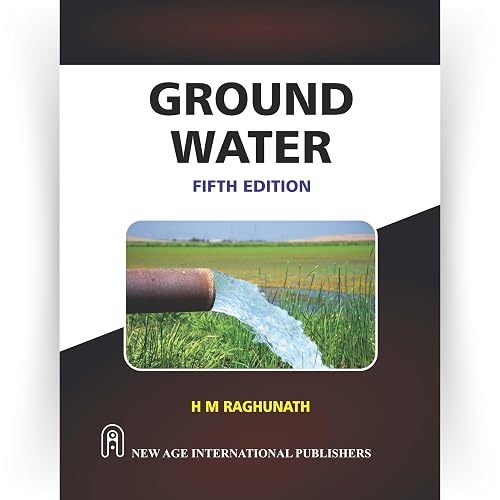
Ground Water by H.M. Raghunath
Alternative
Pick this or Todd. It is simpler and includes Indian practice on well construction, exploration and rainwater harvesting.
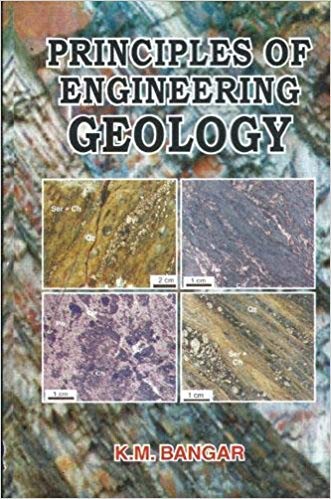
Principles of Engineering Geology by K.M. Bangar
Alternative
Pick this or Parbin Singh. Read the applied chapters on dams, tunnels and groundwater and skip the detailed civil engineering content.
Paper II: Mineralogy – Best Books
Crystal systems and symmetry, crystallographic notation and projections, X-ray crystallography, silicate structures, rock-forming and ore minerals, clay minerals and optical mineralogy.
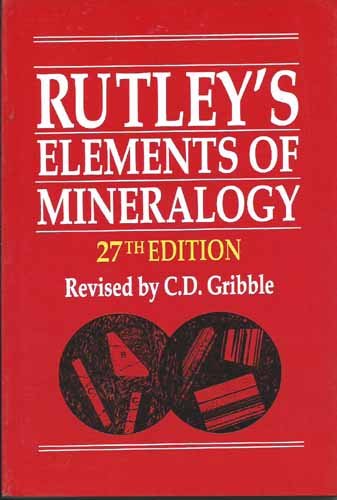
Rutley’s Elements of Mineralogy by H.H. Read
Core
We recommend this as your main mineralogy book. Read crystallography, silicate structures and the descriptions of rock-forming, carbonate, sulphide and halide minerals.
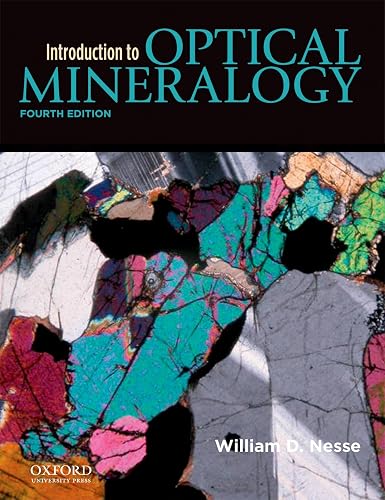
Introduction to Mineralogy by William D. Nesse
Alternative
Pick this for a modern treatment of crystal chemistry, X-ray methods and optical properties. It is useful alongside Rutley.
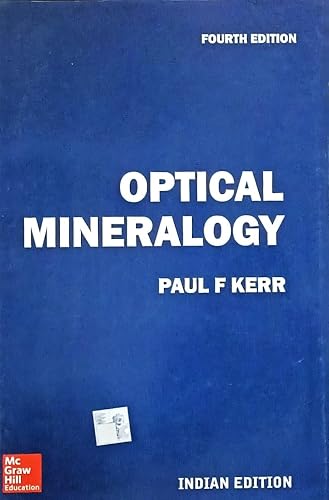
Optical Mineralogy by Paul F. Kerr
Reference
Consult this for optical properties: pleochroism, extinction, birefringence, twinning and dispersion.

Strengthen your GS papers
Our UPSC Mains Topic-wise & Year-wise PYQ Book (2013–2026) maps every GS question to the syllabus, so you know what UPSC asks and how often. Now available as a hard copy and an eBook.
Buy Hard Copy on AmazonBuy eBook (PDF)Paper II: Igneous and Metamorphic Petrology – Best Books
Magma generation and crystallisation, binary and ternary systems, Bowen’s reaction series, petrogenesis of igneous groups and the Deccan province; metamorphic grades, facies, ACF and AKF diagrams, metasomatism and granulite terrains.
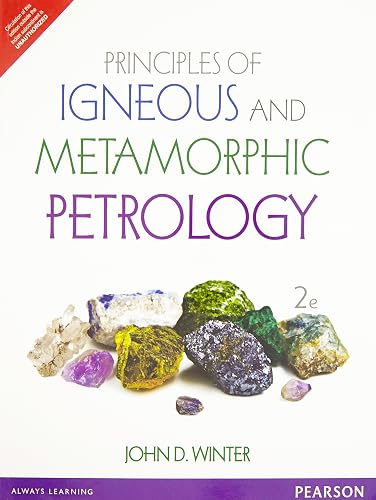
Principles of Igneous and Metamorphic Petrology by John D. Winter
Core
We recommend this as your main petrology book. Read phase diagrams, magma generation and differentiation, petrogenesis of igneous suites, and metamorphic grades, facies and ACF and AKF diagrams.
Igneous and Metamorphic Petrology by Myron G. Best
Alternative
Pick this or Winter. It explains textures and petrography clearly and links them to tectonic settings.
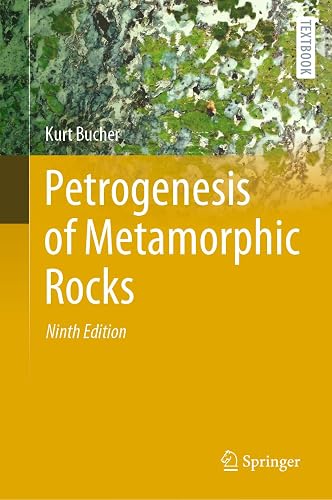
Petrogenesis of Metamorphic Rocks by Kurt Bucher and Rodney Grapes
Reference
Consult this for the metamorphism of pelitic, quartzofeldspathic and basic rocks, and for retrograde metamorphism.
Paper II: Sedimentary Petrology – Best Books
Formation of sediments, diagenesis, clastic and non-clastic rocks, depositional environments, facies and provenance, sedimentary structures, heavy minerals and sedimentary basins of India.
Sedimentary Rocks by F.J. Pettijohn
Core
We recommend this classic for sedimentary petrology. Read classification and petrography of clastic and non-clastic rocks, sedimentary structures and heavy minerals.
Principles of Sedimentology and Stratigraphy by Sam Boggs Jr.
Alternative
Pick this for depositional environments, facies and basin analysis. It is more up to date than Pettijohn.
Sedimentology and Stratigraphy by Gary Nichols
Reference
Consult this for concise, well-illustrated chapters on depositional environments.
Paper II: Economic Geology – Best Books
Ores and ore genesis, classification of deposits, controls of localisation, metallogenic epochs and provinces, Indian metallic and industrial minerals, coal and petroleum, mineral policy and marine resources.
Economic Geology: Economic Mineral Deposits by Umeshwar Prasad
Core
We recommend this as your main economic geology book. Read ore genesis, classification of deposits and the chapters on Indian deposits of each mineral.
Ore Deposits of India: Their Distribution and Processing by K.V.G.K. Gokhale and T.C. Rao
Core
Use this for the distribution, geology and processing of Indian ore deposits, which UPSC asks every year.
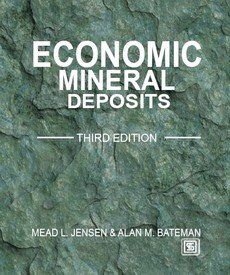
Economic Mineral Deposits by Mead L. Jensen and Alan M. Bateman
Reference
Consult this classic for ore-forming processes and ore textures and structures when you need more depth.
Indian Minerals Yearbook by Indian Bureau of Mines
Website
Use the mineral-wise reviews for current reserves, production and major deposits. This keeps your Indian data up to date.
Paper II: Mining Geology – Best Books
Geological, geophysical, geochemical and geobotanical prospecting, sampling, ore reserve estimation, mining methods and mineral beneficiation.
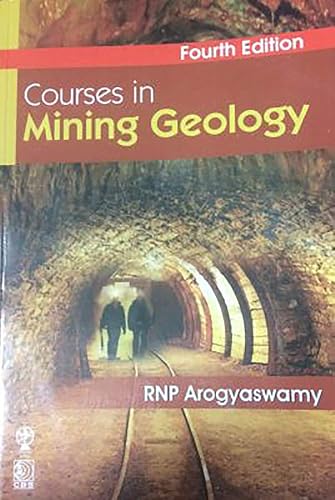
Courses in Mining Geology by R.N.P. Arogyaswamy
Core
We recommend this as your main mining geology book. It covers prospecting methods, sampling, ore reserve estimation and mining methods.
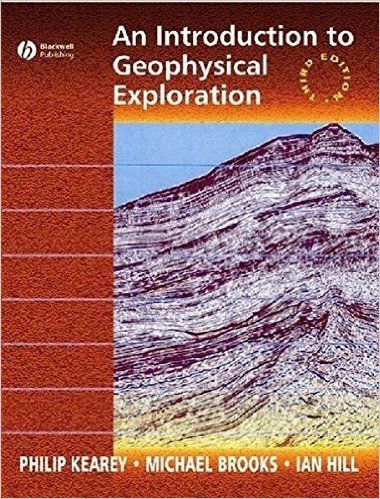
An Introduction to Geophysical Exploration by Philip Kearey, Michael Brooks and Ian Hill
Reference
Consult this for the principles of gravity, magnetic, electrical and seismic prospecting.
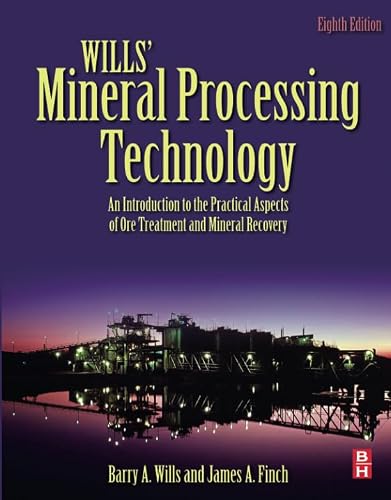
Wills’ Mineral Processing Technology by Barry A. Wills and James A. Finch
Reference
Consult the chapters on comminution, gravity separation and flotation for mineral beneficiation and ore dressing.
Paper II: Geochemistry and Environmental Geology – Best Books
Cosmic abundance of elements, composition of the Earth, trace elements, crystal chemistry, elementary thermodynamics; natural hazards, environmental impact of mining and industry, pollution, legislation and sea-level change.
Principles of Geochemistry by Brian Mason and Carleton B. Moore
Core
We recommend this for the geochemistry part. Read cosmic abundance, composition of the Earth and meteorites, distribution of elements, crystal chemistry and isomorphism.
Environmental Geology: Ecology, Resource and Hazard Management by K.S. Valdiya
Core
Use this for environmental geology with Indian examples. Read natural hazards, impacts of mining, urbanisation and industry, and pollution of land and water.
Environmental Geology by Edward A. Keller
Reference
Consult this for waste disposal, radioactive waste and sea-level change, with clear diagrams.
Geological Survey of India by Geological Survey of India
Website
Follow this for publications, geological maps and reports on Indian geology, hazards and mineral exploration. Use its examples to strengthen Indian content in both papers.
How to use this Geology Optional booklist
- Start with general geology, mineralogy and petrology, since stratigraphy, economic geology and structural questions depend on them.
- Practise diagrams daily: crystal forms, folds and faults, phase diagrams, stratigraphic columns, ore deposit sketches and maps of Indian deposits.
- Keep a separate notebook for Indian stratigraphy and Indian mineral deposits, with locations, ages and examples you can quote.
- Use previous year papers to decide depth; read only the syllabus-linked chapters of the reference books.
- Update Indian mineral data from the Indian Minerals Yearbook and hazard examples from GSI before the exam.
- In the last two months, write timed answers with labelled diagrams and a short Indian example in each.
Some books you find useful may not be on this list. Use them if they fall within the syllabus and help you answer previous year questions – that is the only test that matters. If you spot an outdated edition or a broken link, tell us on the Report an Error page.
FAQs
Which are the best books for Geology Optional?
Our core picks, section by section – General Geology: A Textbook of Geology (P.K. Mukherjee); Geomorphology and Remote Sensing: Principles of Geomorphology (William D. Thornbury), Remote Sensing and GIS (Basudeb Bhatta); Structural Geology: Structural Geology (Marland P. Billings); Palaeontology: Palaeontology: Evolution and Animal Distribution (P.C. Jain and M.S. Anantharaman); Indian Stratigraphy: Fundamentals of Historical Geology and Stratigraphy of India (Ravindra Kumar); Hydrogeology and Engineering Geology: Groundwater Hydrology (David Keith Todd and Larry W. Mays), A Textbook of Engineering and General Geology (Parbin Singh); Mineralogy: Rutley’s Elements of Mineralogy (H.H. Read); Igneous and Metamorphic Petrology: Principles of Igneous and Metamorphic Petrology (John D. Winter); Sedimentary Petrology: Sedimentary Rocks (F.J. Pettijohn); Economic Geology: Economic Geology: Economic Mineral Deposits (Umeshwar Prasad), Ore Deposits of India: Their Distribution and Processing (K.V.G.K. Gokhale and T.C. Rao); Mining Geology: Courses in Mining Geology (R.N.P. Arogyaswamy); Geochemistry and Environmental Geology: Principles of Geochemistry (Brian Mason and Carleton B. Moore), Environmental Geology: Ecology, Resource and Hazard Management (K.S. Valdiya). Each book above is tagged Core, Alternative, Reference, Beginner or Website, so you know what to read first.
Which book should I start Geology Optional with?
Begin with the Core book for the first section – A Textbook of Geology by P.K. Mukherjee – and read it alongside the syllabus and previous year questions for that unit.
Do I need to read every book on this list?
No. Read the Core books fully, choose only one book wherever we list an Alternative, and use Reference books only for specific topics. Keep your sources few and revise them several times.
Where can I find Geology Optional previous year questions?
All Geology Optional PYQs are on our topic-wise PYQs page, and full papers are on the year-wise question papers page. The syllabus page breaks each unit into numbered topics.
Last updated: 2 November 2026