
This is our topic-wise booklist for Physics Optional, arranged by the official UPSC syllabus for Paper I and Paper II. We have chosen the standard B.Sc. and M.Sc. level textbooks that toppers use most often, and marked each one so you know what to read fully and what to consult for specific topics. Physics Optional asks both derivations and numericals, so read for concepts and practise problems from the same books.
Use this booklist together with the Physics Optional syllabus, the topic-wise PYQs and the year-wise question papers. The previous year questions show you which chapters of these books UPSC actually asks from.
Jump to: Paper I: Classical Mechanics and Relativity · Paper I: Waves and Optics · Paper I: Electricity and Magnetism · Paper I: Electromagnetic Waves and Blackbody Radiation · Paper I: Thermal and Statistical Physics · Paper II: Quantum Mechanics · Paper II: Atomic and Molecular Physics · Paper II: Nuclear and Particle Physics · Paper II: Solid State Physics, Devices and Electronics
Some links on this page are Amazon affiliate links. If you buy through them, we may earn a small commission at no extra cost to you.
Paper I: Classical Mechanics and Relativity – Best Books
Mechanics of particles, central forces, scattering, rigid body dynamics, Lagrangian and Hamiltonian formalism, mechanics of continuous media, and special relativity.
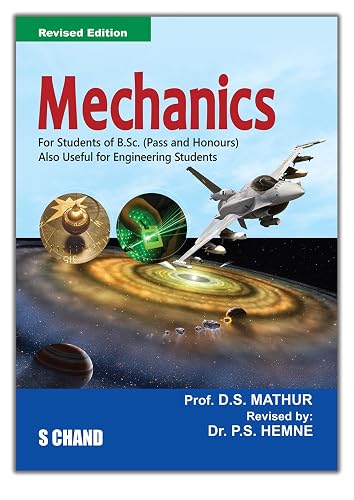
Mechanics by D.S. Mathur (revised by P.S. Hemne)
Core
We recommend this as the base book for Paper I mechanics. Read conservation laws, central forces and Kepler’s laws, rigid body motion, elasticity and fluid flow, and solve its worked examples for numericals.
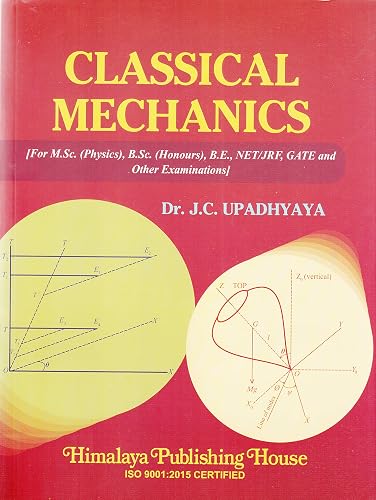
Classical Mechanics by J.C. Upadhyaya
Core
Use this for the advanced part of the section: Lagrangian and Hamiltonian formalism, Rutherford scattering, the centre-of-mass and laboratory frames, and rigid body motion including Euler’s equations.
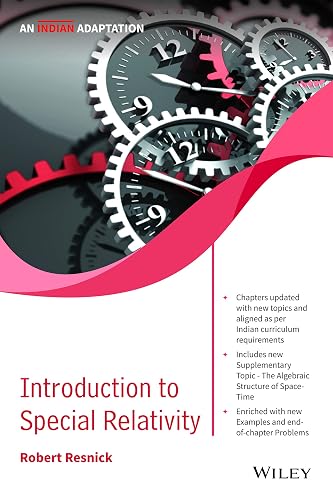
Introduction to Special Relativity by Robert Resnick
Core
A short, clear book for the relativity part. Read Lorentz transformations, length contraction, time dilation, velocity addition, mass–energy relation and four-vectors.
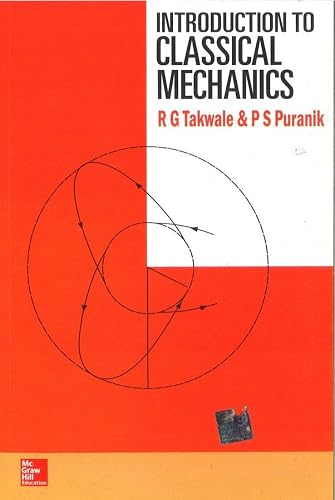
Introduction to Classical Mechanics by R.G. Takwale and P.S. Puranik
Alternative
Pick this instead of J.C. Upadhyaya if you want a more detailed textbook with clear derivations on Lagrangian and Hamiltonian mechanics.
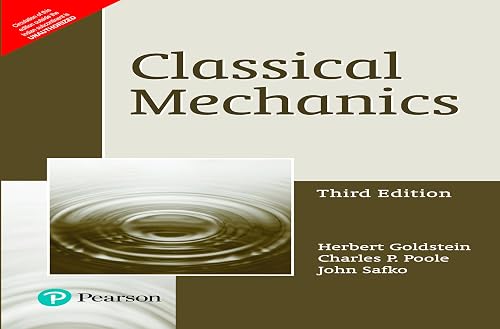
Classical Mechanics by Herbert Goldstein, Charles Poole and John Safko
Reference
Consult Goldstein only for deeper understanding of variational principles, rigid body motion and scattering. It is beyond the level of the exam for first reading.
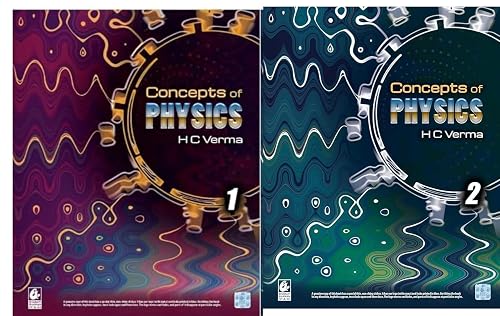
Concepts of Physics, Part 1 by H.C. Verma
Beginner
If your physics is rusty, revise the mechanics chapters here first to rebuild concepts and problem-solving speed before moving to D.S. Mathur.

Preparing for Prelims too?
Our UPSC Prelims Topic-wise PYQ Book covers every Prelims question with detailed explanations, so you can see exactly where UPSC asks from. Now available as a hard copy and an eBook.
Buy Hard Copy on AmazonBuy eBook (PDF)Paper I: Waves and Optics – Best Books
Simple harmonic motion, waves, geometrical optics, interference, diffraction, polarisation, holography, lasers and fibre optics.
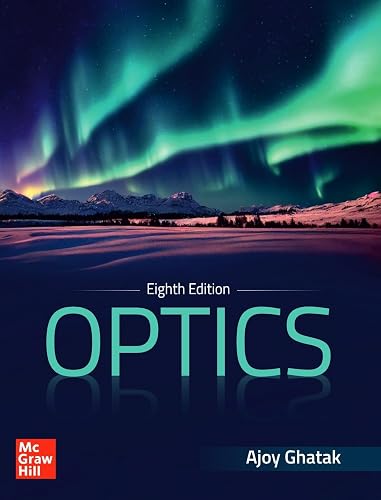
Optics by Ajoy Ghatak
Core
We recommend this as the main book for optics. Read the chapters on interference, Michelson and Fabry–Perot interferometers, Fraunhofer and Fresnel diffraction, gratings, polarisation, holography, lasers and optical fibres.
The Physics of Waves and Oscillations by N.K. Bajaj
Core
Read this for the waves part: damped and forced oscillations, superposition, beats, phase and group velocity, and the wave equation.
A Textbook of Optics by N. Subrahmanyam, Brij Lal and M.N. Avadhanulu
Alternative
Use this instead of Ghatak if you prefer an exam-oriented book with simpler language and many solved numericals, especially in geometrical optics and interference.
Fundamentals of Optics by Francis A. Jenkins and Harvey E. White
Reference
Consult this classic for detailed explanations of thick lenses, aberrations and diffraction patterns when you need more depth.
Paper I: Electricity and Magnetism – Best Books
Electrostatics, magnetostatics, Laplace and Poisson equations, dielectrics, magnetic materials, and current electricity including AC circuits.
Introduction to Electrodynamics by David J. Griffiths
Core
We recommend Griffiths as the core book for this section. Read electrostatics, special techniques (Laplace’s equation, method of images), fields in matter, magnetostatics and electrodynamics, and solve the in-chapter problems.
Electricity and Magnetism by D.C. Tayal
Alternative
Use this if you want an Indian textbook with many solved numericals. It is especially useful for AC circuits, transients and magnetic properties of matter.
Electromagnetic Theory and Electrodynamics by Satya Prakash
Reference
Consult this for extra worked problems on boundary value problems and fields in matter in the style of UPSC numericals.
Electricity and Magnetism (Berkeley Physics Course, Vol. 2) by Edward M. Purcell and David J. Morin
Reference
Consult Purcell for physical intuition on fields, potentials and magnetic materials when a concept feels abstract in Griffiths.
Paper I: Electromagnetic Waves and Blackbody Radiation – Best Books
Maxwell’s equations, electromagnetic waves in free space and media, Poynting vector, reflection and refraction, dispersion, and blackbody radiation and Planck’s law.
Introduction to Electrodynamics by David J. Griffiths
Core
Read the chapters on Maxwell’s equations, conservation laws and electromagnetic waves. They cover the Poynting vector, waves in dielectrics and conductors, and reflection at boundaries.
Thermal Physics: Kinetic Theory, Thermodynamics and Statistical Mechanics by S.C. Garg, R.M. Bansal and C.K. Ghosh
Core
Use the radiation chapter for blackbody radiation: Kirchhoff’s law, Stefan–Boltzmann law, Wien’s and Rayleigh–Jeans laws and Planck’s radiation law.
Concepts of Modern Physics by Arthur Beiser
Reference
Consult the early chapter on the particle nature of light for a short, clear account of blackbody radiation and Planck’s hypothesis.
Paper I: Thermal and Statistical Physics – Best Books
Laws of thermodynamics, entropy, thermodynamic potentials, Maxwell’s relations, phase transitions, kinetic theory, and Maxwell–Boltzmann, Bose–Einstein and Fermi–Dirac statistics.
Thermal Physics: Kinetic Theory, Thermodynamics and Statistical Mechanics by S.C. Garg, R.M. Bansal and C.K. Ghosh
Core
We recommend this as the core book for the whole section. It covers kinetic theory, the laws of thermodynamics, Maxwell’s relations, the Clausius–Clapeyron equation and all three statistical distributions at the exam level.
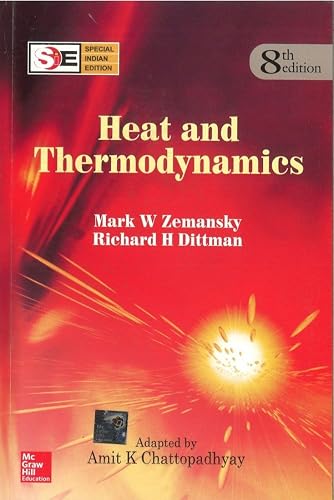
Heat and Thermodynamics by Mark W. Zemansky and Richard H. Dittman
Alternative
Pick this instead of Garg, Bansal and Ghosh for the thermodynamics part if you want fuller explanations of entropy, phase transitions and the third law.
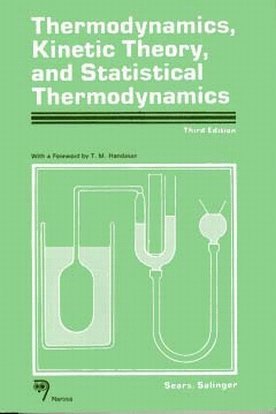
Thermodynamics, Kinetic Theory and Statistical Thermodynamics by Francis W. Sears and Gerhard L. Salinger
Reference
Consult this for the statistical physics part, especially the derivation of the distribution functions and their applications to gases and radiation.
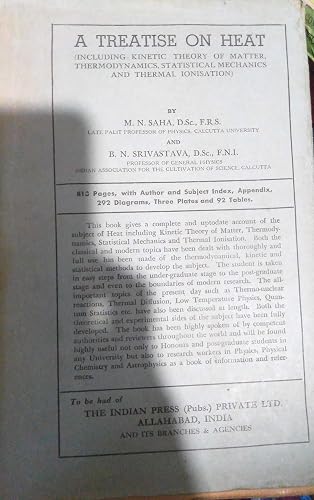
A Treatise on Heat by M.N. Saha and B.N. Srivastava
Reference
A classic Indian reference for specific topics such as the Joule–Kelvin effect, liquefaction of gases and transport phenomena.

Strengthen your GS papers
Our UPSC Mains Topic-wise & Year-wise PYQ Book (2013–2026) maps every GS question to the syllabus, so you know what UPSC asks and how often. Now available as a hard copy and an eBook.
Buy Hard Copy on AmazonBuy eBook (PDF)Paper II: Quantum Mechanics – Best Books
Wave–particle duality, Schrödinger equation, particle in a box, potential steps and barriers, harmonic oscillator, hydrogen atom, angular momentum, spin and Pauli matrices.
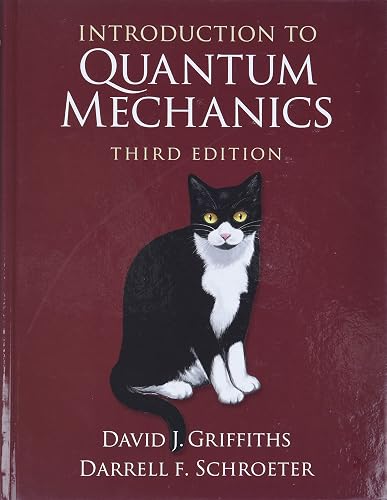
Introduction to Quantum Mechanics by David J. Griffiths and Darrell F. Schroeter
Core
We recommend Griffiths as the core book for Quantum Mechanics. Read the wave function, time-independent Schrödinger equation (box, barrier, harmonic oscillator), the hydrogen atom, angular momentum and spin.
Quantum Physics of Atoms, Molecules, Solids, Nuclei and Particles by Robert Eisberg and Robert Resnick
Alternative
Use this instead of Griffiths if you prefer a more descriptive, physics-first approach. It also helps with Paper II atomic, nuclear and solid state topics.
Quantum Mechanics: Concepts and Applications by Nouredine Zettili
Reference
Consult Zettili mainly for its large set of solved problems on operators, harmonic oscillator, angular momentum and spin.
Quantum Mechanics: Theory and Applications by Ajoy Ghatak and S. Lokanathan
Reference
An Indian reference with careful treatment of the harmonic oscillator, angular momentum and the hydrogen atom. Consult it for specific derivations.
Concepts of Physics, Part 2 by H.C. Verma
Beginner
If modern physics is new to you, revise the chapters on photons, matter waves and the Bohr model before starting Griffiths.
MIT OpenCourseWare 8.04 Quantum Physics I by MIT Department of Physics
Website
Free lectures and notes on the Schrödinger equation, one-dimensional potentials and the harmonic oscillator. Watch selected lectures for concepts you find hard.
Paper II: Atomic and Molecular Physics – Best Books
Stern–Gerlach experiment, fine structure, spin–orbit coupling, LS and JJ coupling, Zeeman, Paschen–Back and Stark effects, X-ray spectra, rotational, vibrational and Raman spectra, NMR, ESR and lasers.
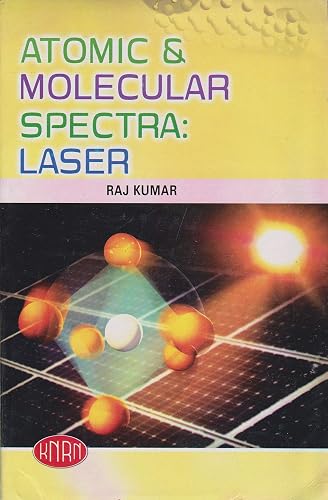
Atomic and Molecular Spectra: Laser by Raj Kumar
Core
We recommend this as the core book for the section. It covers vector atom model, fine structure, Zeeman and Stark effects, X-ray spectra, molecular spectra, Raman effect and lasers at exactly the level UPSC asks.
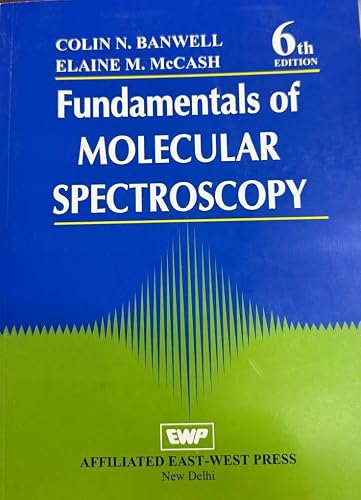
Fundamentals of Molecular Spectroscopy by Colin N. Banwell and Elaine M. McCash
Core
Read this for the molecular part: rotational, vibrational and Raman spectra, electronic spectra and the Franck–Condon principle, and NMR and ESR.
Concepts of Modern Physics by Arthur Beiser
Alternative
Use the atomic structure and many-electron atom chapters for a simpler first account of spin, the exclusion principle and atomic spectra.
Atomic Physics by J.B. Rajam
Reference
Consult this for experimental details, such as the Stern–Gerlach experiment and X-ray spectra, that other books treat briefly.
Paper II: Nuclear and Particle Physics – Best Books
Nuclear properties and models, nuclear forces, radioactivity, alpha, beta and gamma decay, nuclear reactions, fission and fusion, elementary particles, quarks and conservation laws.
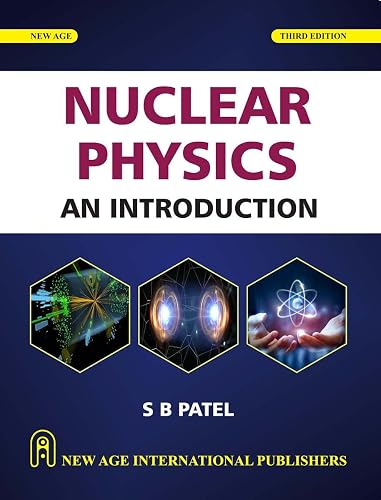
Nuclear Physics: An Introduction by S.B. Patel
Core
We recommend this as the main book for nuclear physics. Read nuclear properties, the liquid drop and shell models, nuclear forces, decay processes, reactions, fission and fusion.
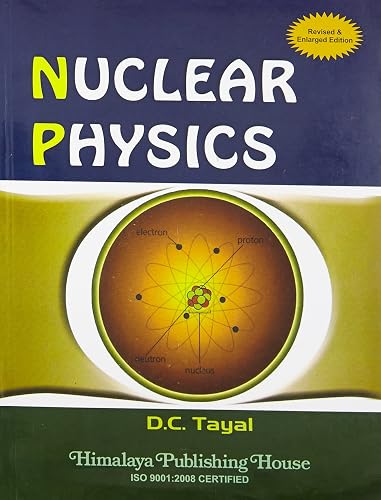
Nuclear Physics by D.C. Tayal
Alternative
Use this instead of Patel, or read selected chapters based on previous year questions. It is good for particle physics, accelerators and detectors.
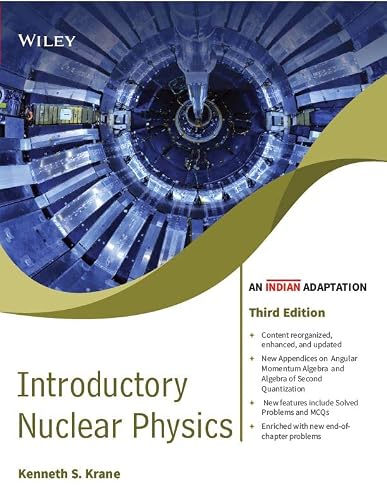
Introductory Nuclear Physics by Kenneth S. Krane
Reference
Consult Krane for a deeper treatment of beta decay, gamma decay and nuclear forces when a derivation needs more support.
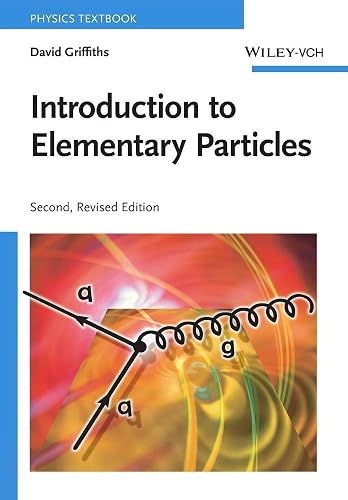
Introduction to Elementary Particles by David J. Griffiths
Reference
Consult the opening chapters for the classification of particles, the quark model and conservation laws. Skip the field-theory parts.
Paper II: Solid State Physics, Devices and Electronics – Best Books
Crystal structure, X-ray diffraction, band theory, semiconductors, superconductivity, magnetism, semiconductor devices, amplifiers, oscillators, op-amps and digital electronics.
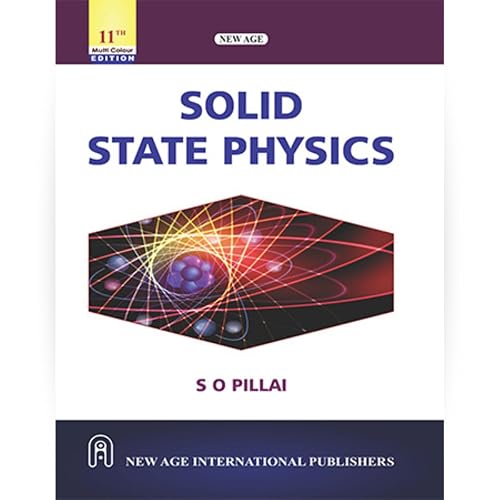
Solid State Physics by S.O. Pillai
Core
We recommend this as the core solid state book. Read crystal structure, X-ray diffraction, lattice vibrations, free electron and band theory, semiconductors, magnetism and superconductivity.
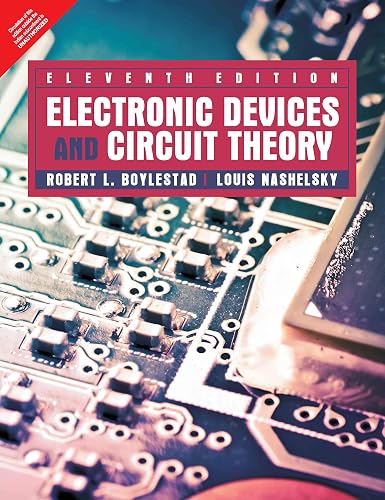
Electronic Devices and Circuit Theory by Robert L. Boylestad and Louis Nashelsky
Core
Use this for the devices and electronics part: diodes, BJTs, FETs, amplifiers, feedback, oscillators and operational amplifiers.
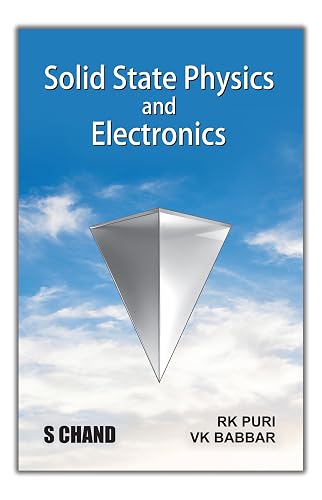
Solid State Physics and Electronics by R.K. Puri and V.K. Babbar
Alternative
Pick this instead of Pillai if you prefer a compact Indian textbook. It covers both solid state physics and basic electronics, so it suits students short of time.
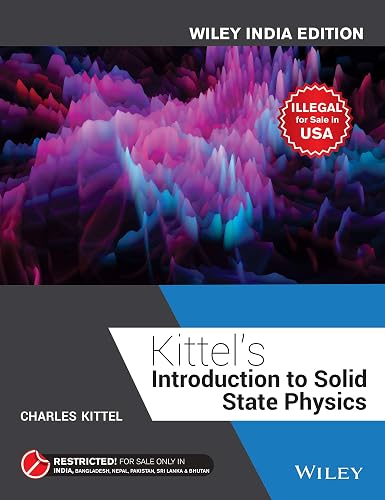
Introduction to Solid State Physics by Charles Kittel
Reference
Consult Kittel for authoritative explanations of the reciprocal lattice, phonons and superconductivity.
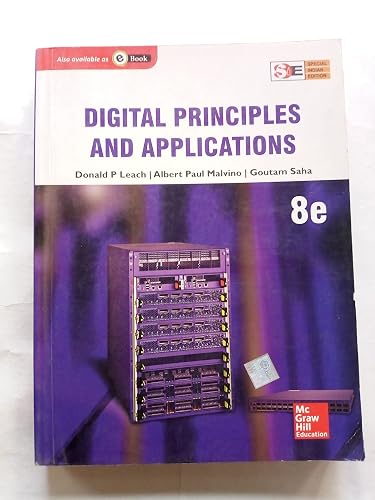
Digital Principles and Applications by Donald P. Leach, Albert Paul Malvino and Goutam Saha
Reference
Consult this for the digital electronics topics: logic gates, Boolean algebra, flip-flops and counters.
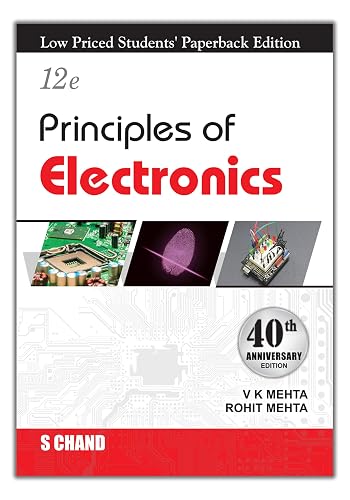
Principles of Electronics by V.K. Mehta and Rohit Mehta
Beginner
If electronics is new to you, read the chapters on semiconductors, diodes, transistors and amplifiers here first.
How to use this Physics Optional booklist
- Start with Paper I mechanics, thermal physics and electricity, which most graduates know best, then move to the Paper II modern physics topics.
- For every derivation in the syllabus, write it out by hand once and revise it from your own notes; UPSC repeats standard derivations often.
- Practise numericals from the core books and from previous year papers; most sections carry 10- and 15-mark numerical parts.
- Draw neat labelled diagrams for optics experiments, band diagrams and electronic circuits, since they earn marks quickly.
- Use one core book per section; open the reference books only for a specific topic you find thin in the core book.
- Solve UPSC previous year questions section by section after each topic, and again as timed full papers before Mains.
Some books you find useful may not be on this list. Use them if they fall within the syllabus and help you answer previous year questions – that is the only test that matters. If you spot an outdated edition or a broken link, tell us on the Report an Error page.
FAQs
Which are the best books for Physics Optional?
Our core picks, section by section – Classical Mechanics and Relativity: Mechanics (D.S. Mathur (revised by P.S. Hemne)), Classical Mechanics (J.C. Upadhyaya), Introduction to Special Relativity (Robert Resnick); Waves and Optics: Optics (Ajoy Ghatak), The Physics of Waves and Oscillations (N.K. Bajaj); Electricity and Magnetism: Introduction to Electrodynamics (David J. Griffiths); Electromagnetic Waves and Blackbody Radiation: Introduction to Electrodynamics (David J. Griffiths), Thermal Physics: Kinetic Theory, Thermodynamics and Statistical Mechanics (S.C. Garg, R.M. Bansal and C.K. Ghosh); Thermal and Statistical Physics: Thermal Physics: Kinetic Theory, Thermodynamics and Statistical Mechanics (S.C. Garg, R.M. Bansal and C.K. Ghosh); Quantum Mechanics: Introduction to Quantum Mechanics (David J. Griffiths and Darrell F. Schroeter); Atomic and Molecular Physics: Atomic and Molecular Spectra: Laser (Raj Kumar), Fundamentals of Molecular Spectroscopy (Colin N. Banwell and Elaine M. McCash); Nuclear and Particle Physics: Nuclear Physics: An Introduction (S.B. Patel); Solid State Physics, Devices and Electronics: Solid State Physics (S.O. Pillai), Electronic Devices and Circuit Theory (Robert L. Boylestad and Louis Nashelsky). Each book above is tagged Core, Alternative, Reference, Beginner or Website, so you know what to read first.
Which book should I start Physics Optional with?
If you are new to the subject, begin with Concepts of Physics, Part 1 (H.C. Verma), Concepts of Physics, Part 2 (H.C. Verma), Principles of Electronics (V.K. Mehta and Rohit Mehta), and then move to the Core books for each section.
Do I need to read every book on this list?
No. Read the Core books fully, choose only one book wherever we list an Alternative, and use Reference books only for specific topics. Keep your sources few and revise them several times.
Where can I find Physics Optional previous year questions?
All Physics Optional PYQs are on our topic-wise PYQs page, and full papers are on the year-wise question papers page. The syllabus page breaks each unit into numbered topics.
Last updated: 2 November 2026