
This is our topic-wise booklist for Mathematics Optional, arranged by the official UPSC syllabus for Paper I and Paper II. We have kept to the standard textbooks that toppers use again and again, and marked each one so you know what to read fully and what to consult only for specific topics. Mathematics rewards practice more than reading, so pair every book here with the previous year questions of that topic.
Use this booklist together with the Mathematics Optional syllabus, the topic-wise PYQs and the year-wise question papers. The previous year questions show you which chapters of these books UPSC actually asks from.
Jump to: Paper I: Linear Algebra · Paper I: Calculus · Paper I: Analytic Geometry · Paper I: Ordinary Differential Equations · Paper I: Dynamics and Statics · Paper I: Vector Analysis · Paper II: Algebra · Paper II: Real Analysis · Paper II: Complex Analysis · Paper II: Linear Programming · Paper II: Partial Differential Equations · Paper II: Numerical Analysis and Computer Programming · Paper II: Mechanics and Fluid Dynamics
Some links on this page are Amazon affiliate links. If you buy through them, we may earn a small commission at no extra cost to you.
Paper I: Linear Algebra – Best Books
Vector spaces, linear transformations, matrices, rank, systems of equations, eigenvalues, Cayley–Hamilton theorem, and symmetric, Hermitian and unitary matrices.
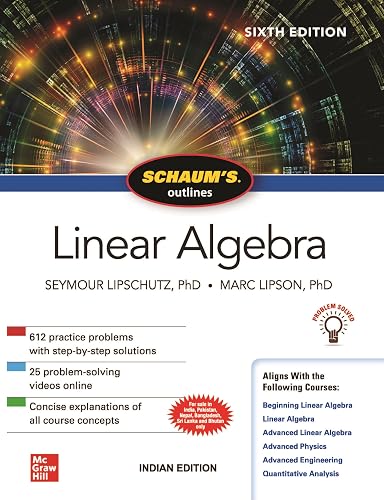
Schaum’s Outline of Linear Algebra by Seymour Lipschutz and Marc Lipson
Core
We recommend this as your main book for Linear Algebra. It explains vector spaces, linear maps, eigenvalues and canonical forms briefly and then gives a large set of solved problems, which suits UPSC’s 10- and 15-mark questions.
Matrices (Krishna Series) by A.R. Vasishtha and A.K. Vasishtha
Alternative
Use this if you want more worked examples on the matrix part of the syllabus. It is exam-oriented, with many solved problems on rank, normal forms, inverses, eigenvalues and special matrices.
Linear Algebra by Kenneth Hoffman and Ray Kunze
Reference
Consult this only when you need a rigorous proof or a deeper look at linear transformations and canonical forms. It is too theoretical to read cover to cover for the exam.
MIT OpenCourseWare 18.06 Linear Algebra (Gilbert Strang) by Gilbert Strang (MIT)
Website
Free video lectures that build intuition for vector spaces, rank and eigenvalues. Watch selected lectures if a concept does not click from the book.

Preparing for Prelims too?
Our UPSC Prelims Topic-wise PYQ Book covers every Prelims question with detailed explanations, so you can see exactly where UPSC asks from. Now available as a hard copy and an eBook.
Buy Hard Copy on AmazonBuy eBook (PDF)Paper I: Calculus – Best Books
Real numbers, limits, continuity, differentiability, mean value theorems, Taylor’s theorem, functions of several variables, Lagrange multipliers, Riemann integration, improper integrals, and double and triple integrals.
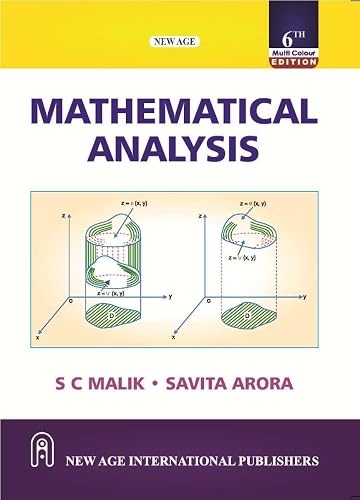
Mathematical Analysis by S.C. Malik and Savita Arora
Core
We recommend this as the core book for Calculus, and you will use it again for Real Analysis in Paper II. Read the chapters on real numbers, limits and continuity, mean value theorems, Taylor’s theorem, functions of several variables and Riemann integration.
Integral Calculus by Shanti Narayan and P.K. Mittal
Core
Use this for the problem-solving side of integration. The chapters on double and triple integrals, change of order, areas, surfaces and volumes match UPSC questions closely.
Differential Calculus by Shanti Narayan and P.K. Mittal
Alternative
Pick this instead of the calculus chapters of Malik and Arora if you prefer a more problem-based book. It is good for maxima and minima, Lagrange’s multipliers, Jacobians, asymptotes and curve tracing.
Paper I: Analytic Geometry – Best Books
Cartesian and polar coordinates in three dimensions, second-degree equations, the plane, straight line, sphere, cone, cylinder, paraboloid, ellipsoid, hyperboloids and their properties.
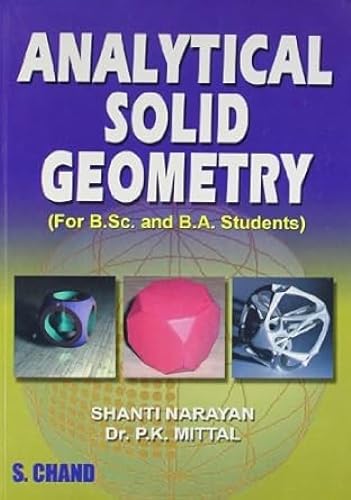
Analytical Solid Geometry by Shanti Narayan and P.K. Mittal
Core
We recommend this as your only main book for three-dimensional geometry. Cover the plane, straight line, sphere, cone, cylinder and central conicoids, including generating lines, and solve all the worked examples.
Solid Geometry by P.N. Chatterjee
Alternative
An exam-oriented book with many solved problems on spheres, cones and conicoids. Use it in place of Shanti Narayan or for extra practice once you have finished it.
NCERT Mathematics Class XII, Part II (Three Dimensional Geometry chapter) by NCERT
Beginner
If three-dimensional geometry is new to you, read this chapter first for direction cosines, lines and planes. It is free on the NCERT website.
Paper I: Ordinary Differential Equations – Best Books
Formulation of differential equations, first-order equations, integrating factors, Clairaut’s equation, higher-order linear equations, variation of parameters, Cauchy–Euler equations and Laplace transforms.
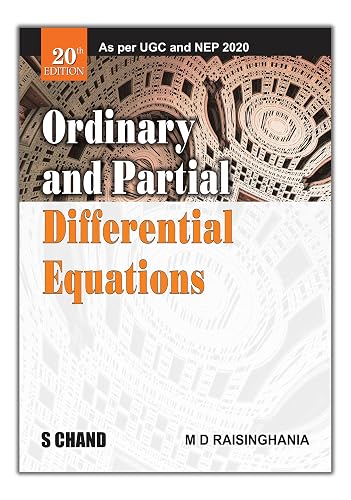
Ordinary and Partial Differential Equations by M.D. Raisinghania
Core
This is the standard book toppers use for ODEs. Work through the chapters on exact equations, integrating factors, Clairaut’s form, singular solutions, linear equations with constant and variable coefficients and variation of parameters.
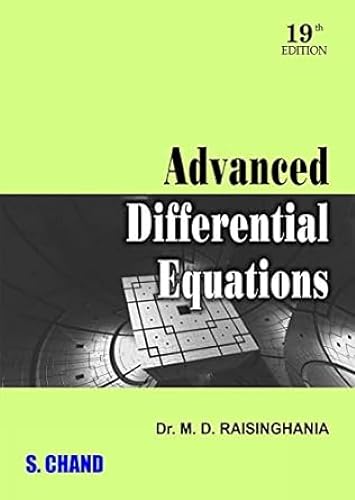
Advanced Differential Equations by M.D. Raisinghania
Core
Read the Laplace transform chapters from this book. They cover transforms of elementary functions, inverse transforms and the solution of initial value problems, which UPSC asks almost every year.
Schaum’s Outline of Laplace Transforms by Murray R. Spiegel
Reference
Consult this for extra solved problems on Laplace transforms and their use in differential equations if you want more practice than Raisinghania gives.
Paper I: Dynamics and Statics – Best Books
Rectilinear motion, simple harmonic motion, motion in a plane, projectiles, constrained motion, work and energy, Kepler’s laws, equilibrium of particles and rigid bodies, friction, virtual work, common catenary and stability.
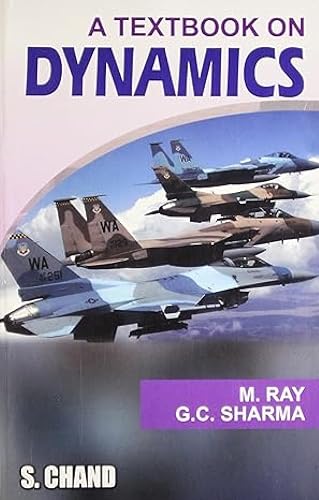
A Textbook on Dynamics by M. Ray and G.C. Sharma
Core
We recommend this for the Dynamics half of the section. Read rectilinear motion, simple harmonic motion, projectiles, motion in resisting media, constrained motion and central orbits including Kepler’s laws.
The Elements of Statics and Dynamics, Part 1: Statics by S.L. Loney
Core
Use this for Statics. Focus on equilibrium of forces, friction, virtual work, the common catenary and stability of equilibrium, and solve the examples at the end of each chapter.
The Elements of Statics and Dynamics, Part 2: Dynamics by S.L. Loney
Alternative
Pick this instead of Ray and Sharma if you prefer Loney’s style. It has a large stock of problems on projectiles, SHM and impulsive motion.
Paper I: Vector Analysis – Best Books
Scalar and vector fields, differentiation of vector fields, gradient, divergence and curl, curves in space, curvature and torsion, Serret–Frenet formulae, and the theorems of Gauss, Green and Stokes.
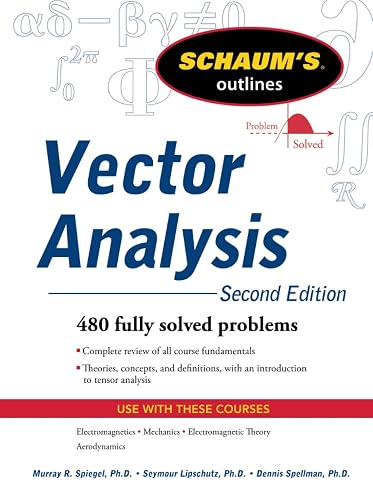
Schaum’s Outline of Vector Analysis by Murray R. Spiegel, Seymour Lipschutz and Dennis Spellman
Core
We recommend this as your main book for Vector Analysis. Its solved problems on gradient, divergence, curl, line and surface integrals and the three integral theorems are close to the UPSC level.
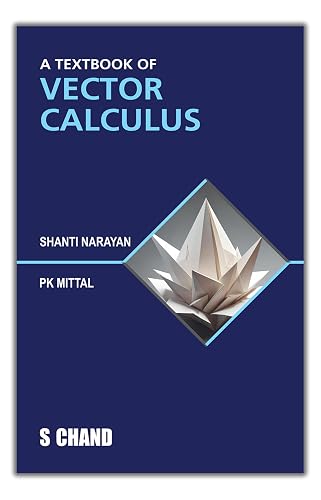
A Textbook of Vector Calculus by Shanti Narayan and P.K. Mittal
Alternative
Use this if you want a fuller textbook treatment, especially for curves in space, curvature, torsion and the Serret–Frenet formulae, which Schaum’s treats briefly.
Paper II: Algebra – Best Books
Groups, subgroups, cyclic groups, cosets, Lagrange’s theorem, normal subgroups, homomorphisms, permutation groups, Cayley’s theorem, rings, ideals, integral domains, PIDs, UFDs, Euclidean domains and fields.
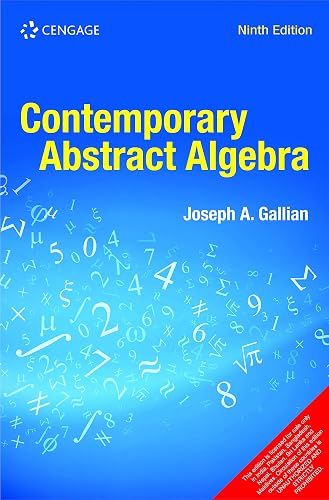
Contemporary Abstract Algebra by Joseph A. Gallian
Core
This is the book most toppers use for Algebra. Read the chapters on groups, subgroups, cyclic and permutation groups, cosets, normal subgroups, homomorphisms, rings, ideals, integral domains and factorisation, and solve a good share of the exercises.
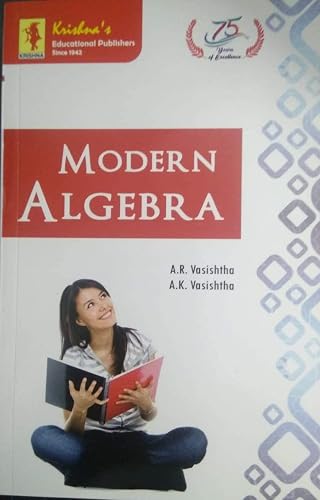
Modern Algebra (Abstract Algebra) (Krishna Series) by A.R. Vasishtha and A.K. Vasishtha
Alternative
An exam-oriented book with many solved examples on groups and rings. Use it instead of Gallian if you find Gallian’s style too wordy, or alongside it for practice.
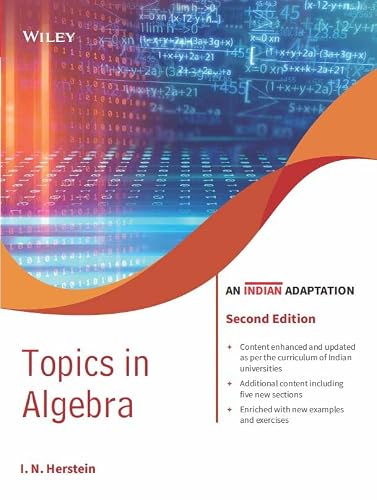
Topics in Algebra by I.N. Herstein
Reference
Consult this for cleaner proofs of the main theorems on groups and rings, and for harder problems. Skip the parts beyond the syllabus.

Strengthen your GS papers
Our UPSC Mains Topic-wise & Year-wise PYQ Book (2013–2026) maps every GS question to the syllabus, so you know what UPSC asks and how often. Now available as a hard copy and an eBook.
Buy Hard Copy on AmazonBuy eBook (PDF)Paper II: Real Analysis – Best Books
Real number system as an ordered field, sequences, series and their convergence, continuity and uniform continuity, Riemann integral, improper integrals, uniform convergence, and functions of several variables.
Mathematical Analysis by S.C. Malik and Savita Arora
Core
We recommend this as the core book for Real Analysis. Focus on sequences and series, tests of convergence, uniform continuity, uniform convergence of sequences and series of functions, the Riemann integral and improper integrals.
Elements of Real Analysis by Shanti Narayan and M.D. Raisinghania
Alternative
Use this instead of Malik and Arora if you want a more problem-based book with many solved examples. It suits short questions on sequences, series and uniform convergence.
Principles of Mathematical Analysis by Walter Rudin
Reference
Consult Rudin only for precise definitions and proofs. It is concise and demanding, so it is not meant for first reading.
Paper II: Complex Analysis – Best Books
Analytic functions, Cauchy–Riemann equations, Cauchy’s theorem and integral formula, power series, Taylor’s and Laurent’s series, singularities, residues and contour integration.
Schaum’s Outline of Complex Variables by Murray R. Spiegel, Seymour Lipschutz, John J. Schiller and Dennis Spellman
Core
We recommend this as your main book for Complex Analysis. Its solved problems on analytic functions, Cauchy’s integral formula, Laurent series and contour integration by residues match the exam pattern.
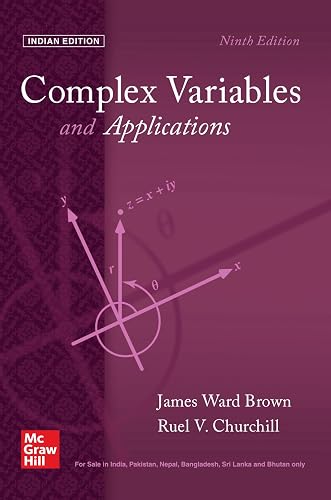
Complex Variables and Applications by James Ward Brown and Ruel V. Churchill
Alternative
Pick this if you prefer a full textbook over an outline. It is clear on theory and has good sections on residues and evaluation of real integrals.
Paper II: Linear Programming – Best Books
Formulation of linear programming problems, graphical and simplex methods, duality, and transportation and assignment problems.
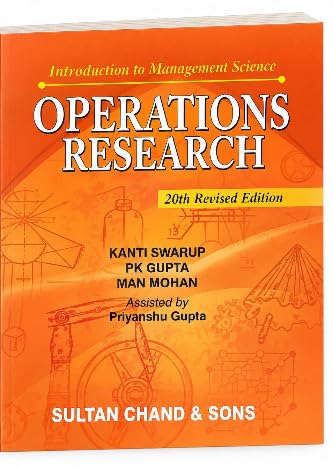
Operations Research by Kanti Swarup, P.K. Gupta and Man Mohan
Core
We recommend this for the whole LPP section. Read formulation, the graphical method, simplex and Big-M methods, duality, and the transportation and assignment chapters, and practise their numerical examples.
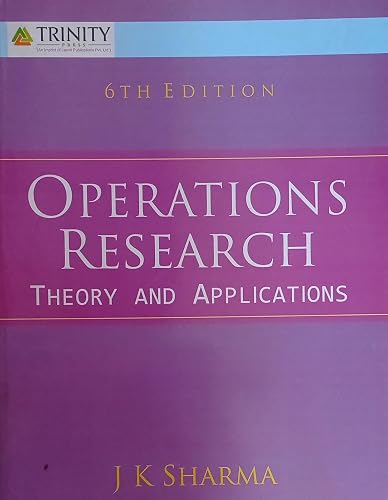
Operations Research: Theory and Applications by J.K. Sharma
Alternative
Some toppers find this clearer than Kanti Swarup for simplex and duality. Use it in place of Kanti Swarup, not alongside it.
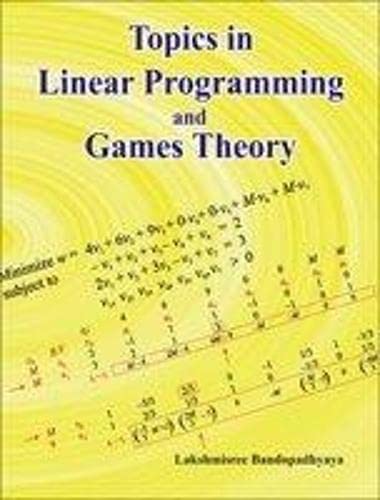
Topics in Linear Programming and Games Theory by Lakshmisree Bandopadhyay
Reference
Consult this for the theoretical side of LPP, such as convex sets and theorems on basic feasible solutions, which UPSC sometimes asks as proofs.
Paper II: Partial Differential Equations – Best Books
Formation of PDEs, first-order linear and non-linear equations, Charpit’s method, second-order linear equations with constant coefficients, canonical forms, and the wave and heat equations.
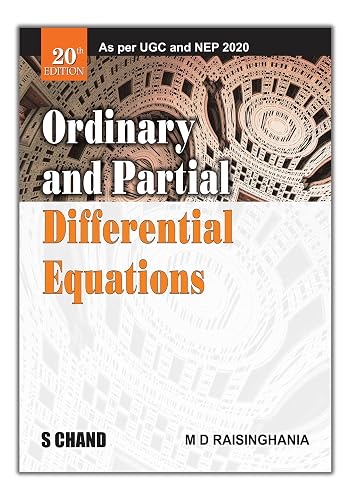
Ordinary and Partial Differential Equations by M.D. Raisinghania
Core
Use the PDE part of this book for formation of PDEs, Lagrange’s method, Charpit’s method, linear equations with constant coefficients and the classification of second-order equations into canonical forms.
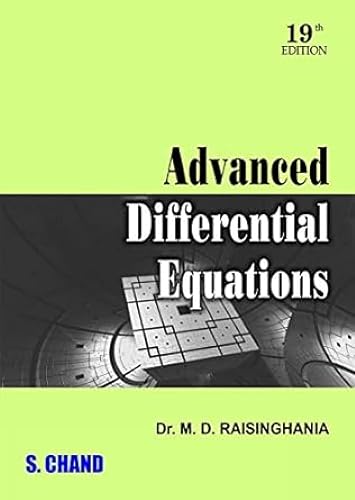
Advanced Differential Equations by M.D. Raisinghania
Core
Read the boundary value problem chapters for the vibrating string and heat equation, solved by separation of variables and Fourier series.
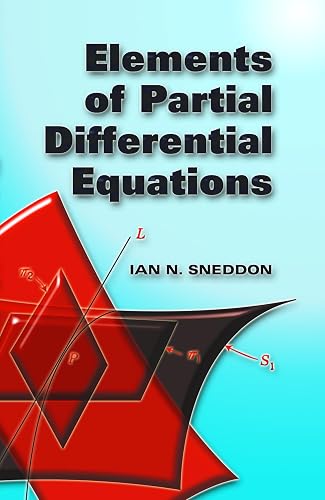
Elements of Partial Differential Equations by Ian N. Sneddon
Reference
Consult Sneddon for a rigorous view of first-order equations, characteristics and the classification of second-order equations.
Paper II: Numerical Analysis and Computer Programming – Best Books
Solution of algebraic and transcendental equations, interpolation, numerical integration, numerical solution of ODEs, number systems, Boolean algebra, logic gates, and algorithms and flowcharts.
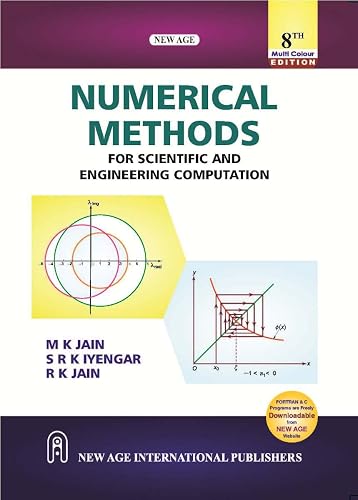
Numerical Methods for Scientific and Engineering Computation by M.K. Jain, S.R.K. Iyengar and R.K. Jain
Core
We recommend this for the numerical analysis part. Read bisection, regula falsi and Newton–Raphson methods, Gauss elimination and Gauss–Seidel, Lagrange and Newton interpolation, trapezoidal and Simpson’s rules, Gaussian quadrature and Runge–Kutta methods.
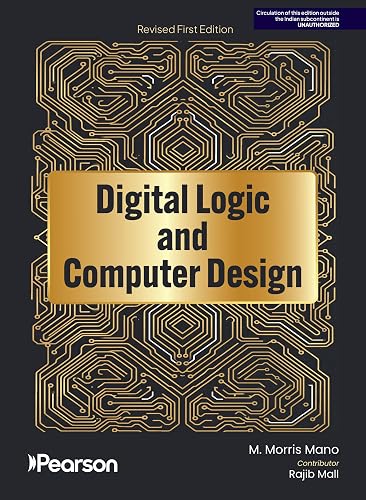
Digital Logic and Computer Design by M. Morris Mano
Core
Use the early chapters for the programming part: binary, octal and hexadecimal systems, Boolean algebra, logic gates and simplification of Boolean expressions.
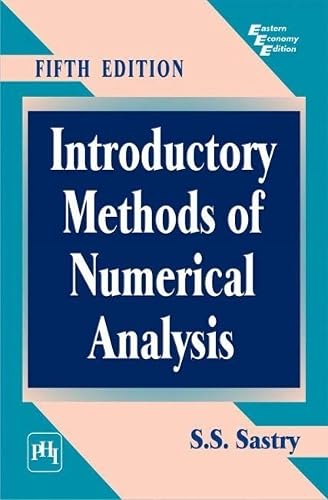
Introductory Methods of Numerical Analysis by S.S. Sastry
Alternative
Pick this instead of Jain and Iyengar if you want a simpler book with worked examples on each numerical method.
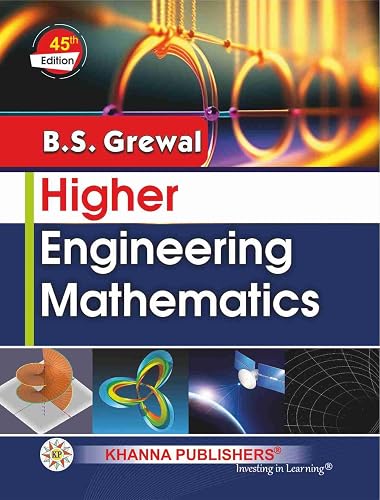
Higher Engineering Mathematics by B.S. Grewal
Reference
Consult Grewal’s numerical methods chapters for quick revision of formulae and short worked problems.
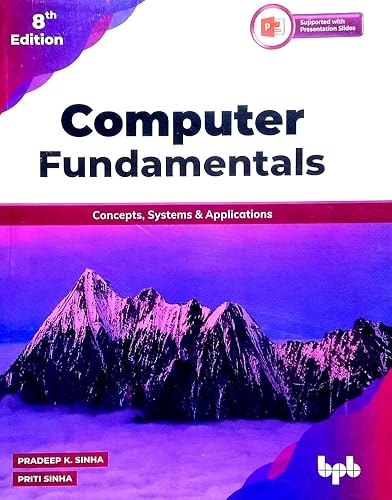
Computer Fundamentals by Pradeep K. Sinha and Priti Sinha
Beginner
If you have no computer science background, read the chapters on number systems, computer codes, Boolean algebra and planning a program with algorithms and flowcharts.
Paper II: Mechanics and Fluid Dynamics – Best Books
Generalised coordinates, D’Alembert’s principle, Lagrange’s and Hamilton’s equations, moment of inertia, motion of rigid bodies, equation of continuity, Euler’s equation of motion, sources and sinks, vortex motion and Navier–Stokes equation.
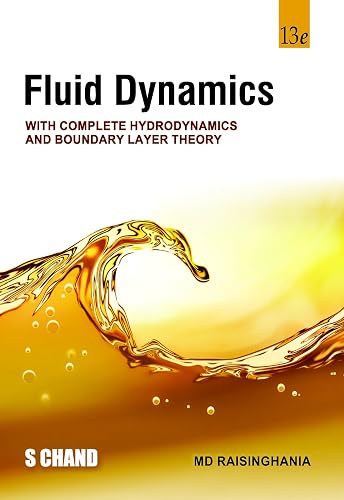
Fluid Dynamics by M.D. Raisinghania
Core
We recommend this as the main book for Fluid Dynamics. Cover the equation of continuity, Euler’s equation, Bernoulli’s theorem, sources, sinks and doublets, the circle theorem, vortex motion and the Navier–Stokes equation.
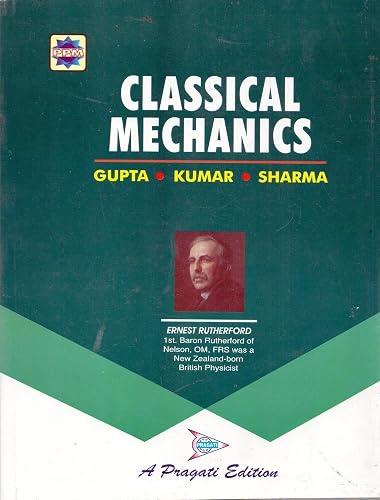
Classical Mechanics by S.L. Gupta, V. Kumar and H.V. Sharma
Core
Use this for the Mechanics half. Read generalised coordinates, D’Alembert’s principle, Lagrange’s equations, Hamilton’s equations and the motion of rigid bodies in two dimensions.
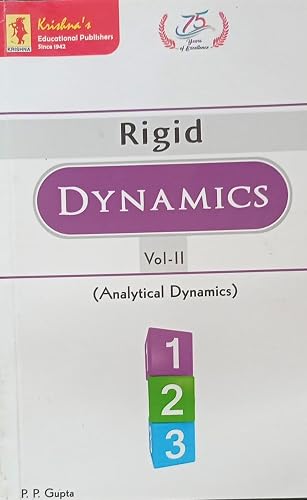
Rigid Dynamics (Krishna Series) by P.P. Gupta
Alternative
Many toppers use this for moment of inertia, D’Alembert’s principle and motion of a rigid body. Cross-check its worked answers, as some readers report printing errors.
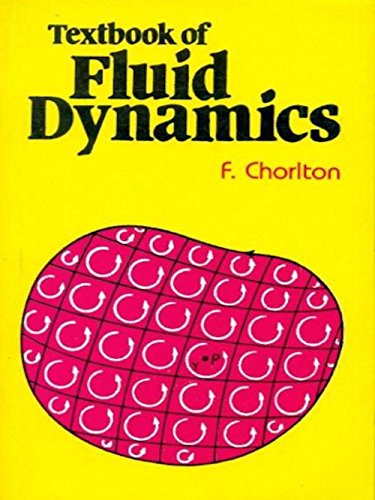
Textbook of Fluid Dynamics by Frank Chorlton
Reference
Consult Chorlton for a fuller derivation of Euler’s and Navier–Stokes equations and for harder problems on vortex motion.
How to use this Mathematics Optional booklist
- Finish Paper I topics that build on school and graduation mathematics (Linear Algebra, Calculus, ODE, Vector Analysis) first; they also prepare you for Real Analysis and PDE in Paper II.
- Read one core book per topic fully and solve its worked examples yourself before looking at the solution; use alternatives only if the core book does not suit you.
- Solve UPSC previous year questions topic by topic as soon as you finish each section, and again in timed conditions before Mains.
- Keep a formula sheet for each section, especially Laplace transforms, vector identities, numerical methods and standard results on conicoids.
- For Algebra and Real Analysis, learn the statements and short proofs of standard theorems; long proofs are rarely asked in full.
- Present answers in clear steps, state the theorem or formula you use, and box the final result.
Some books you find useful may not be on this list. Use them if they fall within the syllabus and help you answer previous year questions – that is the only test that matters. If you spot an outdated edition or a broken link, tell us on the Report an Error page.
FAQs
Which are the best books for Mathematics Optional?
Our core picks, section by section – Linear Algebra: Schaum’s Outline of Linear Algebra (Seymour Lipschutz and Marc Lipson); Calculus: Mathematical Analysis (S.C. Malik and Savita Arora), Integral Calculus (Shanti Narayan and P.K. Mittal); Analytic Geometry: Analytical Solid Geometry (Shanti Narayan and P.K. Mittal); Ordinary Differential Equations: Ordinary and Partial Differential Equations (M.D. Raisinghania), Advanced Differential Equations (M.D. Raisinghania); Dynamics and Statics: A Textbook on Dynamics (M. Ray and G.C. Sharma), The Elements of Statics and Dynamics, Part 1: Statics (S.L. Loney); Vector Analysis: Schaum’s Outline of Vector Analysis (Murray R. Spiegel, Seymour Lipschutz and Dennis Spellman); Algebra: Contemporary Abstract Algebra (Joseph A. Gallian); Real Analysis: Mathematical Analysis (S.C. Malik and Savita Arora); Complex Analysis: Schaum’s Outline of Complex Variables (Murray R. Spiegel, Seymour Lipschutz, John J. Schiller and Dennis Spellman); Linear Programming: Operations Research (Kanti Swarup, P.K. Gupta and Man Mohan); Partial Differential Equations: Ordinary and Partial Differential Equations (M.D. Raisinghania), Advanced Differential Equations (M.D. Raisinghania); Numerical Analysis and Computer Programming: Numerical Methods for Scientific and Engineering Computation (M.K. Jain, S.R.K. Iyengar and R.K. Jain), Digital Logic and Computer Design (M. Morris Mano); Mechanics and Fluid Dynamics: Fluid Dynamics (M.D. Raisinghania), Classical Mechanics (S.L. Gupta, V. Kumar and H.V. Sharma). Each book above is tagged Core, Alternative, Reference, Beginner or Website, so you know what to read first.
Which book should I start Mathematics Optional with?
If you are new to the subject, begin with NCERT Mathematics Class XII, Part II (Three Dimensional Geometry chapter) (NCERT), Computer Fundamentals (Pradeep K. Sinha and Priti Sinha), and then move to the Core books for each section.
Do I need to read every book on this list?
No. Read the Core books fully, choose only one book wherever we list an Alternative, and use Reference books only for specific topics. Keep your sources few and revise them several times.
Where can I find Mathematics Optional previous year questions?
All Mathematics Optional PYQs are on our topic-wise PYQs page, and full papers are on the year-wise question papers page. The syllabus page breaks each unit into numbered topics.
Last updated: 2 November 2026