
This is our booklist for Marathi Literature Optional, arranged by the UPSC syllabus: Paper I Section A (Language and Folk-lore), Paper I Section B (History of Literature and Literary Criticism) and the prescribed prose and poetry of Paper II. Paper II requires first-hand reading of the prescribed texts and tests your critical ability, so read the original works before any guide. Both papers must be answered in Marathi. For every book we mark a priority: Prescribed, Core, Alternative, Reference, Beginner or Website.
We list the prescribed texts exactly as the UPSC syllabus names them, with the portion you must read. Paper II tests first-hand reading, so read each text in the original and use guides only alongside it. Where a book is hard to find in print, try the free sources we list, the Sahitya Akademi and university bookshops.
Jump to: Paper I Section A: Language and Folk-lore · Paper I Section B: History of Literature and Literary Criticism · Paper II Section A: Prescribed texts (Prose) · Paper II Section B: Prescribed texts (Poetry)
Some links on this page are Amazon affiliate links. If you buy through them, we may earn a small commission at no extra cost to you.
Paper I Section A: Language and Folk-lore – Best Books
Nature and functions of language with reference to Marathi; Marathi in the 13th and 17th centuries; dialects (Ahirani, Varhadi, Dangi); Marathi grammar (parts of speech, case system, prayog); nature and kinds of folklore (Lok-Geet, Lok Katha, Lok Natya).
Adhunik Bhashavidnyan: Siddhant va Upayojan (आधुनिक भाषाविज्ञान : सिद्धांत व उपयोजन) by Milind Malshe
Core
Our main book for the nature and functions of language. Read the chapters on language as a sign system, langue and parole, the functions of language, poetic language, and standard language and dialect, and add your own Marathi examples.
Varnanatmak Bhashashastra: Swaroop va Paddhati (वर्णनात्मक भाषाशास्त्र : स्वरूप व पद्धती) by Kalyan Kale and Anjali Soman
Alternative
Pick this or Malshe for the linguistics part. It is clear on descriptive method and on sound and word structure, which also helps for the dialect questions.
Marathi Bhasha: Udgam va Vikas (मराठी भाषा : उद्गम व विकास) by Kru. Pa. Kulkarni
Core
The classic history of the Marathi language. Read the chapters on the origin of Marathi and on its forms in the early and medieval periods for the 13th and 17th century features.
Marathiche Aitihasik Bhashashastra (मराठीचे ऐतिहासिक भाषाशास्त्र) by R. R. Gosavi
Reference
Consult it for the historical linguistics of Marathi when you need more detail on the changes between the thirteenth and seventeenth centuries.
Sugam Marathi Vyakaran va Lekhan (सुगम मराठी व्याकरण व लेखन) by Mo. Ra. Walambe
Beginner
Start here for the grammar unit. Revise parts of speech, the case system (vibhakti) and prayog (voice) with its examples.
Shastriya Marathi Vyakaran (शास्त्रीय मराठी व्याकरण) by Moro Keshav Damle
Reference
The classic scholarly grammar of Marathi. Read only the chapters on case and prayog, where a deeper treatment helps in 15 and 20 mark answers.
Marathi Vyakaranacha Punarvichar (मराठी व्याकरणाचा पुनर्विचार) by Arvind Mangrulkar
Reference
A modern rethinking of Marathi grammar. Consult it for the prayog-vichar debate and for a linguistic view of the case system.
Lokasahityachi Ruparekha (लोकसाहित्याची रूपरेषा) by Durga Bhagwat
Core
Our main book for the folklore unit. Read the parts on the nature of folk literature and on folk song and folk tale; take Marathi examples from it for Lok-Geet and Lok Katha.
Lokasahityache Swaroop (लोकसाहित्याचे स्वरूप) by Prabhakar Mande
Alternative
Pick this or Durga Bhagwat as your main folklore book. It is useful on the kinds of folk literature and on Lok Natya forms such as tamasha and dashavatar.

Preparing for Prelims too?
Our UPSC Prelims Topic-wise PYQ Book covers every Prelims question with detailed explanations, so you can see exactly where UPSC asks from. Now available as a hard copy and an eBook.
Buy Hard Copy on AmazonBuy eBook (PDF)Paper I Section B: History of Literature and Literary Criticism – Best Books
Marathi literature from the beginning to 1818 (Mahanubhava, Varkari, Pandit poets, Shahirs, bakhar) and from 1850 to 1990 (poetry, fiction, drama; Romantic, Realist, Modernist, Dalit, Gramin and Feminist currents); nature, function and evaluation of literature; criticism; literature, culture and society.
Prachin Marathi Vangmayacha Itihas (प्राचीन मराठी वाङ्मयाचा इतिहास) by A. N. Deshpande
Core
Our anchor for the history up to 1818. It is published in several parts; read the parts on the Mahanubhava writers, the Varkari poets, the Pandit poets, the Shahirs and the bakhars.
Adhunik Marathi Vangmayacha Itihas (आधुनिक मराठी वाङ्मयाचा इतिहास) by A. N. Deshpande
Core
Use it for the period after 1850: the development of poetry, the novel, the short story and drama. Supplement the post-1960 currents (Dalit, Gramin, Feminist) from the references below.
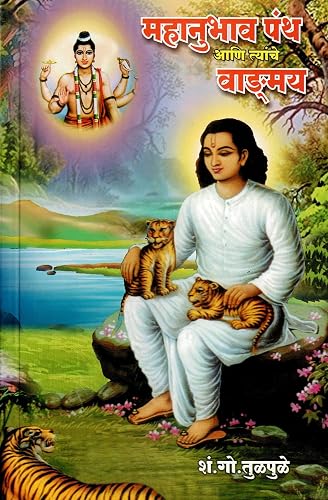
Mahanubhav Panth va tyanche Vangmay (महानुभाव पंथ व त्यांचे वाङ्मय) by S. G. Tulpule
Reference
Consult it for the Mahanubhava writers and their prose, and as background for the prescribed Smritisthal.
Pach Santkavi (पाच संतकवी) by S. G. Tulpule
Reference
A study of five major saint poets. Read it for the Varkari poets, including Namdev, whose Abhangawani is prescribed in Paper II.
Marathi Panditi Kavya (मराठी पंडिती काव्य) by K. N. Watve
Reference
Use it for the Pandit poets and as background for Raghunath Pandit’s Damayanti-Swayamvar.
Marathi Lavani Vangmay (मराठी लावणी वाङ्मय) by G. N. Morje
Reference
Consult it for the Shahirs and the lavani and powada traditions.
Marathi Bakhar (मराठी बखर) by R. V. Herwadkar
Reference
The standard study of bakhar literature. Read the introductory chapters on the nature of the bakhar and its main examples.
Dalit Sahitya: Vedna va Vidroh (दलित साहित्य : वेदना व विद्रोह) by Bhalchandra Phadke
Reference
Use it for the Dalit literary movement, which links Paper I with Bagul, Sonkamble and Dhasal in Paper II.
Bharatiya Sahityashastra (भारतीय साहित्यशास्त्र) by G. T. Deshpande
Core
Our main book for Indian poetics. Read the parts on rasa, dhvani and the nature and purpose of poetry; use them in answers on the nature and function of literature.
Sahityashastra: Swaroop va Samasya (साहित्यशास्त्र : स्वरूप व समस्या) by Vasant Patankar
Core
Our main book for modern literary theory. Read the chapters on the nature of literature, evaluation, the objectives and methods of criticism, and literature and society.
Sahityachi Bhasha (साहित्याची भाषा) by Bhalchandra Nemade
Reference
Consult it for the language of literature and poetic language, which links the criticism unit with Section A.
Paper II Section A: Prescribed texts (Prose)
Smritisthal, Mahatma Phule, S. V. Ketkar, P. K. Atre, Sharatchandra Muktibodh, Uddhav Shelke, Baburao Bagul, Gauri Deshpande and P. I. Sonkamble.
Smritisthal (स्मृतिस्थळ) by Mahanubhava text
Prescribed
The whole text is prescribed. Read it in an annotated edition; focus on its account of the Mahanubhava community after Chakradhar, its early Marathi prose and its language features, which also serve Section A of Paper I.
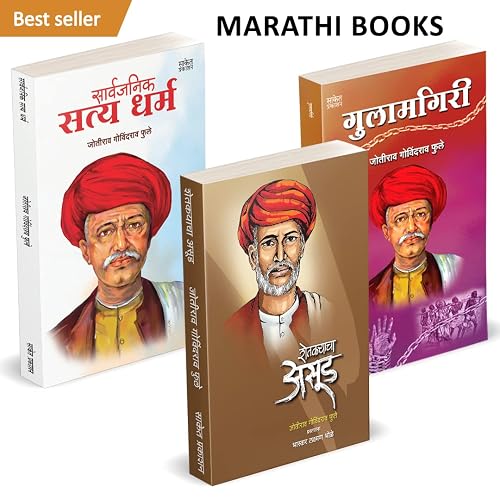
Shetkaryacha Asud (शेतकऱ्याचा असूड) by Mahatma Jotirao Phule
Prescribed
The whole work is prescribed. Read it in the original; focus on Phule’s analysis of the exploitation of the peasant, his argument and his forceful prose.
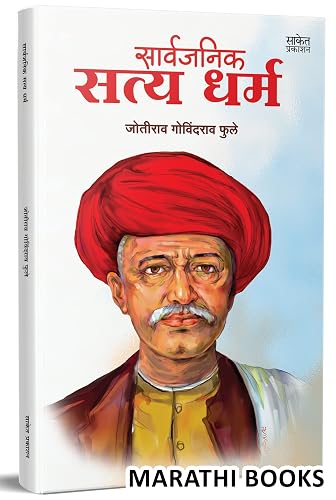
Sarvajanik Satyadharma (सार्वजनिक सत्यधर्म) by Mahatma Jotirao Phule
Prescribed
The whole work is prescribed. Read it in the original; focus on Phule’s idea of a universal religion of truth, equality of men and women, and its place in the reform movement.
Brahmankanya (ब्राह्मणकन्या) by S. V. Ketkar
Prescribed
The whole novel is prescribed. Read it in the original; focus on its treatment of caste and inter-caste relations, women’s position and Ketkar’s social thought.
Sashtang Namaskar (साष्टांग नमस्कार) by P. K. Atre
Prescribed
The whole play is prescribed. Read it in the original; focus on Atre’s comedy and satire, the characters and the dialogue.
Jana He Volatu Jethe (जन हे वोळतु जेथे) by Sharatchandra Muktibodh
Prescribed
The whole novel is prescribed (the syllabus prints the title as Jana Hey Volatu Jethe). Read it in the original; focus on its ideological concerns, characters and narrative method.
Shilan (शिळान) by Uddhav Shelke
Prescribed
The whole novel is prescribed. Read it in the original; focus on its rural world, its use of dialect and its place in Gramin literature.
Jevha Mi Jaat Chorli Hoti (जेव्हा मी जात चोरली होती) by Baburao Bagul
Prescribed
The whole short-story collection is prescribed. Read every story; focus on caste experience, urban Dalit life and the rebellious tone that made the book a landmark of Dalit writing.
Ekek Paan Galavaya (एकेक पान गळावया) by Gauri Deshpande
Prescribed
The whole work is prescribed. Read it in the original; focus on the woman’s point of view, relationships and individual freedom, and its place in feminist writing.
Athavaninche Pakshi (आठवणींचे पक्षी) by P. I. Sonkamble
Prescribed
The whole autobiography is prescribed. Read it in the original; focus on the Dalit autobiographical form, the memory of caste and poverty, and its narrative style.

Strengthen your GS papers
Our UPSC Mains Topic-wise & Year-wise PYQ Book (2013–2026) maps every GS question to the syllabus, so you know what UPSC asks and how often. Now available as a hard copy and an eBook.
Buy Hard Copy on AmazonBuy eBook (PDF)Paper II Section B: Prescribed texts (Poetry)
Namdev, Painjan (ed. M. N. Adwant), Raghunath Pandit, Balkavi, Kusumagraj, Vinda Karandikar, Narayan Surve, Grace and Namdeo Dhasal.
Namadevanchi Abhangawani (नामदेवांची अभंगवाणी) by Namdev; ed. Inamdar, Relekar and Mirajkar
Prescribed
This selection (Modern Book Depot, Pune) is prescribed. Read all the abhangs; focus on Namdev’s bhakti, his place among the Varkari poets and the abhang form.
Painjan (पैंजण) by M. N. Adwant (ed.)
Prescribed
This anthology (Sahitya Prasar Kendra, Nagpur) is prescribed. Read every piece in it and note the themes, form and language of each.
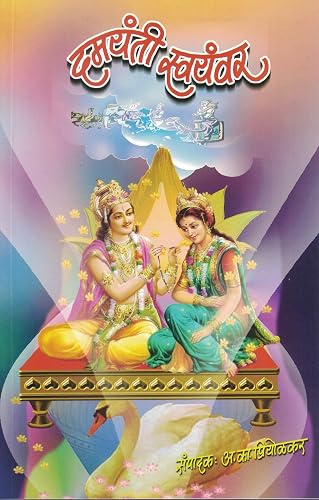
Damayanti-Swayamvar (दमयंती स्वयंवर) by Raghunath Pandit
Prescribed
The whole poem is prescribed. Read it in an annotated edition; focus on the Nala-Damayanti story, the Sanskritised diction and metres of Pandit poetry, and its descriptive art.
Balakvinchi Kavita (बालकवींची कविता) by Balkavi (T. B. Thombre)
Prescribed
The collection is prescribed. Read the poems in full; focus on nature, wonder and melancholy, and Balkavi’s place in Romantic Marathi poetry.
Vishakha (विशाखा) by Kusumagraj
Prescribed
The whole collection is prescribed. Read the poems in full; focus on its revolutionary and humanist voice, its Romantic imagery and its context in the 1940s.
Mrudgandh (मृद्गंध) by Vinda Karandikar
Prescribed
The whole collection is prescribed (the syllabus misprints the title as Maridgandh). Read the poems in full; focus on Vinda’s experiments with form, his modernist and philosophical concerns and his wit.
Jahirnama (जाहीरनामा) by Narayan Surve
Prescribed
The whole collection is prescribed. Read the poems in full; focus on the worker’s life in Mumbai, Surve’s progressive commitment and his plain diction.
Sandhyakalchya Kavita (संध्याकाळच्या कविता) by Grace
Prescribed
The whole collection is prescribed. Read the poems in full; focus on Grace’s imagery, solitude and the modernist difficulty of his language.
Ya Sattet Jeev Ramat Nahi (या सत्तेत जीव रमत नाही) by Namdeo Dhasal
Prescribed
The whole collection is prescribed. Read the poems in full; focus on Dhasal’s political anger, his Dalit and urban idiom and his break with conventional poetic language.
Marathi Wikisource by Wikimedia
Website
A free library of Marathi texts, including many saint-poet abhangs and older prose. Use it to read alongside your printed editions.
Marathi Vishwakosh by Government of Maharashtra
Website
The official Marathi encyclopaedia online. Use its entries on the prescribed authors, literary movements and folk forms for quick, reliable facts.
How to use this Marathi Literature Optional booklist
- Read all nine prose works and nine poetry collections of Paper II in the original. For each, prepare a page on its theme, form, context, language and two critical views, plus passages you can explain with reference to context.
- For Section A, learn the linguistic terms precisely (langue and parole, functions of language, standard language and dialect) and illustrate each with Marathi examples; examiners expect examples, not definitions alone.
- Prepare the features of Marathi in the thirteenth and seventeenth centuries with sample lines from Mahanubhava prose and Dnyaneshwari, and from seventeenth-century saint poetry and bakhars.
- Make a separate note for each dialect in the syllabus (Ahirani, Varhadi, Dangi) with its region, sound and word features and a few sample sentences.
- Link Paper I history with Paper II texts: Smritisthal with the Mahanubhava writers, Namdev with the Varkari poets, Raghunath Pandit with the Pandit poets, and Bagul, Sonkamble and Dhasal with Dalit literature.
- In criticism answers, use the Indian concepts (rasa, dhvani) and modern Marathi critics together, and apply them to a prescribed text wherever you can.
Some books you find useful may not be on this list. Use them if they fall within the syllabus and help you answer previous year questions. If you spot a wrong title, an outdated edition or a broken link, tell us on the Report an Error page.
FAQs
Which are the best books for Marathi Literature Optional Paper I?
Our core picks, section by section – Language and Folk-lore: Adhunik Bhashavidnyan: Siddhant va Upayojan (Milind Malshe), Marathi Bhasha: Udgam va Vikas (Kru. Pa. Kulkarni), Lokasahityachi Ruparekha (Durga Bhagwat); History of Literature and Literary Criticism: Prachin Marathi Vangmayacha Itihas (A. N. Deshpande), Adhunik Marathi Vangmayacha Itihas (A. N. Deshpande), Bharatiya Sahityashastra (G. T. Deshpande). Each book above is tagged so you know what to read first.
Which texts are prescribed for Marathi Literature Optional?
The UPSC syllabus prescribes 19 texts for first-hand reading: Smritisthal (Mahanubhava text); Shetkaryacha Asud (Mahatma Jotirao Phule); Sarvajanik Satyadharma (Mahatma Jotirao Phule); Brahmankanya (S. V. Ketkar); Sashtang Namaskar (P. K. Atre); Jana He Volatu Jethe (Sharatchandra Muktibodh); Shilan (Uddhav Shelke); Jevha Mi Jaat Chorli Hoti (Baburao Bagul); Ekek Paan Galavaya (Gauri Deshpande); Athavaninche Pakshi (P. I. Sonkamble); Namadevanchi Abhangawani (Namdev; ed. Inamdar, Relekar and Mirajkar); Painjan (M. N. Adwant (ed.)); Damayanti-Swayamvar (Raghunath Pandit); Balakvinchi Kavita (Balkavi (T. B. Thombre)); Vishakha (Kusumagraj); Mrudgandh (Vinda Karandikar); Jahirnama (Narayan Surve); Sandhyakalchya Kavita (Grace); Ya Sattet Jeev Ramat Nahi (Namdeo Dhasal). We list the exact portions under each text above.
In which language must I write answers in Marathi Literature Optional?
Both papers must be answered in Marathi, as the UPSC syllabus states for Marathi Literature.
Do I need to read every book on this list?
Read every prescribed text in the original, since Paper II tests first-hand reading. For Paper I, read the Core books fully, choose only one book wherever we list an Alternative, and use Reference books only for specific topics. If you are new to the subject, begin with Sugam Marathi Vyakaran va Lekhan (Mo. Ra. Walambe).
Last updated: 2 November 2026