
This is our topic-wise booklist for Electrical Engineering Optional, arranged by the official UPSC syllabus for Paper I and Paper II. We have picked the standard B.E./B.Tech. textbooks that CSE toppers and ESE aspirants use most, and marked each one so you know what to read fully and what to consult for specific topics. The syllabus is wide and covers electronics and communication as well, so keep to one main book per topic and practise numericals from it.
Use this booklist together with the Electrical Engineering Optional syllabus, the topic-wise PYQs and the year-wise question papers. The previous year questions show you which chapters of these books UPSC actually asks from.
Jump to: Paper I: Circuit Theory · Paper I: Signals and Systems · Paper I: E.M. Theory · Paper I: Analog Electronics · Paper I: Digital Electronics · Paper I: Energy Conversion · Paper I: Power Electronics and Electric Drives · Paper I: Analog Communication · Paper II: Control Systems · Paper II: Microprocessors and Microcomputers · Paper II: Measurement and Instrumentation · Paper II: Power Systems: Analysis and Control · Paper II: Power System Protection · Paper II: Digital Communication
Some links on this page are Amazon affiliate links. If you buy through them, we may earn a small commission at no extra cost to you.
Paper I: Circuit Theory – Best Books
Network graphs, KCL/KVL, nodal and mesh analysis, network theorems, transients, sinusoidal steady state, resonance, coupled and three-phase circuits, two-port networks.
Circuit Theory: Analysis and Synthesis by A. Chakrabarti
Core
We recommend this as your main circuit theory book; toppers use it mainly for numerical practice. Cover network theorems, transients, resonance, coupled circuits, three-phase circuits and two-port networks.
Engineering Circuit Analysis by William H. Hayt, Jack E. Kemmerly and Steven M. Durbin
Alternative
Pick this or Chakrabarti. It explains concepts more gradually and suits students who need to rebuild their basics.
Network Analysis by M.E. Van Valkenburg
Reference
Consult this for network graph theory, Laplace transform methods in circuits and network functions.

Preparing for Prelims too?
Our UPSC Prelims Topic-wise PYQ Book covers every Prelims question with detailed explanations, so you can see exactly where UPSC asks from. Now available as a hard copy and an eBook.
Buy Hard Copy on AmazonBuy eBook (PDF)Paper I: Signals and Systems – Best Books
Continuous and discrete-time signals and LTI systems, convolution, Fourier, Laplace and Z-transforms, sampling, DFT and FFT.
Signals and Systems by Alan V. Oppenheim, Alan S. Willsky and S. Hamid Nawab
Core
This is the standard text recommended by toppers. Read LTI systems and convolution, Fourier series and transforms, Laplace and Z-transforms, and sampling, and practise the worked examples.
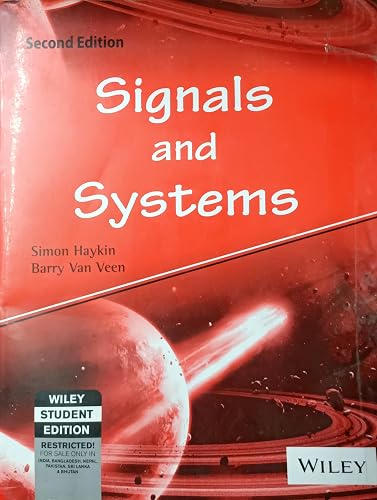
Signals and Systems by Simon Haykin and Barry Van Veen
Alternative
Pick this if you find Oppenheim heavy. It covers the same syllabus with more direct examples.
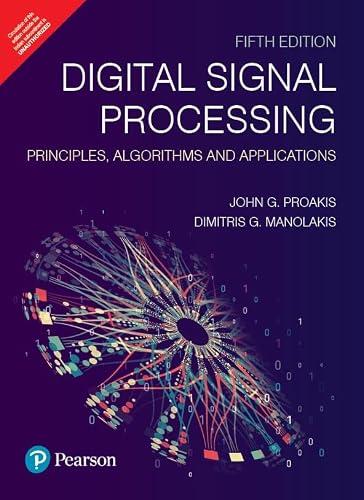
Digital Signal Processing: Principles, Algorithms and Applications by John G. Proakis and Dimitris G. Manolakis
Reference
Consult the DFT and FFT chapters, which Oppenheim’s Signals and Systems does not cover in depth.
Paper I: E.M. Theory – Best Books
Maxwell’s equations, wave propagation and boundary conditions, reflection and refraction of plane waves, transmission lines, impedance matching and the Smith chart.
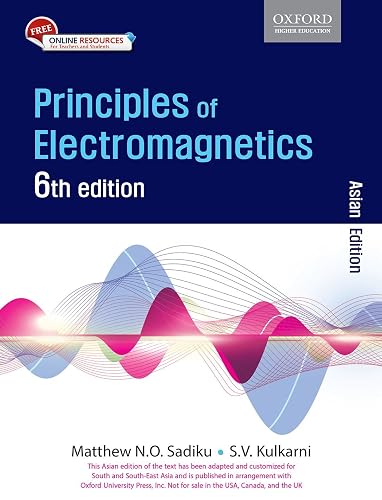
Principles of Electromagnetics by Matthew N.O. Sadiku and S.V. Kulkarni
Core
We recommend this as your main E.M. theory book. Read Maxwell’s equations, plane wave propagation, reflection and refraction, and transmission lines including the Smith chart.
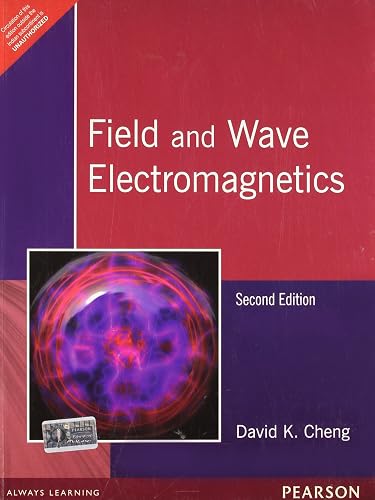
Field and Wave Electromagnetics by David K. Cheng
Alternative
Pick this or Sadiku. Toppers have used it for plane waves, polarisation, reflection and the Smith chart.
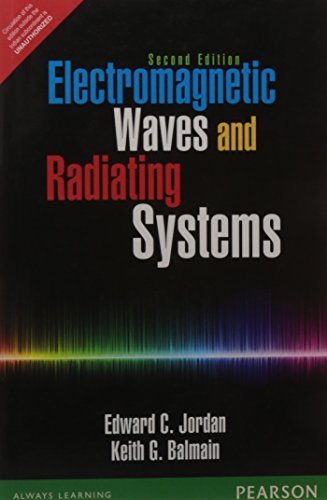
Electromagnetic Waves and Radiating Systems by Edward C. Jordan and Keith G. Balmain
Reference
Consult this for transmission line theory, impedance matching and the Smith chart if you need more depth.
Paper I: Analog Electronics – Best Books
Diodes, BJT, JFET and MOSFET circuits, biasing, amplifiers, feedback, op-amp circuits, filters, oscillators, wave-shaping and power supplies.
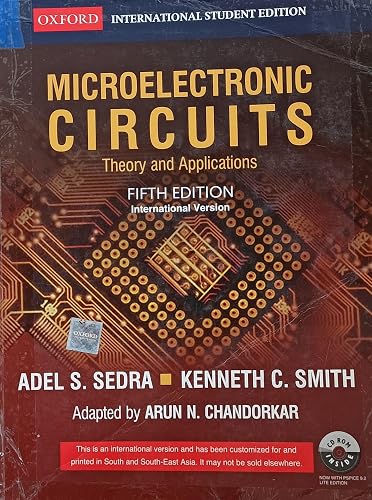
Microelectronic Circuits by Adel S. Sedra and Kenneth C. Smith
Core
We recommend this for devices and amplifiers. Read diodes, BJT and MOSFET amplifiers, current mirrors, differential and feedback amplifiers, frequency response and op-amp circuits.
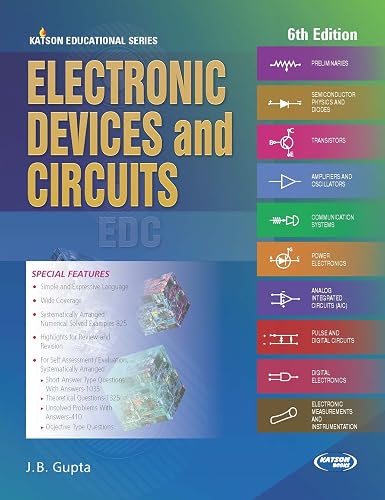
Electronic Devices and Circuits by J.B. Gupta
Alternative
Toppers have used this as their main analog book. It is easier to follow than Sedra and Smith and covers oscillators, wave-shaping, multivibrators and power supplies well.
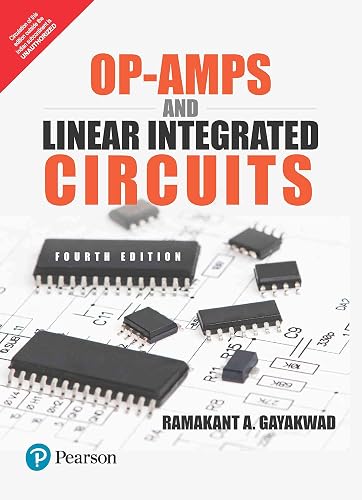
Op-Amps and Linear Integrated Circuits by Ramakant A. Gayakwad
Reference
Consult this for op-amp applications, active filters, function generators and timers.
Paper I: Digital Electronics – Best Books
Boolean algebra, logic families, combinational and sequential circuits, timers and multivibrators, ADC/DAC, memories and programmable logic.
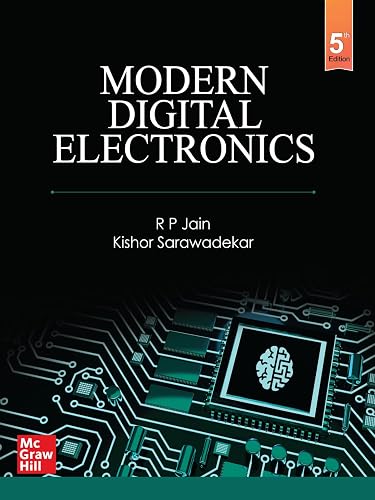
Modern Digital Electronics by R.P. Jain
Core
We recommend this for the full digital electronics syllabus. It covers logic families, combinational and sequential circuits, ADCs and DACs, memories and PLDs with numericals.
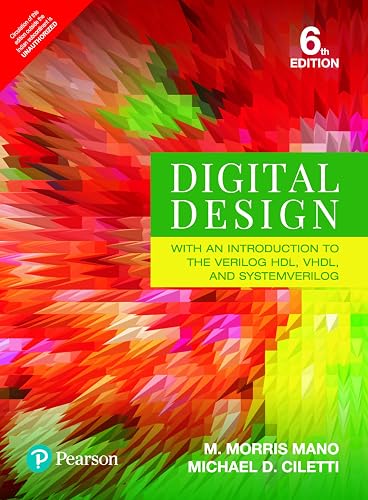
Digital Design by M. Morris Mano and Michael D. Ciletti
Alternative
Pick this alongside or instead of R.P. Jain for combinational and sequential design. It is clear on minimisation and state machines.
Paper I: Energy Conversion – Best Books
Electromechanical energy conversion, DC machines, single and three-phase transformers, induction and synchronous machines.
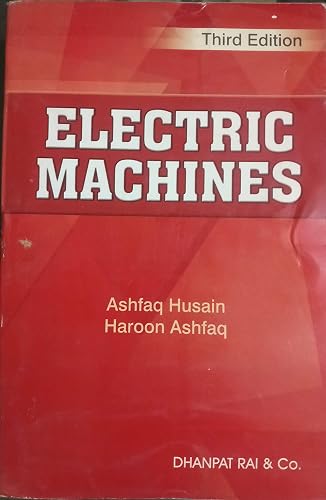
Electric Machines by Ashfaq Husain and Haroon Ashfaq
Core
Toppers recommend this as the main book for energy conversion. It covers DC machines, transformers, induction and synchronous machines with ESE-style numericals.
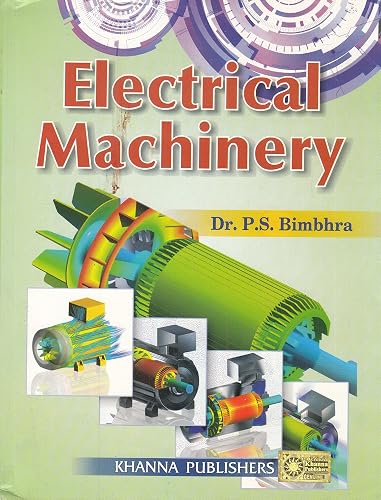
Electrical Machinery by P.S. Bimbhra
Alternative
Pick this or Ashfaq Husain. It is more detailed in theory and has a large problem set.
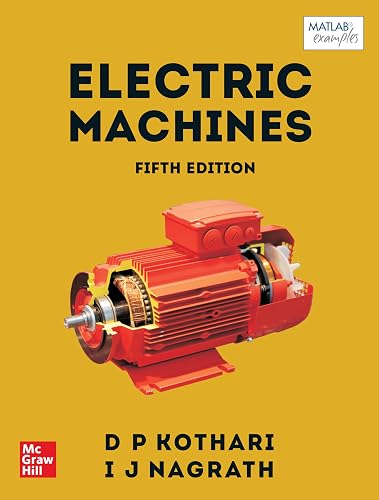
Electric Machines by D.P. Kothari and I.J. Nagrath
Reference
Consult this for phasor diagrams, equivalent circuits and performance characteristics when you need a second explanation.
Paper I: Power Electronics and Electric Drives – Best Books
Power semiconductor devices, triggering circuits, phase-controlled rectifiers, choppers, inverters, DC-DC converters and speed control of DC and AC drives.
Power Electronics by P.S. Bimbhra
Core
Toppers use this as the main power electronics book. Focus on concepts first: devices, thyristor commutation, rectifiers, choppers and inverters, then solve the numericals.
Power Electronics: Circuits, Devices and Applications by Muhammad H. Rashid
Alternative
Pick this or Bimbhra. It is stronger on DC-DC converters and switch-mode inverters.
Fundamentals of Electrical Drives by G.K. Dubey
Reference
Consult this for speed control of DC and induction motor drives using converters.
NPTEL Electrical Engineering Courses by IITs and IISc
Website
Free lectures on power electronics, electrical machines, power systems and communication. Toppers used them to fill gaps in energy conversion and power electronics.
Paper I: Analog Communication – Best Books
Random variables and noise, SNR, AM, DSB-SC, SSB, FM and PM, modulators and demodulators, receivers, PLL and SNR of AM and FM receivers.
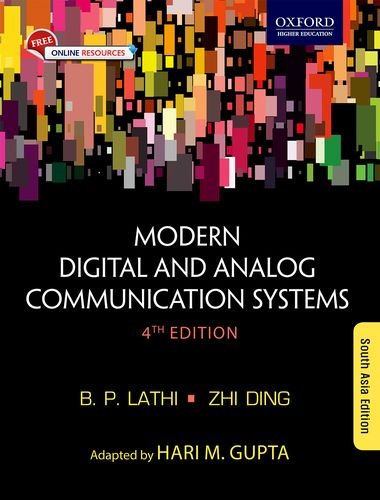
Modern Digital and Analog Communication Systems by B.P. Lathi and Zhi Ding
Core
We recommend this as your main communication book. Read the chapters on amplitude modulation and angle modulation, and the random processes and noise chapters for SNR analysis.
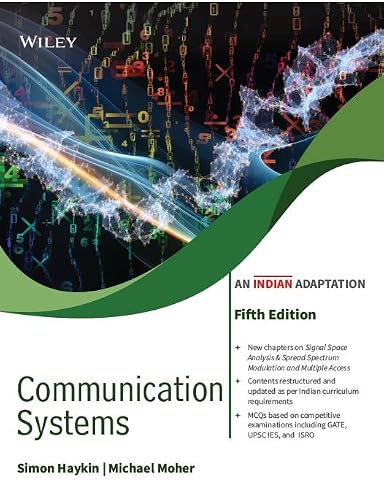
Communication Systems by Simon Haykin and Michael Moher
Alternative
Pick this or Lathi. Toppers have used its chapter on random processes for the probability and noise part.
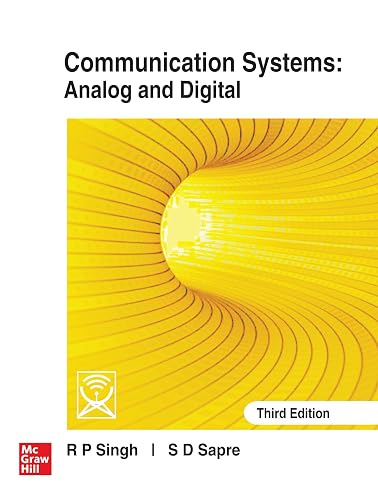
Communication Systems: Analog and Digital by R.P. Singh and S.D. Sapre
Reference
Consult this for noise and for practical modulator and demodulator circuits for AM and FM.

Strengthen your GS papers
Our UPSC Mains Topic-wise & Year-wise PYQ Book (2013–2026) maps every GS question to the syllabus, so you know what UPSC asks and how often. Now available as a hard copy and an eBook.
Buy Hard Copy on AmazonBuy eBook (PDF)Paper II: Control Systems – Best Books
Block diagrams, feedback, time and frequency domain analysis, Routh-Hurwitz, root locus, Bode, polar and Nyquist plots, compensators, PID control and state variables.
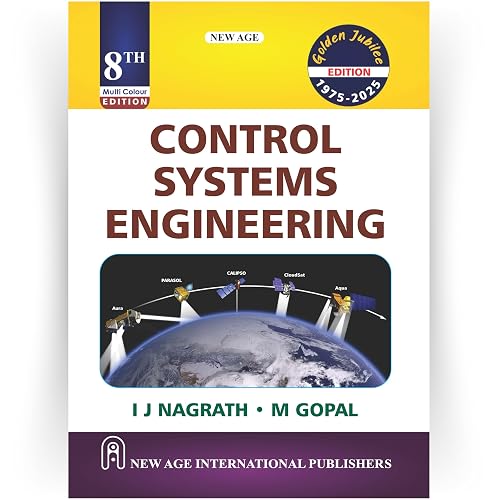
Control Systems Engineering by I.J. Nagrath and M. Gopal
Core
We recommend this as your main control systems book; toppers say you need only the chapters on the syllabus. Read time response, stability, root locus, frequency response, compensators and state-variable analysis.
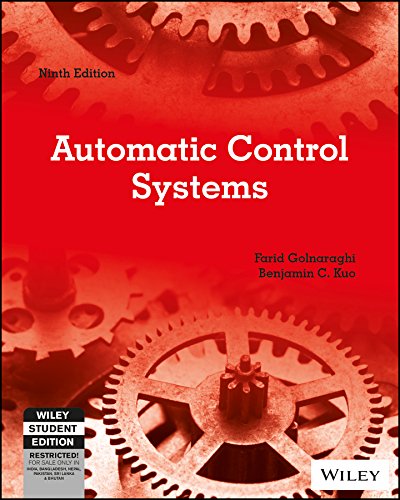
Automatic Control Systems by Farid Golnaraghi and Benjamin C. Kuo
Reference
Use this for extra practice questions on stability and frequency response, as toppers did.
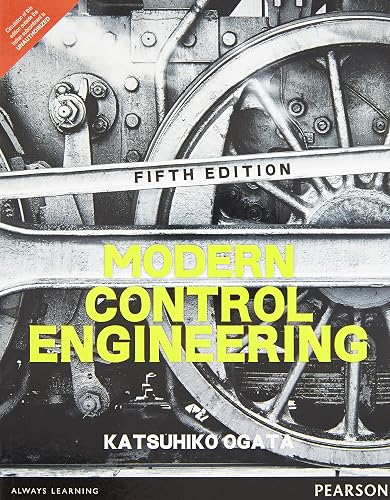
Modern Control Engineering by Katsuhiko Ogata
Reference
Consult this for state-space analysis and PID tuning when you want a fuller derivation.
Paper II: Microprocessors and Microcomputers – Best Books
PC organisation, CPU, instruction and register sets, timing diagrams, programming, interrupts, memory and I/O interfacing, programmable peripheral devices.
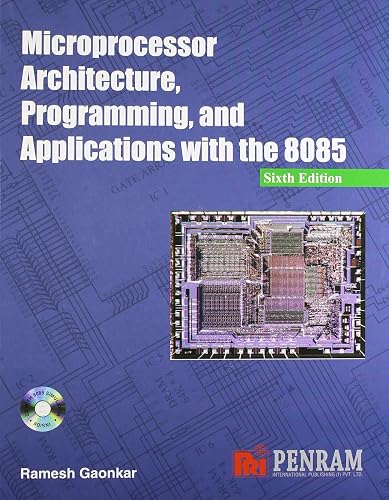
Microprocessor Architecture, Programming and Applications with the 8085 by Ramesh S. Gaonkar
Core
We recommend this as the main book. Read architecture, instruction set, timing diagrams, programming, interrupts, memory and I/O interfacing, and the peripheral chapters (8255, 8253/8254, 8259, 8237).
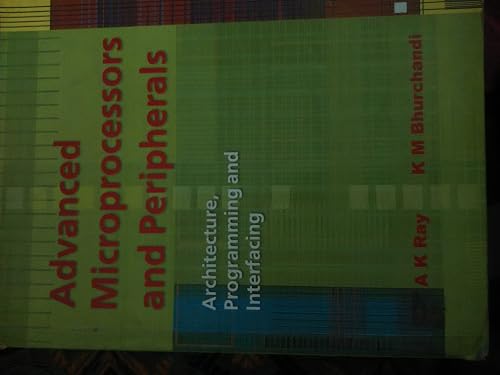
Advanced Microprocessors and Peripherals by A.K. Ray and K.M. Bhurchandi
Reference
Consult this for the 8086 architecture, addressing modes and PC organisation. Toppers limited 8086 study to these areas.
Paper II: Measurement and Instrumentation – Best Books
Error analysis, measurement of electrical quantities, bridges, signal conditioning, electronic instruments and transducers.
A Course in Electrical and Electronic Measurements and Instrumentation by A.K. Sawhney
Core
Toppers recommend this for the whole section. For each instrument, learn the construction, derivation and drawbacks, and practise the CRO block diagram.
Electronic Instrumentation by H.S. Kalsi
Reference
Consult this for digital instruments, frequency counters, spectrum and distortion analysers and signal conditioning.
Paper II: Power Systems: Analysis and Control – Best Books
Line and cable performance, per-unit system, bus matrices, load flow, voltage control, economic dispatch, symmetrical components, fault analysis, stability, static VAR systems and HVDC.
Modern Power System Analysis by D.P. Kothari and I.J. Nagrath
Core
We recommend this as your main power systems book. Read line performance, load flow, economic operation, symmetrical components and fault analysis, and stability with the equal area criterion.
Electrical Power Systems by Ashfaq Husain
Alternative
Toppers have used this as their main power systems book. It is concise and suits revision, though you may need Kothari and Nagrath for depth.
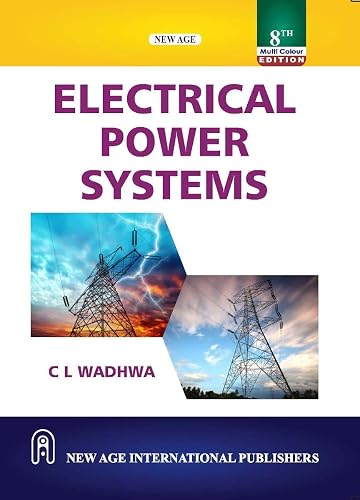
Electrical Power Systems by C.L. Wadhwa
Reference
Consult this for cables, static VAR systems and HVDC basics, and for extra solved problems.
Paper II: Power System Protection – Best Books
Overcurrent, differential and distance protection, solid-state and numerical relays, circuit breakers, and computer-aided protection of lines, buses, generators and transformers.
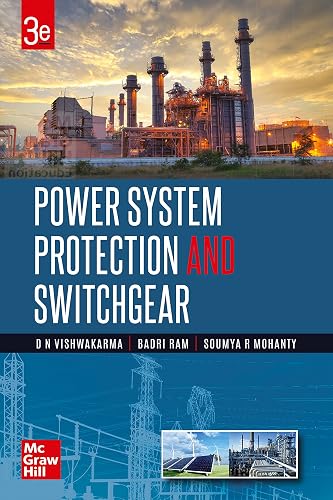
Power System Protection and Switchgear by Badri Ram and D.N. Vishwakarma
Core
We recommend this for the whole protection section. It covers relays, circuit breakers, apparatus protection, and microprocessor-based and numerical relays.
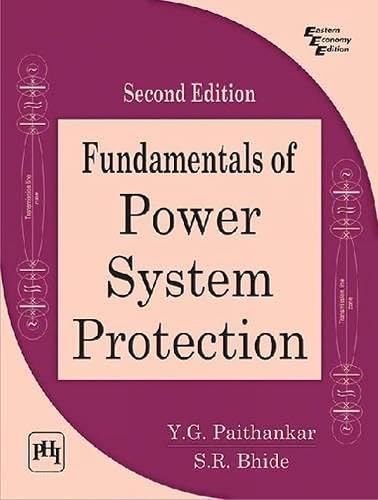
Fundamentals of Power System Protection by Y.G. Paithankar and S.R. Bhide
Reference
Consult this for numerical relays and digital signal processing in protection, which Badri Ram covers briefly.
Paper II: Digital Communication – Best Books
PCM, DPCM and delta modulation, ASK, PSK and FSK, error control coding, information theory and source coding, data networks and the 7-layer architecture.
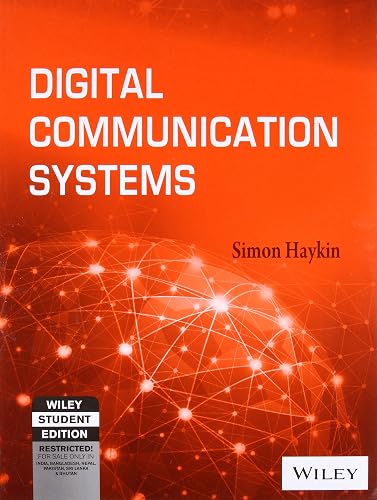
Digital Communications by Simon Haykin
Core
Toppers use this as the main digital communication book. Read pulse modulation, digital modulation schemes, information theory and error-control codes.
Modern Digital and Analog Communication Systems by B.P. Lathi and Zhi Ding
Alternative
If you already use Lathi for analog communication, read its sampling and pulse code modulation chapter here as well.
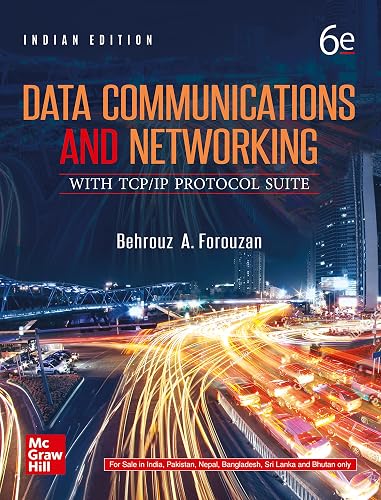
Data Communications and Networking by Behrouz A. Forouzan
Reference
Read only the opening chapters on network models and the OSI seven-layer architecture.
How to use this Electrical Engineering Optional booklist
- The syllabus is large, so start early and keep to one main book per topic; add a second book only for chapters the main book handles poorly.
- Finish the theory first, then solve the book examples yourself before reading the solutions, and practise CSE and ESE conventional previous year papers alongside revision.
- Keep separate formula sheets for signals and systems, E.M. theory, communication and power systems, and practise the standard derivations.
- Draw block diagrams, circuit diagrams and phasor diagrams in answers wherever they help, and show every step with formulas stated.
- Note the drawbacks and errors of each measuring instrument, since UPSC often asks about them.
- Leave some topics such as network graphs and DFT/FFT for planned slots after Prelims rather than skipping them.
Some books you find useful may not be on this list. Use them if they fall within the syllabus and help you answer previous year questions – that is the only test that matters. If you spot an outdated edition or a broken link, tell us on the Report an Error page.
FAQs
Which are the best books for Electrical Engineering Optional?
Our core picks, section by section – Circuit Theory: Circuit Theory: Analysis and Synthesis (A. Chakrabarti); Signals and Systems: Signals and Systems (Alan V. Oppenheim, Alan S. Willsky and S. Hamid Nawab); E.M. Theory: Principles of Electromagnetics (Matthew N.O. Sadiku and S.V. Kulkarni); Analog Electronics: Microelectronic Circuits (Adel S. Sedra and Kenneth C. Smith); Digital Electronics: Modern Digital Electronics (R.P. Jain); Energy Conversion: Electric Machines (Ashfaq Husain and Haroon Ashfaq); Power Electronics and Electric Drives: Power Electronics (P.S. Bimbhra); Analog Communication: Modern Digital and Analog Communication Systems (B.P. Lathi and Zhi Ding); Control Systems: Control Systems Engineering (I.J. Nagrath and M. Gopal); Microprocessors and Microcomputers: Microprocessor Architecture, Programming and Applications with the 8085 (Ramesh S. Gaonkar); Measurement and Instrumentation: A Course in Electrical and Electronic Measurements and Instrumentation (A.K. Sawhney); Power Systems: Analysis and Control: Modern Power System Analysis (D.P. Kothari and I.J. Nagrath); Power System Protection: Power System Protection and Switchgear (Badri Ram and D.N. Vishwakarma); Digital Communication: Digital Communications (Simon Haykin). Each book above is tagged Core, Alternative, Reference, Beginner or Website, so you know what to read first.
Which book should I start Electrical Engineering Optional with?
Begin with the Core book for the first section – Circuit Theory: Analysis and Synthesis by A. Chakrabarti – and read it alongside the syllabus and previous year questions for that unit.
Do I need to read every book on this list?
No. Read the Core books fully, choose only one book wherever we list an Alternative, and use Reference books only for specific topics. Keep your sources few and revise them several times.
Where can I find Electrical Engineering Optional previous year questions?
All Electrical Engineering Optional PYQs are on our topic-wise PYQs page, and full papers are on the year-wise question papers page. The syllabus page breaks each unit into numbered topics.
Last updated: 2 November 2026