
Here are all 56 Psychological Measurement of Individual Differences questions asked in UPSC Psychology Optional Paper II from 1995 to 2026, arranged under the 5 topics of the official syllabus. Within each topic the latest questions come first.
Each question ends with a code such as [2024/15m/3b] – the year, the marks, the word limit (where UPSC set one) and the question number in the paper.
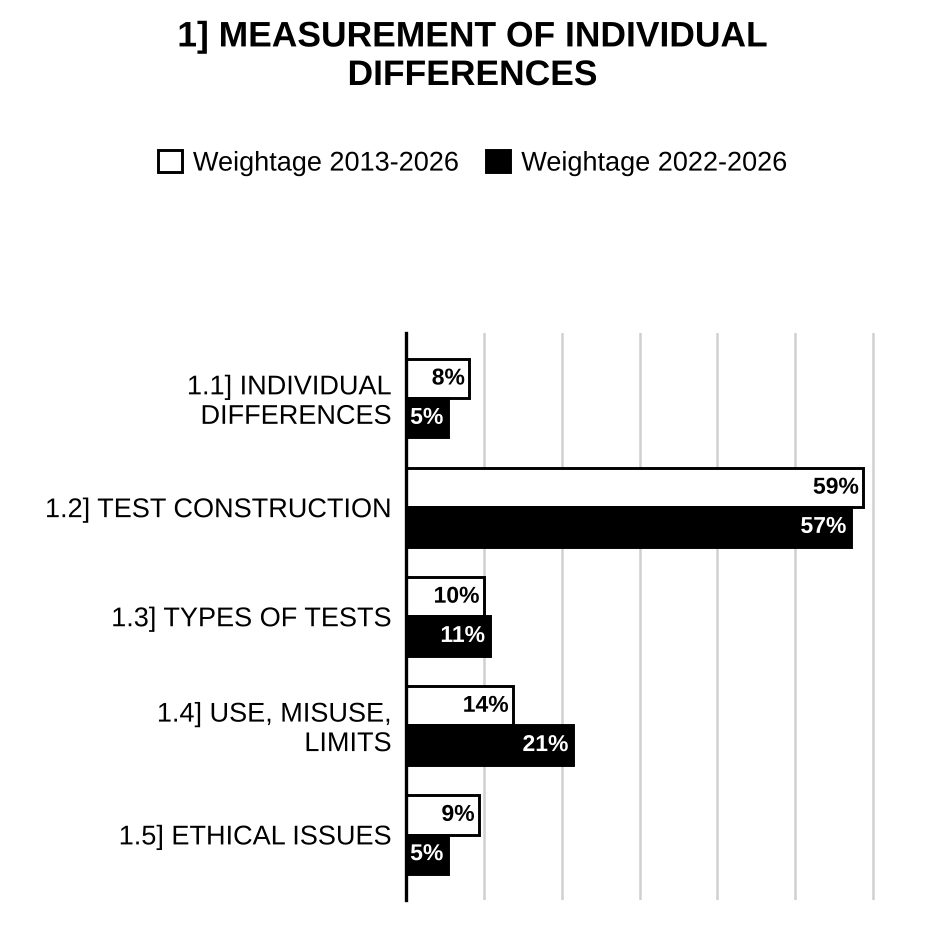
1.1] The nature of individual differences
6 questions
What do you understand by Individual Differences? Comment on the major methodological issues in construction of tests for assessment. [2026/15m/4a]
In what ways psychological tests are better tools in assessing individual differences? Explain. [2020/10m/150w/5e]
Explain how the concept of individual differences emerged and state its importance for vocational guidance. [2017/10m/150w/1b]
In what ways psychological tests are useful in assessing individual differences? Answer with examples. [2016/10m/150w/1a]
Elucidate the nature of individual differences. Describe the methods of validity and reliability. [2002/20m/200w/1a]
Comment on: Briefly describe the origin of the measurement of individual differences and comment on the present status of psychological testing in India. [1997/20m/200w/1a]
1.2] Characteristics and construction of standardized psychological tests
30 questions
What do you understand by Individual Differences? Comment on the major methodological issues in construction of tests for assessment. [2026/15m/4a]
What are the different methods of estimating internal consistency reliability? Explain their strengths and limitations. [2025/10m/150w/1a]
What are the factors that determine the efficacy of psychological tests? Discuss the ethical issues in the use of psychological tests. [2025/15m/2a]
Why are norms needed for psychological tests? Explain the uses and limitations of percentile ranks in this context. [2024/15m/2b]
How will you construct an achievement test in Arithmetics for the fifth standard? [2024/20m/4c]
Explain the characteristics of standardized psychological tests. Highlight the limitations of psychological tests. [2023/20m/2c]
Some measures can be reliable but not valid. Illustrate with relevant examples. [2022/10m/150w/1b]
Describe the different methods for making a psychological test reliable. [2021/10m/150w/1c]
What are the challenges in the development and uses of psychological tests? Illustrate with examples. [2020/15m/2b]
Even though validity often requires reliability, the reverse is not true. Explain. [2019/10m/150w/1a]
How can one make a decision of using exploratory factor analysis or confirmatory factor analysis or an integrated approach while constructing a psychological test? [2019/15m/4a]
Discuss the different steps in the construction and standardization of psychological tests. Illustrate your answer with suitable example. [2018/20m/2c]
What is the role of item validation in psychometric scaling? Briefly describe the steps involved. [2017/20m/3c]
Analyze the factors determining the efficacy of psychological tests. Discuss the limitations in the use of psychological tests. [2016/15m/2b]
How will you go about constructing a test for assessing aptitude for Civil Services? Discuss the details. [2015/20m/7c]
What different types of norms will a psychologist need to develop a test of general mental ability for use in India? [2014/15m/2a]
What is the purpose of item analysis? How would you carry it out for a test of aptitude? [2014/20m/7c]
How will you ensure that a newly constructed personnel selection test measures that it purports to measure and predicts what it intends to predict? Explain. [2013/10m/150w/1a]
Explain the characteristics of standardized psychological tests. Discuss the major steps in developing self-report personality inventory. Illustrate your answer with a suitable example. [2012/30m/2a]
Critically evaluate internal consistency and stability coefficients as indices of reliability. [2011/20m/200w/1b]
You have been asked to establish convergent and discriminant validity of the Civil Service (Preliminary) Test. How would you do it? [2009/20m/200w/1a]
What are the methodological differences between a ‘constructed’ and a ‘standardized’ psychological test? [2009/20m/2a]
Enumerate the methods of assessing validity of a personality inventory and highlight their significance. [2008/20m/200w/1a]
Explain the characteristics and types of standardized psychological tests. Critically comment on their utility and limitations. [2007/60m/2]
List the characteristics of psychological tests. Explain the process of construction of a standardized psychological test with an example of your choice. [2004/60m/3]
Discuss the salient features of a psychological test. Identify the process involved in construction and standardization of a psychological test. What are the ethical issues involved in the use of a psychological test? [2003/60m/2]
Elucidate the nature of individual differences. Describe the methods of validity and reliability. [2002/20m/200w/1a]
Describe the steps and procedures involved in construction of psychological tests. [1999/20m/200w/1a]
Discuss the different types of psychological tests. Are the results obtained in different areas of testing equally scientific and dependable? Suggest measures for ensuring their reliability and accuracy. [1996/60m/2]
What is the rationale behind use of psychological tests? Critically examine reliability and validity of such tests, and their interdependence. [1995/60m/2]

Preparing for Prelims too?
Our UPSC Prelims Topic-wise PYQ eBook covers every Prelims question with detailed explanations, so you can see exactly where UPSC asks from.
View the BookDownload Free Sample1.3] Types of psychological tests
7 questions
Compare and contrast Norm referenced vs criterion referenced measurement. [2026/15m/2a]
What are the different types of psychological tests for personality assessment? [2021/15m/3a]
Bring out the similarities and differences between intelligence, aptitude, and achievement tests. [2018/10m/150w/1a]
Explain the characteristics and types of standardized psychological tests. Critically comment on their utility and limitations. [2007/60m/2]
Discuss the different types of psychological tests. Describe ethical issues involved in the use of psychological tests. [2005/60m/2]
Mention different types of psychological tests and discuss their uses, misuses and limitations. [2001/20m/200w/1a]
Discuss the different types of psychological tests. Are the results obtained in different areas of testing equally scientific and dependable? Suggest measures for ensuring their reliability and accuracy. [1996/60m/2]
1.4] Use, misuse and limitation of psychological tests
7 questions
Explain the characteristics of standardized psychological tests. Highlight the limitations of psychological tests. [2023/20m/2c]
Discuss uses, misuses and limitations of psychological tests in clinical setting. [2022/20m/3b]
What are the challenges in the development and uses of psychological tests? Illustrate with examples. [2020/15m/2b]
Analyze the factors determining the efficacy of psychological tests. Discuss the limitations in the use of psychological tests. [2016/15m/2b]
What factors can impede fair assessment of individual differences? Examine in the light of research evidence. [2014/10m/150w/1a]
Mention different types of psychological tests and discuss their uses, misuses and limitations. [2001/20m/200w/1a]
What is the rationale behind use of psychological tests? Critically examine reliability and validity of such tests, and their interdependence. [1995/60m/2]
1.5] Ethical issues in the use of psychological tests
6 questions
What are the factors that determine the efficacy of psychological tests? Discuss the ethical issues in the use of psychological tests. [2025/15m/2a]
What are some important ethical principles that psychologists must adhere to while making use of psychological tests? [2015/15m/8a]
Identify the ethical and non-ethical uses of psychological tests especially measuring individual differences. Provide suitable examples. [2013/15m/200w/6b]
Discuss the different types of psychological tests. Describe ethical issues involved in the use of psychological tests. [2005/60m/2]
Discuss the salient features of a psychological test. Identify the process involved in construction and standardization of a psychological test. What are the ethical issues involved in the use of a psychological test? [2003/60m/2]
Discuss critically the ethical issues involved in the construction and use of psychological tests. [2002/60m/2]

Strengthen your GS papers
Our UPSC Mains Topic-wise & Year-wise PYQ eBook (2013–2026) maps every GS question to the syllabus, so you know what UPSC asks and how often.
View the BookDownload Free Sample« Previous: Issues and Perspectives in Modern Contemporary Psychology | Next: Psychological Well Being and Mental Disorders »
Back to: Psychology Optional PYQs – Topic-wise | Also see: Psychology Optional year-wise question papers
Last updated: 30 October 2026