
This is our booklist for Nepali Literature Optional, arranged by the UPSC syllabus: Paper I covers the history, grammar, dialects and standardisation of Nepali, and the history, theory, movements and folklore of Nepali literature, and Paper II prescribes poetry, drama, fiction and essays. Paper II requires first-hand reading of the prescribed texts, so read each one in the original before any guide. Answers in both papers must be written in Nepali. We mark each book Prescribed, Core, Alternative, Reference or Beginner so you know what to read fully and what to consult.
We list the prescribed texts exactly as the UPSC syllabus names them, with the portion you must read. Paper II tests first-hand reading, so read each text in the original and use guides only alongside it. Where a book is hard to find in print, try the free sources we list, the Sahitya Akademi and university bookshops.
Jump to: Paper I Section A: Nepali language · Paper I Section B: Literary history, theory and folklore · Paper II Section A: Prescribed texts (Poetry and drama) · Paper II Section B: Prescribed texts (Fiction and essays)
Some links on this page are Amazon affiliate links. If you buy through them, we may earn a small commission at no extra cost to you.
Paper I Section A: Nepali language – Best Books
Origin and development of Nepali, grammar and phonology, major dialects, standardisation and language movements, and the teaching of Nepali in India.
Nepali Bhashako Utpatti (नेपाली भाषाको उत्पत्ति) by Chudamani Bandhu
Core
This is our anchor for unit 1. Read it for the origin of Nepali from Sanskrit through Prakrit and Apabhramsha, its place among the New Indo-Aryan languages and its early records.
Samasamayik Nepali Vyakaran (समसामयिक नेपाली व्याकरण) by Hemanga Raj Adhikari
Core
The standard modern grammar of Nepali. Read the parts on gender, number, case, adjectives, pronouns and avyayas, and on tense, aspect, voice, roots and affixes for unit 2.
Dhwani Vigyan ra Nepali Bhashako Dhwani Parichaya (ध्वनिविज्ञान र नेपाली भाषाको ध्वनि परिचय) by Madhav Prasad Pokharel
Reference
Consult it for Nepali swara and vyanjana: the vowel and consonant system and its description.
Nepali Vakya Vyakaran (नेपाली वाक्य व्याकरण) by Madhav Prasad Pokharel
Reference
Consult it for verbal categories and sentence structure if the general grammar feels thin.
Rashtra Bhasha (राष्ट्र भाषा) by Balkrishna Pokharel
Reference
Read it for the dialects of Nepali and the history of its standardisation; use it with your notes on the Halanta Bahiskar and Jharrovad movements.

Preparing for Prelims too?
Our UPSC Prelims Topic-wise PYQ Book covers every Prelims question with detailed explanations, so you can see exactly where UPSC asks from. Now available as a hard copy and an eBook.
Buy Hard Copy on AmazonBuy eBook (PDF)Paper I Section B: Literary history, theory and folklore – Best Books
History of Nepali literature with its development in India, concepts and theories of literature, major trends and movements, and Nepali folk forms.
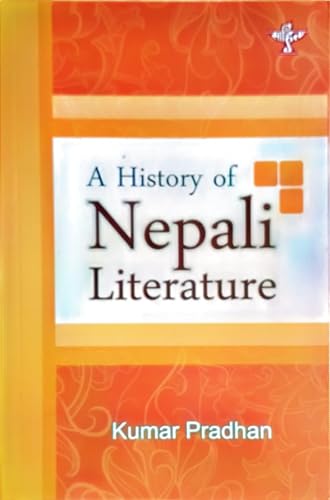
A History of Nepali Literature by Kumar Pradhan
Core
This is our anchor for unit 1, published by the Sahitya Akademi. Read it in full; it gives due attention to Nepali writing in India, which the syllabus stresses.
Nepali Sahityako Parichayatmak Itihas (नेपाली साहित्यको परिचयात्मक इतिहास) by Ghanashyam Nepal
Core
A Nepali-medium history widely used in Indian universities. Read it for the periods, genres and writers, and for the Nepali critical vocabulary you need in answers.
Nepali Sahityako Sankshipta Itihas (नेपाली साहित्यको संक्षिप्त इतिहास) by Dayaram Shrestha and Mohanraj Sharma
Alternative
Pick this or Ghanashyam Nepal as your Nepali-medium history. It is short and clear on periods and movements, but thinner on Indian Nepali writing.
Purbiya Sahitya Siddhanta (पूर्वीय साहित्य सिद्धान्त) by Keshav Prasad Upadhyaya
Core
Our choice for unit 2 on the Indian side: kavya and sahitya, kavya prayojan, shabda shakti, rasa and alankara. Learn each concept with one Nepali example.
Pashchatya Samalochanako Saiddhantik Parampara (पाश्चात्य समालोचनाको सैद्धान्तिक परम्परा) by Vasudev Tripathi
Reference
Consult it for the Western concepts in unit 2: tragedy, comedy, aesthetics and stylistics.
Pashchatya Sahityaka Pramukh Vad (पाश्चात्य साहित्यका प्रमुख वाद) by Kumar Bahadur Joshi
Reference
Read the chapters on swachchhandatavad (Romanticism), yatharthavad (realism) and astitwavad (existentialism) for unit 3, then link each with Nepali writers.
Marxvad ra Uttar-Adhunikatavad (मार्क्सवाद र उत्तरआधुनिकतावाद) by Rishiraj Baral
Reference
Consult the part on postmodernism for unit 3 and for contemporary Nepali writing.
Nepali Lok Sahitya (नेपाली लोकसाहित्य) by Chudamani Bandhu
Core
The standard book for unit 4. Read the sections on the folk forms the syllabus names: sawai, jhyaurey, selo, sangini and lahari, with their themes, metre and occasion.
Paper II Section A: Prescribed texts (Poetry and drama)
Jnandil Das, Lekhnath Paudyal, Agam Singh Giri, Haribhakta Katuwal, Balkrishna Sama and Manbahadur Mukhia.
Udaya Lahari (उदयलहरी) by Santa Jnandil Das
Prescribed
Prescribed in full. Read the devotional songs themselves; focus on the Josmani saint tradition, nirguna bhakti and the simple language of early Nepali poetry.
Tarun Tapasi (तरुण तपसी) by Lekhnath Paudyal
Prescribed
Only Vishrams III, V, VI, XII, XV and XVIII are prescribed. Read these cantos in the original; focus on the young ascetic’s reflections, Lekhnath’s classical metre and polished diction.
Jaleko Pratibimba: Royeko Pratidhwani (जलेको प्रतिबिम्ब : रोएको प्रतिध्वनि) by Agam Singh Giri
Prescribed
Only five poems are prescribed: Prasawako Chichyahatsanga Byunjheko Ek Raat, Chhorolai, Jaleko Pratibimba: Royeko Pratidhwani, Hamro Akashmani Pani Hunchha Ujyalo, and Tihar. Read them closely; focus on pain, the identity of Indian Nepalis and Giri’s intense imagery.
Yo Zindagi Khai Ke Zindagi (यो जिन्दगी खै के जिन्दगी) by Haribhakta Katuwal
Prescribed
Only five poems are prescribed: Jeevan: Ek Drishti, Yo Zindagi Khai Ke Zindagi, Akashka Tara Ke Tara, Hamilai Nirdho Nasamjha, and Khai Manyata Yahan Atmahutiko Balidanko. Read them closely; focus on Katuwal’s existential questioning and lyrical style.
Prahlad (प्रह्लाद) by Balkrishna Sama
Prescribed
Prescribed play. Read the drama in full; focus on how Sama treats the Prahlad myth, his use of verse in drama and its moral and philosophical ideas.
Andhyaroma Banchneharu (अँध्यारोमा बाँच्नेहरू) by Manbahadur Mukhia
Prescribed
Only two one-act plays are prescribed: Andhyaroma Banchneharu and Suskera. Read them in full; focus on the lives of the poor, social realism and the one-act form.

Strengthen your GS papers
Our UPSC Mains Topic-wise & Year-wise PYQ Book (2013–2026) maps every GS question to the syllabus, so you know what UPSC asks and how often. Now available as a hard copy and an eBook.
Buy Hard Copy on AmazonBuy eBook (PDF)Paper II Section B: Prescribed texts (Fiction and essays)
Indra Sundas, Lil Bahadur Chhetri, Rupnarayan Sinha, Indra Bahadur Rai, Sanu Lama, Laxmi Prasad Devkota and Ramkrishna Sharma.
Sahara (सहारा) by Indra Sundas
Prescribed
Prescribed novel. Read the novel itself; focus on its characters, social setting and Sundas’s view of human relations.
Brahmaputrako Chheuchhau (ब्रह्मपुत्रको छेउछाउ) by Lil Bahadur Chhetri
Prescribed
Prescribed novel. Read the novel itself; focus on the life of Nepali settlers in Assam, rural realism and its place as a landmark of Indian Nepali fiction.
Katha Navaratna (कथा नवरत्न) by Rupnarayan Sinha
Prescribed
Only four stories are prescribed: Biteka Kura, Jimmewari Kasko, Dhanamatiko Cinema-Swapna and Vidhwasta Jeevan. Read them closely; focus on Sinha’s early realism and his narrative technique.
Vipana Katipaya (विपना कतिपय) by Indra Bahadur Rai
Prescribed
Only five stories are prescribed: Raatbhari Huri Chalyo, Jayamaya Aphumatra Lekhapani Aipugi, Bhagi, Ghosh Babu and Chhutuaiyo. Read them closely; focus on Rai’s experiments in form and his link with the Ayamik (Tesro Ayam) movement.
Katha Sampad (कथा सम्पद) by Sanu Lama
Prescribed
Only four stories are prescribed: Swasni Manchhey, Khani Tarma Ekdin, Phurbale Gaun Chhadyo and Asinapo Manchhey. Read them closely; focus on the lives of ordinary people in Sikkim and the hills.
Laxmi Nibandha Sangraha (लक्ष्मी निबन्धसङ्ग्रह) by Laxmi Prasad Devkota
Prescribed
Only five essays are prescribed: Sri Ganeshaya Namah, Nepali Sahityako Itihasma Sarvashrestha Purush, Kalpana, Kala ra Jeevan, and Gadha Buddhiman ki Guru?. Read them closely; focus on Devkota’s playful, imaginative personal-essay style.
Das Gorkha (दस गोर्खा) by Ramkrishna Sharma
Prescribed
Only five essays are prescribed: Kavi, Samaj ra Sahitya, Sahityama Sapekshata, Sahityik Ruchiko Praudhata and Nepali Sahityako Pragati. Read them closely; focus on his critical ideas on literature and society.
Madan Puraskar Pustakalaya by Madan Puraskar Pustakalaya
Website
The leading Nepali-language library and archive. Use its site to trace older Nepali books, journals and writers.
Sahitya Akademi by Sahitya Akademi
Website
Check its catalogue for Nepali books it publishes, including award-winning works by Indian Nepali writers and Kumar Pradhan’s history.
How to use this Nepali Literature Optional booklist
- Many prescribed texts set only some poems, stories or essays; mark the exact list from the syllabus in each book and read those pieces several times.
- The syllabus stresses the development of Nepali in India, so prepare Darjeeling, Sikkim, Assam and Banaras as separate notes with key writers, journals and movements.
- For literary theory, learn each concept (rasa, alankara, shabda shakti, tragedy, stylistics) with a definition and an example from a prescribed text.
- Link the movements to the texts: Indra Bahadur Rai for the Ayamik movement, Katuwal for existentialism, Lekhnath and Sama for the classical and romantic strands.
- Prepare the five folk forms in the syllabus (sawai, jhyaurey, selo, sangini, lahari) with their occasion, metre and a short sample.
- Solve the previous year questions and practise writing in Nepali at exam speed, with neat Devanagari.
Some books you find useful may not be on this list. Use them if they fall within the syllabus and help you answer previous year questions. If you spot a wrong title, an outdated edition or a broken link, tell us on the Report an Error page.
FAQs
Which are the best books for Nepali Literature Optional Paper I?
Our core picks, section by section – Nepali language: Nepali Bhashako Utpatti (Chudamani Bandhu), Samasamayik Nepali Vyakaran (Hemanga Raj Adhikari); Literary history, theory and folklore: A History of Nepali Literature (Kumar Pradhan), Nepali Sahityako Parichayatmak Itihas (Ghanashyam Nepal), Purbiya Sahitya Siddhanta (Keshav Prasad Upadhyaya). Each book above is tagged so you know what to read first.
Which texts are prescribed for Nepali Literature Optional?
The UPSC syllabus prescribes 13 texts for first-hand reading: Udaya Lahari (Santa Jnandil Das); Tarun Tapasi (Lekhnath Paudyal); Jaleko Pratibimba: Royeko Pratidhwani (Agam Singh Giri); Yo Zindagi Khai Ke Zindagi (Haribhakta Katuwal); Prahlad (Balkrishna Sama); Andhyaroma Banchneharu (Manbahadur Mukhia); Sahara (Indra Sundas); Brahmaputrako Chheuchhau (Lil Bahadur Chhetri); Katha Navaratna (Rupnarayan Sinha); Vipana Katipaya (Indra Bahadur Rai); Katha Sampad (Sanu Lama); Laxmi Nibandha Sangraha (Laxmi Prasad Devkota); Das Gorkha (Ramkrishna Sharma). We list the exact portions under each text above.
In which language must I write answers in Nepali Literature Optional?
Both papers must be answered in Nepali, as the UPSC syllabus states for Nepali Literature.
Do I need to read every book on this list?
Read every prescribed text in the original, since Paper II tests first-hand reading. For Paper I, read the Core books fully, choose only one book wherever we list an Alternative, and use Reference books only for specific topics.
Last updated: 2 November 2026