
This is our booklist for Gujarati Literature Optional, arranged by the UPSC syllabus: Paper I Section A (Gujarati language and the history of Gujarati literature), Paper I Section B (literary forms and criticism) and the prescribed texts of Paper II, from the medieval period to the Adhunik yug. Paper II requires first-hand reading of the prescribed texts and tests your critical ability, so read the original works before any guide. Both papers must be answered in Gujarati. For every book we mark a priority: Prescribed, Core, Alternative, Reference, Beginner or Website.
We list the prescribed texts exactly as the UPSC syllabus names them, with the portion you must read. Paper II tests first-hand reading, so read each text in the original and use guides only alongside it. Where a book is hard to find in print, try the free sources we list, the Sahitya Akademi and university bookshops.
Jump to: Paper I Section A: Gujarati Language and History of Gujarati Literature · Paper I Section B: Literary Forms and Criticism · Paper II Section A: Prescribed texts (Medieval, Sudharak yug and Pandit yug) · Paper II Section B: Prescribed texts (Gandhi yug, Anu-Gandhi yug and Adhunik yug)
Some links on this page are Amazon affiliate links. If you buy through them, we may earn a small commission at no extra cost to you.
Paper I Section A: Gujarati Language and History of Gujarati Literature – Best Books
History of Gujarati in the New Indo-Aryan period; phonology, morphology and syntax; dialects (Surti, Pattani, Charotari, Saurashtri); medieval Jaina, Bhakti and Laukik traditions; Sudharak, Pandit, Gandhi, Anu-Gandhi and Adhunik yugs.
Gujarati Bhasha: Udgam, Vikas ane Swarup (ગુજરાતી ભાષા : ઉદ્ગમ, વિકાસ અને સ્વરૂપ) by K. B. Vyas
Core
Our main book for the language part. Read the chapters on the origin of Gujarati, its development over the last thousand years and the features of its sounds, forms and sentences.
Gujarati Bhashanu Aitihasik Vyakaran (ગુજરાતી ભાષાનું ઐતિહાસિક વ્યાકરણ) by Harivallabh Bhayani
Reference
The authoritative historical grammar of Gujarati. Consult it when a question asks for the history of particular forms; you do not need to read it cover to cover.
Gujarati Bhashanun Dhvaniswarup ane Dhvaniparivartan (ગુજરાતી ભાષાનું ધ્વનિસ્વરૂપ અને ધ્વનિપરિવર્તન) by Prabodh Pandit
Reference
The classic study of Gujarati phonology and sound change. Use selected chapters for the phonology part of the syllabus and for dialect differences in sounds.
Gujarati Sahitya (Madhyakalin) (ગુજરાતી સાહિત્ય (મધ્યકાલીન)) by Anantrai Raval
Core
Our anchor for medieval literature. Read the parts on the Jaina tradition, the sagun and nirgun Bhakti poets and the non-sectarian (laukik) tradition of tales and akhyans.
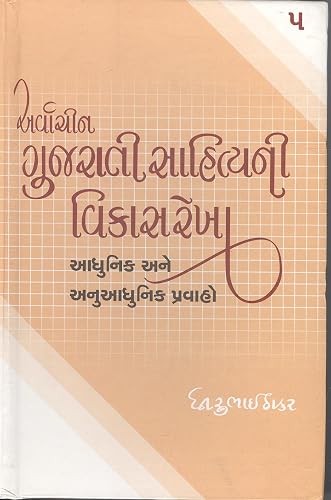
Arvachin Gujarati Sahityani Vikasrekha (અર્વાચીન ગુજરાતી સાહિત્યની વિકાસરેખા) by Dhirubhai Thaker
Core
Our anchor for modern literature. It is in several volumes arranged by period; read the volumes on the Sudharak, Pandit, Gandhi and Anu-Gandhi yugs and the later volumes for the Adhunik yug.
Gujarati Sahityano Itihas (ગુજરાતી સાહિત્યનો ઇતિહાસ) by Gujarati Sahitya Parishad (eds. Umashankar Joshi, Anantrai Raval and others)
Reference
The multi-volume standard history of Gujarati literature. Consult the volume for the period you are revising when you need more detail on a writer or form.
Gujarati Sahityana Margsuchak Stambho (ગુજરાતી સાહિત્યના માર્ગસૂચક સ્તંભો) by K. M. Jhaveri
Reference
A survey of the landmark writers and works of Gujarati literature. Use it for quick reference on the major figures of each period.

Preparing for Prelims too?
Our UPSC Prelims Topic-wise PYQ Book covers every Prelims question with detailed explanations, so you can see exactly where UPSC asks from. Now available as a hard copy and an eBook.
Buy Hard Copy on AmazonBuy eBook (PDF)Paper I Section B: Literary Forms and Criticism – Best Books
Medieval narratives (rasa, akhyan, padyavarta) and pada; Bhavai; novel and short story, drama, literary essay and lyrical poetry; history of theoretical Gujarati criticism; recent research in folk tradition.
Madhyakalna Sahityaprakaro (મધ્યકાળના સાહિત્યપ્રકારો) by Chandrakant Mehta
Core
Use it for the features and development of the medieval forms in the syllabus: rasa, phagu, akhyan, padyavarta and pada. Learn one example of each form from the prescribed texts.
Bhavai by Sudha R. Desai
Reference
A full study of Bhavai as a medieval dramatic form in Gujarat (Gujarat University, in English). Read the chapters on its origin, the vesh and its stage conventions for the Bhavai unit; it also helps with Pannalal Patel’s Manvini Bhavai.
Lokvidya Vignan (લોકવિદ્યા વિજ્ઞાન) by Hasu Yagnik
Reference
Consult it for the unit on recent research in folk tradition: approaches to folklore study and the work done on Gujarati folk literature.
Vangmayvimarsh (વાઙ્મયવિમર્શ) by Ramprasad Bakshi
Reference
A classic work of Gujarati literary theory. Use it with the history volumes for the unit on theoretical Gujarati criticism.
Paper II Section A: Prescribed texts (Medieval, Sudharak yug and Pandit yug)
Vasantvilas, Bhalan, Premanand, Shamal, Akho, Narmad, Dalpatram, Govardhanram Tripathi, Kant and Ramanbhai Nilkanth.
Vasantvilas Phagu (વસંતવિલાસ ફાગુ) by Anonymous (Ajnatkrut)
Prescribed
The whole phagu is prescribed. Read it in an annotated edition such as Kantilal Vyas’s; focus on the spring and love themes, the phagu form and the old Gujarati language.
Kadambari (કાદંબરી) by Bhalan
Prescribed
Bhalan’s Kadambari, his Gujarati rendering of Bana’s Sanskrit romance, is prescribed. Read it in an annotated edition; focus on how he adapts the source and on his place as an early akhyan poet.
Sudamacharit (સુદામાચરિત) by Premanand
Prescribed
The whole akhyan is prescribed (the syllabus prints it as Sudamacharitra). Read it in the original; focus on Premanand’s art of the akhyan, his humour and pathos, and the friendship of Krishna and Sudama.
Chandrachandravatini Varta (ચંદ્રચંદ્રાવતીની વાર્તા) by Shamal
Prescribed
The whole tale is prescribed. Read it in the original; focus on Shamal’s padyavarta form, his storytelling and the laukik (non-sectarian) tradition.
Akhegita (અખેગીતા) by Akho
Prescribed
The whole work is prescribed. Read it in an annotated edition; focus on Akho’s Jnanmargi (nirgun) thought, his satire on ritual and his images.
Mari Hakikat (મારી હકીકત) by Narmad (Narmadashankar Dave)
Prescribed
The whole autobiography is prescribed. Read it in the original; focus on Narmad’s reformist outlook, his frankness and the beginnings of modern Gujarati prose.
Farbasviraha (ફાર્બસવિરહ) by Dalpatram
Prescribed
The whole poem is prescribed. Read it in the original; focus on Dalpatram’s elegy for his friend A. K. Forbes and its Sudharak yug context.
Saraswatichandra (Part 1) (સરસ્વતીચંદ્ર (ભાગ 1)) by Govardhanram Tripathi
Prescribed
Only Part 1 is prescribed. Read it in full; focus on Saraswatichandra and Kumud, the conflict of tradition and modernity, and the novel as the defining work of the Pandit yug.
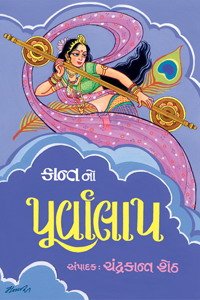
Purvalap (પૂર્વાલાપ) by Kant (Manishankar Ratnaji Bhatt)
Prescribed
The whole collection is prescribed. Read the poems in full; focus on Kant’s khandakavyas, his lyricism and his spiritual search.
Raino Parvat (રાઈનો પર્વત) by Ramanbhai Nilkanth
Prescribed
The whole play is prescribed. Read it in the original; focus on its plot, its social reform themes and its place in Pandit yug drama.
Akho: Ek Adhyayan (અખો : એક અધ્યયન) by Umashankar Joshi
Reference
Umashankar Joshi’s study of Akho. Read it after Akhegita for critical points on Akho’s thought and poetry.

Strengthen your GS papers
Our UPSC Mains Topic-wise & Year-wise PYQ Book (2013–2026) maps every GS question to the syllabus, so you know what UPSC asks and how often. Now available as a hard copy and an eBook.
Buy Hard Copy on AmazonBuy eBook (PDF)Paper II Section B: Prescribed texts (Gandhi yug, Anu-Gandhi yug and Adhunik yug)
Gandhi, K. M. Munshi, Ramnarayan Pathak, Zaverchand Meghani, Pannalal Patel, Rajendra Shah, Umashankar Joshi, Suresh Joshi and Sitanshu Yashashchandra.
Hind Swaraj (હિંદ સ્વરાજ) by Mohandas Karamchand Gandhi
Prescribed
The whole work is prescribed. Read the original Gujarati text; focus on Gandhi’s critique of modern civilisation, his idea of swaraj and his dialogue form and simple prose.
Patanni Prabhuta (પાટણની પ્રભુતા) by Kanaiyalal Munshi
Prescribed
The whole novel is prescribed. Read it in the original; focus on Munshi’s historical romance, the power struggles of Patan and his vivid characters.
Kavyani Shakti (કાવ્યની શક્તિ) by Ramnarayan Vishwanath Pathak
Prescribed
The whole work of criticism is prescribed. Read it in the original; focus on Pathak’s theory of poetry, which also serves the criticism unit of Paper I.
Saurashtrani Rasdhar (Part 1) (સૌરાષ્ટ્રની રસધાર (ભાગ 1)) by Zaverchand Meghani
Prescribed
Only Part 1 is prescribed. Read all its tales; focus on Meghani’s collection and retelling of Saurashtra’s folk stories, their heroes and his prose, which also links to the folk units of Paper I.
Manvini Bhavai (માનવીની ભવાઈ) by Pannalal Patel
Prescribed
The whole novel is prescribed. Read it in the original; focus on Kalu and Raju, the famine, the rural world of north Gujarat and Pannalal’s use of dialect.
Dhvani (ધ્વનિ) by Rajendra Shah
Prescribed
The whole collection is prescribed. Read the poems in full; focus on Rajendra Shah’s lyricism, his song forms and his spiritual vision.
Saptapadi (સપ્તપદી) by Umashankar Joshi
Prescribed
The whole work is prescribed. Read the poems in full; focus on their themes, form and Umashankar’s development as a poet.
Janantike (જનાન્તિકે) by Suresh Joshi
Prescribed
The whole collection of essays is prescribed. Read them in full; focus on Suresh Joshi’s personal essay form, his imagery and his modernist sensibility.
Ashwatthama (અશ્વત્થામા) by Sitanshu Yashashchandra
Prescribed
The whole work is prescribed. Read it in the original; focus on how it reworks the myth of Ashwatthama, its experimental form and its Adhunik yug concerns.
Ekatra Foundation by Ekatra Foundation
Website
A free digital library of Gujarati literature. Check it for older prescribed texts and classic criticism before buying print copies.
Gujarati Vishwakosh by Gujarati Vishwakosh Trust
Website
The Gujarati encyclopaedia online. Use its entries on the prescribed authors, the yugs and the literary forms for reliable facts and dates.
How to use this Gujarati Literature Optional booklist
- Read all nineteen Paper II texts in the original, keeping to the prescribed portions such as Saraswatichandra Part 1 and Saurashtrani Rasdhar Part 1. For each, note its theme, form, yug, language and two critical views.
- Learn the yugs as a framework: for the Sudharak, Pandit, Gandhi, Anu-Gandhi and Adhunik yugs, note the dates, the main writers, the dominant forms and the ideas that defined each period.
- For the language section, prepare examples for each sound and form change from Apabhramsha to modern Gujarati, and a short note with sample words on the Surti, Pattani, Charotari and Saurashtri dialects.
- Prepare each medieval form (rasa, phagu, akhyan, padyavarta, pada) with its features and one or two examples; the prescribed Vasantvilas, Sudamacharit and Chandrachandravatini Varta give you ready examples.
- Link Paper I and Paper II in every answer where you can: Akho for the Jnanmargi tradition, Narmad and Dalpatram for the Sudharak yug, Govardhanram for the Pandit yug, Meghani and Pannalal for the Gandhi and Anu-Gandhi yugs.
- For the criticism unit, keep short notes on the views of Narmad, Navalram, Ramnarayan Pathak, Umashankar Joshi and Suresh Joshi; Pathak’s Kavyani Shakti and Suresh Joshi’s Janantike are themselves prescribed.
Some books you find useful may not be on this list. Use them if they fall within the syllabus and help you answer previous year questions. If you spot a wrong title, an outdated edition or a broken link, tell us on the Report an Error page.
FAQs
Which are the best books for Gujarati Literature Optional Paper I?
Our core picks, section by section – Gujarati Language and History of Gujarati Literature: Gujarati Bhasha: Udgam, Vikas ane Swarup (K. B. Vyas), Gujarati Sahitya (Madhyakalin) (Anantrai Raval), Arvachin Gujarati Sahityani Vikasrekha (Dhirubhai Thaker); Literary Forms and Criticism: Madhyakalna Sahityaprakaro (Chandrakant Mehta). Each book above is tagged so you know what to read first.
Which texts are prescribed for Gujarati Literature Optional?
The UPSC syllabus prescribes 19 texts for first-hand reading: Vasantvilas Phagu (Anonymous (Ajnatkrut)); Kadambari (Bhalan); Sudamacharit (Premanand); Chandrachandravatini Varta (Shamal); Akhegita (Akho); Mari Hakikat (Narmad (Narmadashankar Dave)); Farbasviraha (Dalpatram); Saraswatichandra (Part 1) (Govardhanram Tripathi); Purvalap (Kant (Manishankar Ratnaji Bhatt)); Raino Parvat (Ramanbhai Nilkanth); Hind Swaraj (Mohandas Karamchand Gandhi); Patanni Prabhuta (Kanaiyalal Munshi); Kavyani Shakti (Ramnarayan Vishwanath Pathak); Saurashtrani Rasdhar (Part 1) (Zaverchand Meghani); Manvini Bhavai (Pannalal Patel); Dhvani (Rajendra Shah); Saptapadi (Umashankar Joshi); Janantike (Suresh Joshi); Ashwatthama (Sitanshu Yashashchandra). We list the exact portions under each text above.
In which language must I write answers in Gujarati Literature Optional?
Both papers must be answered in Gujarati, as the UPSC syllabus states for Gujarati Literature.
Do I need to read every book on this list?
Read every prescribed text in the original, since Paper II tests first-hand reading. For Paper I, read the Core books fully, choose only one book wherever we list an Alternative, and use Reference books only for specific topics.
Last updated: 2 November 2026