
This is our topic-wise booklist for Mechanical Engineering Optional, arranged by the official UPSC syllabus for Paper I and Paper II. We have picked the standard B.E./B.Tech. textbooks that CSE and ESE aspirants use most, and marked each one so you know what to read fully and what to consult for specific topics. Both papers mix derivations with numericals, so read for concepts and solve problems from the same books.
Use this booklist together with the Mechanical Engineering Optional syllabus, the topic-wise PYQs and the year-wise question papers. The previous year questions show you which chapters of these books UPSC actually asks from.
Jump to: Paper I: Mechanics (Rigid and Deformable Bodies) · Paper I: Engineering Materials · Paper I: Theory of Machines · Paper I: Manufacturing Science – Manufacturing Processes · Paper I: Manufacturing Science – Manufacturing Management · Paper II: Thermodynamics, Gas Dynamics and Turbines · Paper II: Heat Transfer · Paper II: I.C. Engines · Paper II: Steam Engineering · Paper II: Refrigeration and Air-Conditioning
Some links on this page are Amazon affiliate links. If you buy through them, we may earn a small commission at no extra cost to you.
Paper I: Mechanics (Rigid and Deformable Bodies) – Best Books
Equilibrium, moments of area, friction and particle dynamics; stresses and strains, bending and torsion, principal stresses, pressure vessels, deflection and failure theories.
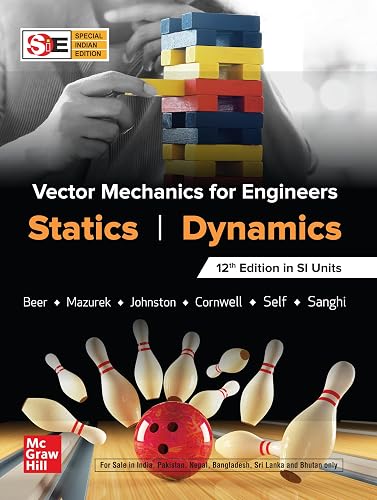
Vector Mechanics for Engineers: Statics and Dynamics by Ferdinand P. Beer, E. Russell Johnston and others
Core
We recommend this for the rigid body part of the section. Read equilibrium in space, centroids and moments of inertia, friction, and kinematics and kinetics of particles, and solve the sample problems.
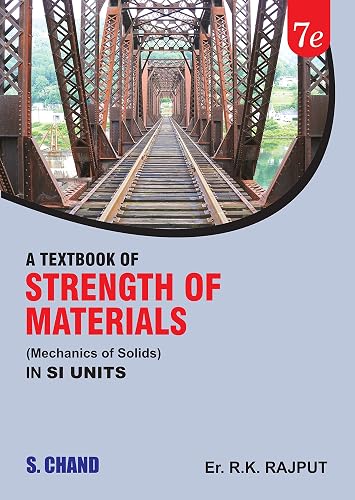
Strength of Materials by R.K. Rajput
Core
Use this as your main book for mechanics of deformable bodies. It covers stresses, bending and shear in beams, torsion, principal stresses, thin cylinders, deflection and theories of failure with many solved numericals.
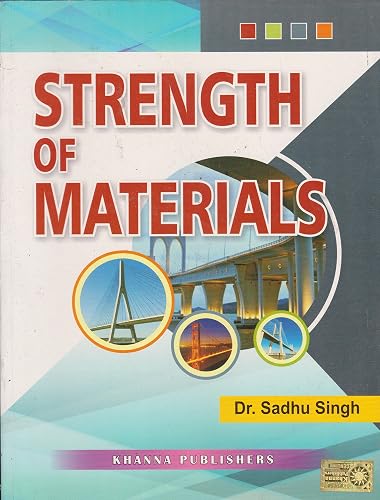
Strength of Materials by Sadhu Singh
Alternative
Pick this or Rajput. It is compact and suits quick revision of formulas and standard derivations.
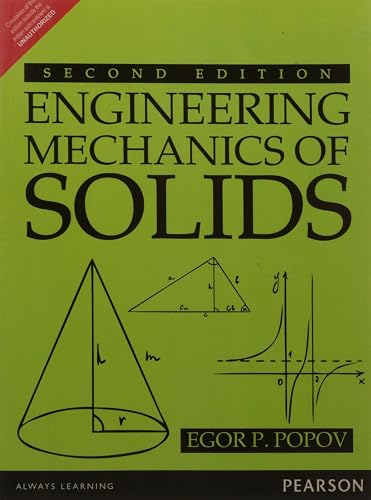
Engineering Mechanics of Solids by Egor P. Popov
Reference
Consult this for a deeper treatment of combined stresses, shaft design under bending and torsion, and material behaviour. Use it for specific topics, not cover to cover.
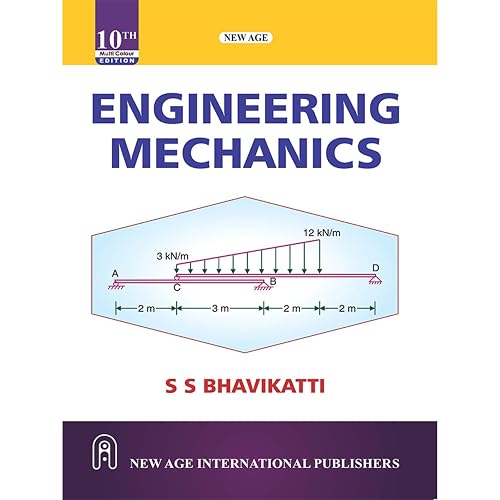
Engineering Mechanics by S.S. Bhavikatti and K.G. Rajashekarappa
Beginner
Read this first if you have not studied engineering mechanics recently. It explains free-body diagrams, friction and dynamics in simple language before you move to Beer and Johnston.

Preparing for Prelims too?
Our UPSC Prelims Topic-wise PYQ Book covers every Prelims question with detailed explanations, so you can see exactly where UPSC asks from. Now available as a hard copy and an eBook.
Buy Hard Copy on AmazonBuy eBook (PDF)Paper I: Engineering Materials – Best Books
Structure of solids, ferrous and non-ferrous materials, heat treatment of steels, plastics, ceramics, composites and nanomaterials.
Materials Science and Engineering: An Introduction by William D. Callister and David G. Rethwisch
Core
We recommend this as the main materials book. Read crystal structures, imperfections, phase diagrams, the iron-carbon system, heat treatment, and the chapters on polymers, ceramics and composites.
Materials Science and Engineering: A First Course by V. Raghavan
Alternative
Pick this or Callister. It is shorter and well suited to students who want concise coverage of structure, phase diagrams and properties.
Introduction to Physical Metallurgy by Sidney H. Avner
Reference
Consult this for heat treatment of steels, alloy steels, cast irons and non-ferrous alloys. Its explanations help with descriptive questions on heat treatment processes.
A Textbook of Material Science and Metallurgy by O.P. Khanna
Beginner
Read this first if materials science is new to you. It gives simple coverage of metals, heat treatment and non-metals before you move to Callister.
Paper I: Theory of Machines – Best Books
Kinematics and dynamics of plane mechanisms, cams, gears and gear trains, flywheels, governors, balancing, vibrations and whirling of shafts.
Theory of Machines by S.S. Rattan
Core
We recommend this as your main book for theory of machines. It covers velocity and acceleration analysis, cams, gears, flywheels, governors, balancing and vibrations with solved problems for every chapter.
Theory of Machines and Mechanisms by John J. Uicker, Gordon R. Pennock and Joseph E. Shigley
Alternative
Pick this if you prefer a more analytical approach to kinematics and dynamics. It is useful for derivation-heavy questions on mechanisms and cams.
Mechanical Vibrations by G.K. Grover
Reference
Consult this for free and forced vibrations of single-degree systems and whirling of shafts. It has many numericals for practice.
Paper I: Manufacturing Science – Manufacturing Processes – Best Books
Machine tools and metal cutting, tool life, NC/CNC machining, jigs and fixtures, non-conventional machining, forming, welding and metrology.
Manufacturing Technology (Vol. 1 and 2) by P.N. Rao
Core
We recommend Volume 1 for casting, forming and welding and Volume 2 for metal cutting, machine tools, CNC and non-conventional machining. Together they cover most of this section.
Manufacturing Science by Amitabha Ghosh and Asok Kumar Mallik
Alternative
Pick this or P.N. Rao. It is stronger on the analysis of metal cutting and forming, which helps with numerical questions.
Production Technology by HMT
Reference
Consult this for machine tools, jigs and fixtures and practical shop-floor details. It is useful for descriptive questions with sketches.
Modern Machining Processes by P.C. Pandey and H.S. Shan
Reference
Consult this for EDM, ECM, ultrasonic, water jet, laser and plasma machining. Read the principle, process parameters and applications of each.
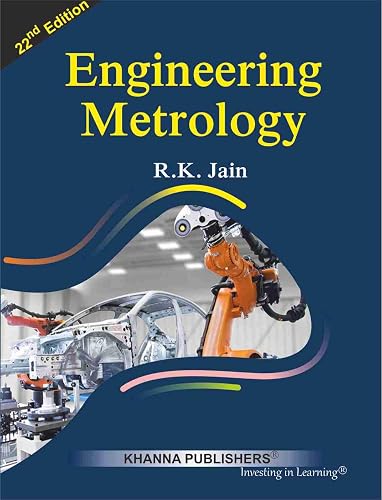
Engineering Metrology and Measurements by R.K. Jain
Reference
Consult this for limits, fits and tolerances, gauge design and comparators. A few chapters cover the metrology part of the syllabus.
Paper I: Manufacturing Science – Manufacturing Management – Best Books
Plant location and layout, break-even analysis, forecasting, inventory and JIT, scheduling, quality control charts, project management, TQM and lean systems.
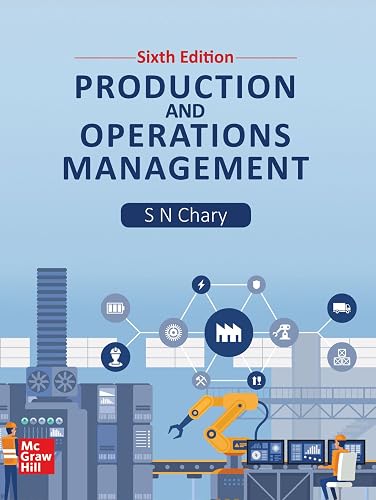
Production and Operations Management by S.N. Chary
Core
We recommend this for the management part of Paper I. Read plant location and layout, forecasting, inventory models, scheduling, quality control and project management.
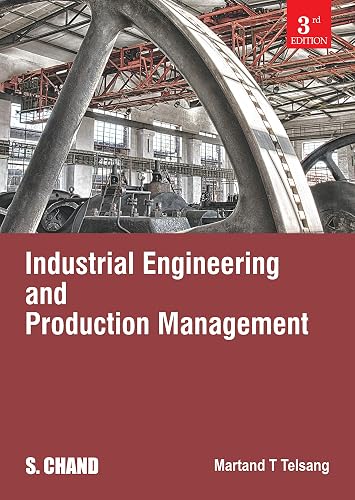
Industrial Engineering and Production Management by Martand Telsang
Alternative
Pick this or Chary. It suits engineering students and covers work study, time standards, assembly line balancing and quality control with numericals.
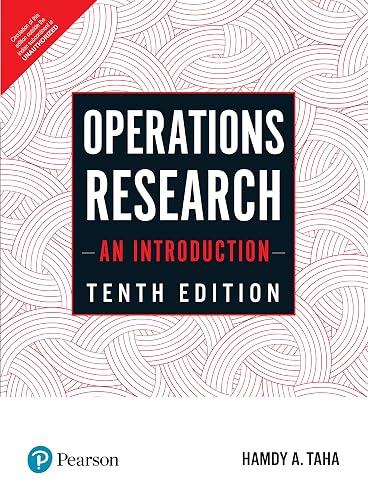
Operations Research: An Introduction by Hamdy A. Taha
Reference
Consult the chapters on inventory models and CPM/PERT for numerical practice. You do not need the rest of the book for this syllabus.
Statistical Quality Control by M. Mahajan
Reference
Consult this for control charts, acceptance sampling and quality costs. Practise drawing and interpreting X-bar, R, p and c charts.
Paper II: Thermodynamics, Gas Dynamics and Turbines – Best Books
Laws of thermodynamics, entropy and availability; compressible flow, shocks and nozzles; fans, compressors, turbine cascades and gas turbine cycles.
Engineering Thermodynamics by P.K. Nag
Core
We recommend this as your main thermodynamics book. Read the first and second laws, entropy, availability and irreversibility, and work through the solved and exercise problems.
Fundamentals of Compressible Flow with Aircraft and Rocket Propulsion by S.M. Yahya
Core
Use this for gas dynamics. Read isentropic flow, normal and oblique shocks, and flow through ducts with friction (Fanno) and heat transfer (Rayleigh).
Thermodynamics: An Engineering Approach by Yunus A. Cengel and Michael A. Boles
Alternative
Pick this or Nag. It explains concepts with many examples and diagrams, which helps if you find Nag dense.
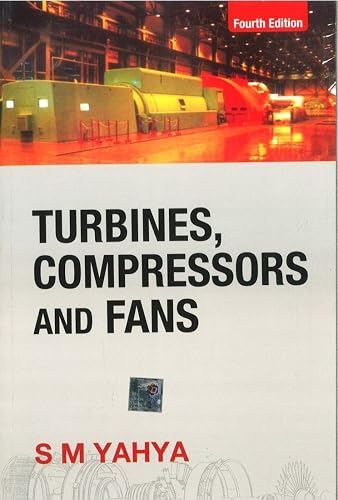
Turbines, Compressors and Fans by S.M. Yahya
Reference
Consult this for axial and centrifugal compressors, fans and blowers, and turbine cascades. Read velocity triangles and stage efficiencies for numericals.
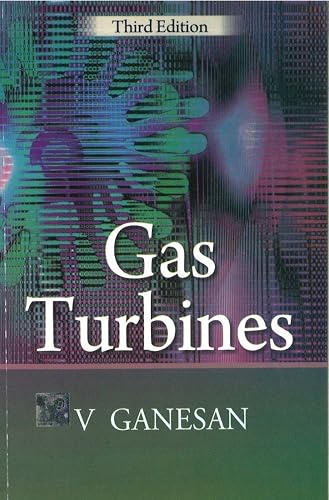
Gas Turbines by V. Ganesan
Reference
Consult this for open and closed gas turbine cycles with reheat, intercooling and regeneration. It complements Nag for cycle numericals.

Strengthen your GS papers
Our UPSC Mains Topic-wise & Year-wise PYQ Book (2013–2026) maps every GS question to the syllabus, so you know what UPSC asks and how often. Now available as a hard copy and an eBook.
Buy Hard Copy on AmazonBuy eBook (PDF)Paper II: Heat Transfer – Best Books
Steady conduction, free and forced convection, boundary layers and analogies, black body radiation and heat exchanger analysis.
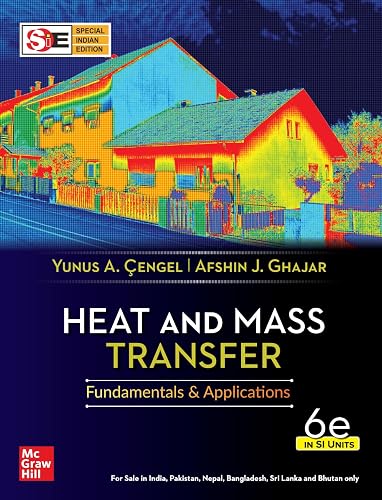
Heat and Mass Transfer: Fundamentals and Applications by Yunus A. Cengel and Afshin J. Ghajar
Core
We recommend this as your main heat transfer book. Read conduction, convection over plates and in tubes, radiation laws and heat exchangers (LMTD and NTU methods).
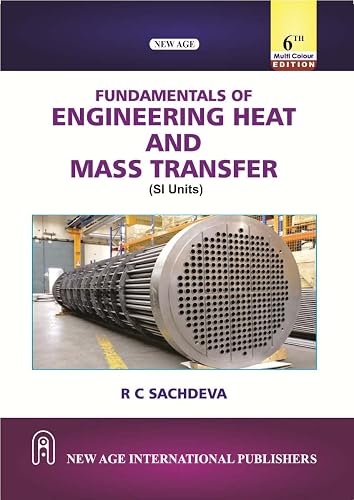
Fundamentals of Engineering Heat and Mass Transfer by R.C. Sachdeva
Alternative
Pick this or Cengel. It is closer to the Indian university style and has many solved numericals.
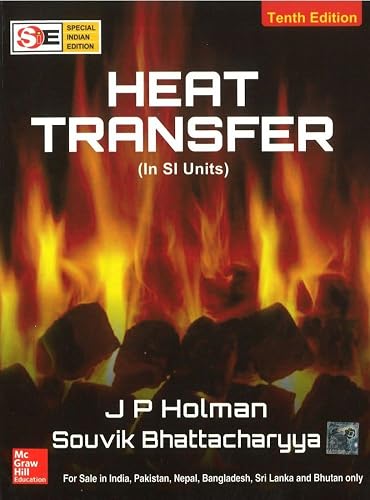
Heat Transfer by J.P. Holman
Reference
Consult this for concise derivations on boundary layers and the Reynolds and Colburn analogies.
Paper II: I.C. Engines – Best Books
Engine cycles and performance, SI and CI combustion, knocking and chamber design, fuels and emissions, engine systems and alternative fuels.
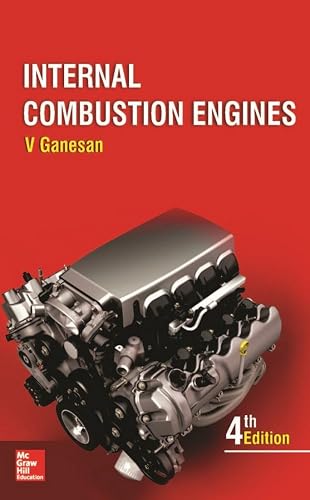
Internal Combustion Engines by V. Ganesan
Core
We recommend this as your main I.C. engines book. It covers cycles, combustion in SI and CI engines, knocking, fuels, emissions and engine systems.
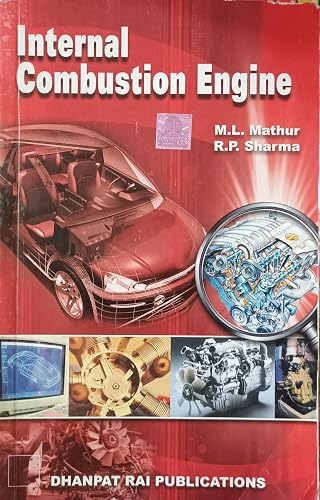
A Course in Internal Combustion Engines by M.L. Mathur and R.P. Sharma
Alternative
Pick this or Ganesan. It is detailed on engine testing and performance, with many numericals.
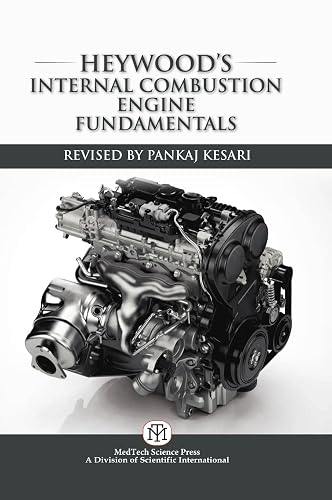
Internal Combustion Engine Fundamentals by John B. Heywood
Reference
Consult this only for deeper explanations of combustion and emission formation. It is too detailed to read fully.
Paper II: Steam Engineering – Best Books
Boilers and Rankine cycle, steam nozzles, steam turbines and governing, reheat and regeneration, combined cycles, HRSG and co-generation.
Power Plant Engineering by P.K. Nag
Core
We recommend this for steam generation and power cycles. Read the Rankine cycle with reheat and regeneration, modern boilers, supercritical cycles, combined cycles and co-generation.
A Course in Power Plant Engineering by S.C. Arora and S. Domkundwar
Alternative
Pick this or Nag. It is more descriptive and has good diagrams of boilers and plant components.
Applied Thermodynamics by Onkar Singh
Reference
Consult this for steam nozzles, the Wilson line and supersaturated flow, compounding, and impulse and reaction turbine numericals.
Thermal Engineering by R.K. Rajput
Reference
Use this for extra solved problems on nozzles and turbines, and for quick revision of steam engineering topics.
Paper II: Refrigeration and Air-Conditioning – Best Books
Vapour compression and absorption systems, eco-friendly refrigerants, system components, psychrometry, cooling load calculation and duct design.
Refrigeration and Air Conditioning by C.P. Arora
Core
We recommend this as your main RAC book. Read the vapour compression cycle on p-h and T-s charts, refrigerants, components, absorption systems, psychrometry and load calculation.
A Course in Refrigeration and Air Conditioning by S.C. Arora and S. Domkundwar
Alternative
Pick this or C.P. Arora. It has a large set of solved numericals on cycles and psychrometric processes.
A Textbook of Refrigeration and Air Conditioning by R.S. Khurmi and J.K. Gupta
Beginner
Read this first if RAC is new to you. It explains the basics simply before you move to C.P. Arora.
NPTEL Mechanical Engineering Courses by IITs and IISc
Website
Free video lectures and notes on thermodynamics, heat transfer, RAC, I.C. engines and manufacturing. Use them for topics you cannot follow from the book.
How to use this Mechanical Engineering Optional booklist
- Start with Paper I mechanics and strength of materials, and Paper II thermodynamics, since theory of machines, heat transfer and steam engineering build on them.
- Solve numericals from the same book you read; use CSE and ESE conventional previous year papers for extra practice.
- Keep property tables, steam tables, the Mollier chart and the psychrometric chart beside you while practising Paper II.
- Manufacturing management is largely theory with some numericals, so make short notes with neat diagrams and practise inventory, break-even and control chart problems.
- Maintain a formula sheet for each section and revise it every week.
- In the final two months, write full-length tests under time limits and show every step with units and labelled diagrams.
Some books you find useful may not be on this list. Use them if they fall within the syllabus and help you answer previous year questions – that is the only test that matters. If you spot an outdated edition or a broken link, tell us on the Report an Error page.
FAQs
Which are the best books for Mechanical Engineering Optional?
Our core picks, section by section – Mechanics (Rigid and Deformable Bodies): Vector Mechanics for Engineers: Statics and Dynamics (Ferdinand P. Beer, E. Russell Johnston and others), Strength of Materials (R.K. Rajput); Engineering Materials: Materials Science and Engineering: An Introduction (William D. Callister and David G. Rethwisch); Theory of Machines: Theory of Machines (S.S. Rattan); Manufacturing Science – Manufacturing Processes: Manufacturing Technology (Vol. 1 and 2) (P.N. Rao); Manufacturing Science – Manufacturing Management: Production and Operations Management (S.N. Chary); Thermodynamics, Gas Dynamics and Turbines: Engineering Thermodynamics (P.K. Nag), Fundamentals of Compressible Flow with Aircraft and Rocket Propulsion (S.M. Yahya); Heat Transfer: Heat and Mass Transfer: Fundamentals and Applications (Yunus A. Cengel and Afshin J. Ghajar); I.C. Engines: Internal Combustion Engines (V. Ganesan); Steam Engineering: Power Plant Engineering (P.K. Nag); Refrigeration and Air-Conditioning: Refrigeration and Air Conditioning (C.P. Arora). Each book above is tagged Core, Alternative, Reference, Beginner or Website, so you know what to read first.
Which book should I start Mechanical Engineering Optional with?
If you are new to the subject, begin with Engineering Mechanics (S.S. Bhavikatti and K.G. Rajashekarappa), A Textbook of Material Science and Metallurgy (O.P. Khanna), A Textbook of Refrigeration and Air Conditioning (R.S. Khurmi and J.K. Gupta), and then move to the Core books for each section.
Do I need to read every book on this list?
No. Read the Core books fully, choose only one book wherever we list an Alternative, and use Reference books only for specific topics. Keep your sources few and revise them several times.
Where can I find Mechanical Engineering Optional previous year questions?
All Mechanical Engineering Optional PYQs are on our topic-wise PYQs page, and full papers are on the year-wise question papers page. The syllabus page breaks each unit into numbered topics.
Last updated: 2 November 2026