
This booklist follows the UPSC Commerce and Accountancy syllabus section by section, so you can see which book covers which part of Paper I and Paper II. We have kept to the standard textbooks and free ICAI material that successful candidates use, and marked each one by priority so you know what to read fully and what to consult only for specific topics.
Use this booklist together with the Commerce Optional syllabus, the topic-wise PYQs and the year-wise question papers. The previous year questions show you which chapters of these books UPSC actually asks from.
Jump to: Paper I (Accounting, Taxation and Auditing): Financial Accounting · Paper I (Accounting, Taxation and Auditing): Cost Accounting · Paper I (Accounting, Taxation and Auditing): Taxation · Paper I (Accounting, Taxation and Auditing): Auditing · Paper I (Financial Management, Financial Institutions and Markets): Financial Management · Paper I (Financial Management, Financial Institutions and Markets): Financial Markets and Institutions · Paper II (Organisation Theory and Behaviour): Organisation Theory and Organisation Behaviour · Paper II (Human Resources Management and Industrial Relations): Human Resources Management · Paper II (Human Resources Management and Industrial Relations): Industrial Relations
Some links on this page are Amazon affiliate links. If you buy through them, we may earn a small commission at no extra cost to you.
Paper I (Accounting, Taxation and Auditing): Financial Accounting – Best Books
Accounting as an information system, accounting standards, share capital transactions, company final accounts, and amalgamation, absorption and reconstruction.
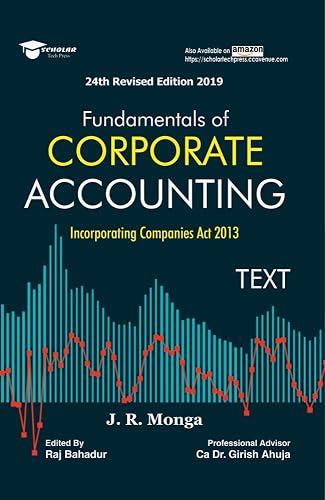
Fundamentals of Corporate Accounting by J.R. Monga
Core
This is the main text for the company accounts part of the syllabus. Read the chapters on share capital, bonus and rights issues, buy-back, final accounts and amalgamation, and work through the solved illustrations.
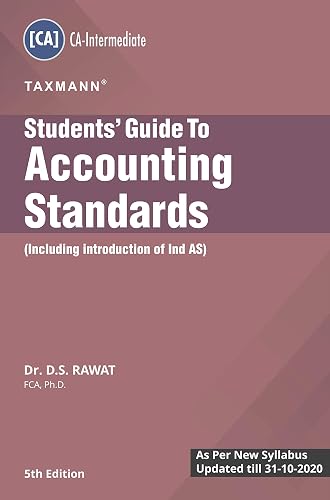
Students’ Guide to Accounting Standards by D.S. Rawat
Core
Use it for the accounting standards named in the syllabus (depreciation, inventories, revenue recognition, construction contracts, cash flow, EPS and others). Each standard comes with short notes and examples, which suit both theory and numerical questions.
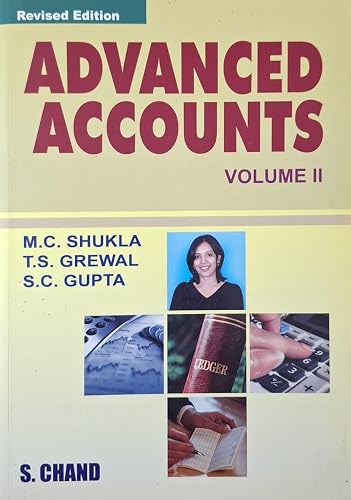
Advanced Accounts, Vol. II by M.C. Shukla, T.S. Grewal and S.C. Gupta
Alternative
This is a long-standing alternative to Monga, with plenty of practice problems on company accounts and amalgamation. Pick one of the two and do not try to finish both.
NCERT Accountancy, Classes XI and XII by NCERT
Beginner
If you do not have a commerce background, start here for journal entries, final accounts and the basics of company accounts. A non-commerce student can cover both years in about two weeks.
ICAI Intermediate Study Material: Advanced Accounting by Board of Studies, ICAI
Website
This free official module covers accounting standards and company accounts with fully solved illustrations. We recommend it for practice questions and for the current wording of the standards.

Preparing for Prelims too?
Our UPSC Prelims Topic-wise PYQ Book covers every Prelims question with detailed explanations, so you can see exactly where UPSC asks from. Now available as a hard copy and an eBook.
Buy Hard Copy on AmazonBuy eBook (PDF)Paper I (Accounting, Taxation and Auditing): Cost Accounting – Best Books
Cost concepts, job, process and activity-based costing, CVP analysis, decision-making costing, budgeting, standard costing and responsibility accounting.
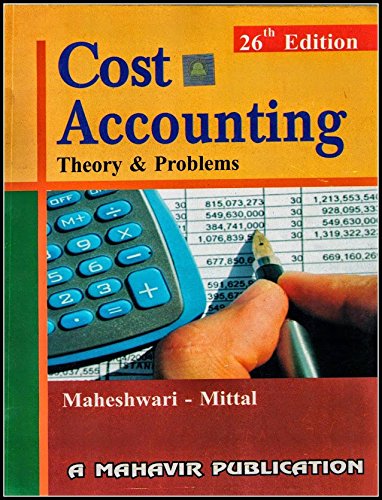
Cost Accounting: Theory and Problems by S.N. Maheshwari and S.N. Mittal
Core
This is the standard book for cost accounting in this optional, with theory and a large bank of problems. Read the syllabus chapters fully and practise the solved problems on variance analysis, marginal costing and process costing.
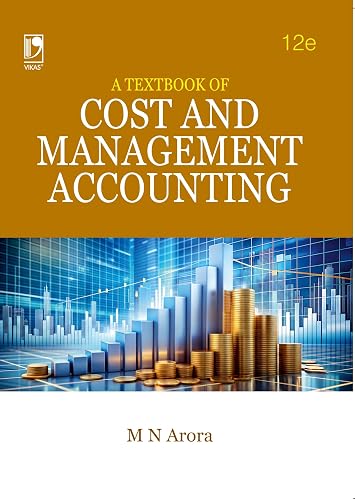
A Textbook of Cost and Management Accounting by M.N. Arora
Alternative
This book explains costing theory more clearly and in more detail than most problem books. Use it instead of Maheshwari and Mittal if you prefer more theory, especially for budgeting, standard costing and responsibility accounting.
ICAI Intermediate Study Material: Cost and Management Accounting by Board of Studies, ICAI
Website
This is the free ICAI module on costing. Use it for extra practice questions, particularly on activity-based costing and decisions such as make-or-buy and shutdown.
Paper I (Accounting, Taxation and Auditing): Taxation – Best Books
Income tax definitions, residence and incidence, exempt incomes, the five heads of income, clubbing, set-off and carry forward of losses, deductions, and indirect tax (now GST).
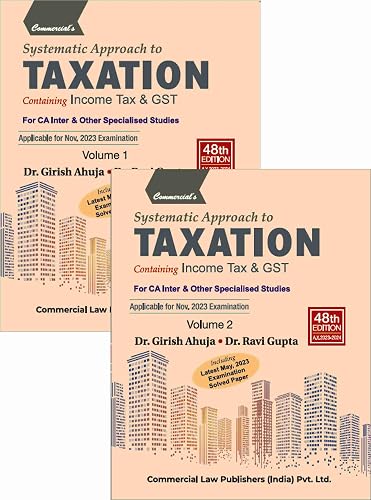
Systematic Approach to Taxation (Income Tax and GST) by Girish Ahuja and Ravi Gupta
Core
This book is written for CA Intermediate and covers the income tax computations UPSC asks, with many solved illustrations. Buy the latest edition based on the Income-tax Act, 2025, which applies from 1 April 2026. Read the GST part only for its basic features, because the syllabus still names VAT and service tax.
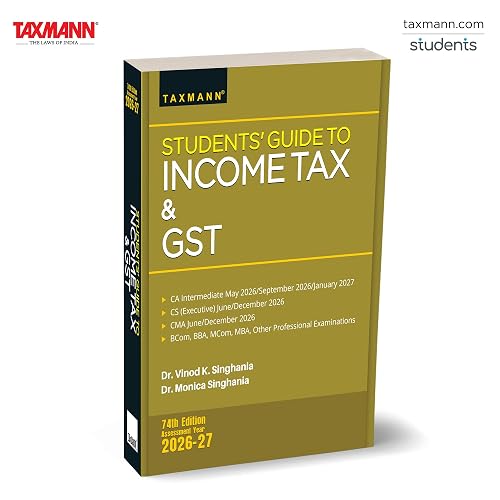
Students’ Guide to Income Tax including GST by V.K. Singhania and Monica Singhania
Alternative
This is a well-organised alternative to Ahuja and Gupta, with short chapters and worked examples. Choose one of the two and stick with it through your revisions.
ICAI Intermediate Study Material: Taxation by Board of Studies, ICAI
Website
The free ICAI taxation module is updated quickly after each Finance Act. Use it to check current provisions and to practise computations.
Income Tax Department e-Filing Portal (Acts, Rules and FAQs) by Income Tax Department, Government of India
Website
This is the official source for the Income-tax Act, 2025 and the CBDT FAQs on the move from the 1961 Act. Consult it when a book’s section reference and the new Act do not match.
Paper I (Accounting, Taxation and Auditing): Auditing – Best Books
Company audit, divisible profits and dividends, special investigations, tax audit, and audit of banks, insurance companies, non-profit organisations and trusts.
Students’ Guide to Auditing and Ethics by Aruna Jha
Core
This is the book most toppers name for auditing. Read only the chapters that match the syllabus, such as company audit, bank audit, audit of non-profit organisations and special investigations, and note the relevant Companies Act sections.
Contemporary Auditing by Kamal Gupta
Reference
Use it for topics that Aruna Jha covers briefly, such as divisible profits, dividends and special investigations. You only need it for selected chapters.
ICAI Intermediate Study Material: Auditing and Ethics by Board of Studies, ICAI
Website
The free ICAI module has detailed chapters on bank audit and audit of different entities. It also gives the current position on Standards on Auditing.
Paper I (Financial Management, Financial Institutions and Markets): Financial Management – Best Books
Finance function, financial analysis, capital budgeting, cost of capital, capital structure and leverage, dividend models, working capital, and mergers and acquisitions.
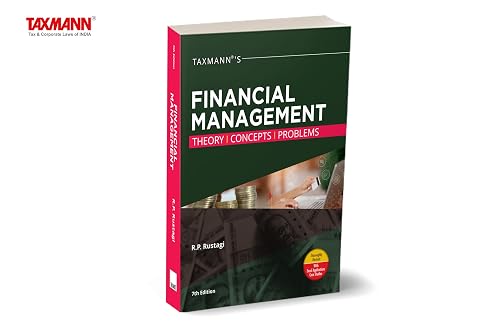
Financial Management: Theory, Concepts and Problems by R.P. Rustagi
Core
Toppers often say they did not go beyond Rustagi for this section. It covers theory and numericals on capital budgeting, the cost of capital, leverage, MM theory, dividend models and working capital, so we recommend reading the syllabus chapters cover to cover.
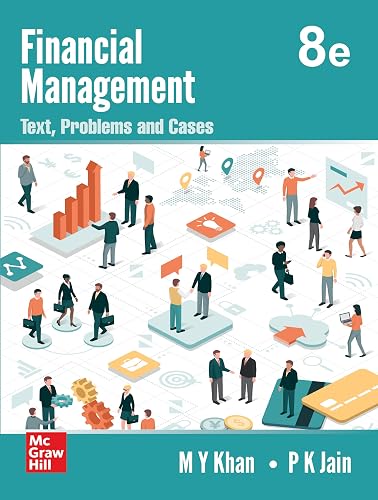
Financial Management: Text, Problems and Cases by M.Y. Khan and P.K. Jain
Alternative
This is a problem-heavy alternative to Rustagi, good for capital budgeting under risk and for working capital management. Use one of the two as your main book.
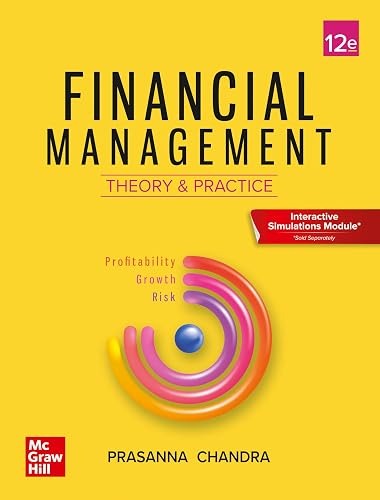
Financial Management: Theory and Practice by Prasanna Chandra
Reference
Consult it for clear explanations of conceptual questions, such as Lintner’s model, CAPM-based cost of equity and the financial side of mergers. You do not need to read it in full.

Strengthen your GS papers
Our UPSC Mains Topic-wise & Year-wise PYQ Book (2013–2026) maps every GS question to the syllabus, so you know what UPSC asks and how often. Now available as a hard copy and an eBook.
Buy Hard Copy on AmazonBuy eBook (PDF)Paper I (Financial Management, Financial Institutions and Markets): Financial Markets and Institutions – Best Books
Indian financial system, money markets, commercial banks and reforms, RBI’s role, capital markets and SEBI, mutual funds, venture capital, credit rating and insurance.
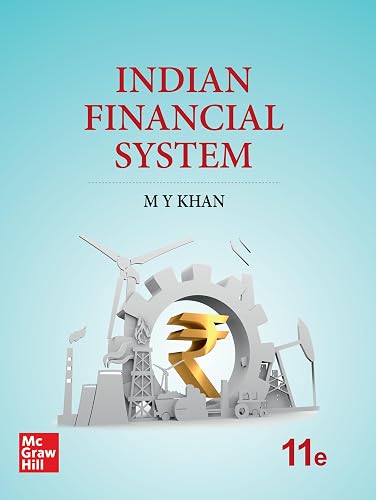
Indian Financial System by M.Y. Khan
Core
This book covers the whole section, from money markets and banking to SEBI, mutual funds, venture capital and credit rating. Read the syllabus chapters fully and update the figures from RBI and SEBI sources.
Indian Financial System by Bharati V. Pathak
Alternative
Some toppers have used this instead of M.Y. Khan. It is good on capital market instruments and regulation, so choose whichever book you find easier to read.
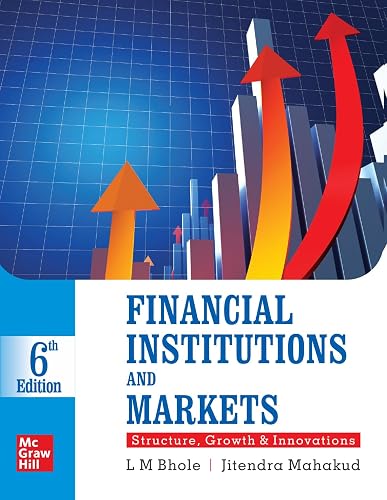
Financial Institutions and Markets by L.M. Bhole and Jitendra Mahakud
Reference
Use it for background on banking sector reforms and how the money market is structured. Read only the chapters you need.
Reserve Bank of India: Publications and Monetary Policy Statements by Reserve Bank of India
Website
Follow the monetary policy statements, the Financial Stability Report and the annual report. They give you current examples of RBI’s regulatory role for your answers.
SEBI: Circulars, Regulations and Annual Report by Securities and Exchange Board of India
Website
Check SEBI’s annual report and its major circulars for recent capital market reforms. These are frequent material for short notes.
Paper II (Organisation Theory and Behaviour): Organisation Theory and Organisation Behaviour – Best Books
Nature of organisations, classical to systems theories, organisational design, structure, culture, power and politics, personality, perception, motivation, leadership, conflict, TA and change.
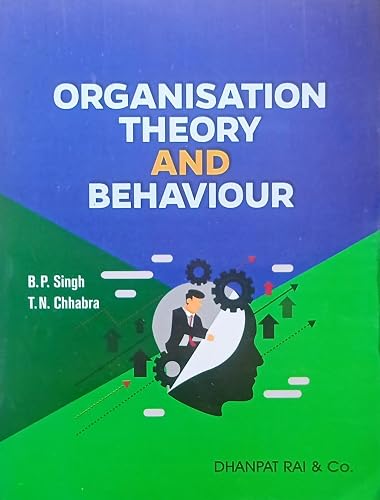
Organisation Theory and Behaviour by B.P. Singh and T.N. Chhabra
Core
This book follows the UPSC Paper II structure closely and is the standard Indian text for this part. Read it fully and build your own short notes with diagrams for revision.
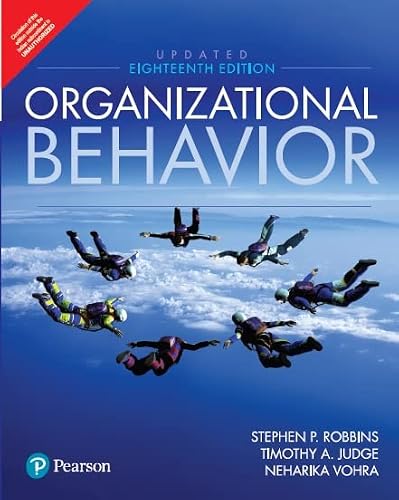
Organizational Behaviour by Stephen P. Robbins, Timothy A. Judge and Neharika Vohra
Alternative
This is the international standard for OB, with Indian cases. Use the chapters on personality, perception, motivation, leadership, conflict and change for models and current research.
Organization Theory: Structure, Design and Applications by Stephen P. Robbins
Reference
Consult it for the design part of the syllabus: differentiation and integration, centralisation, formalisation, mechanistic versus organic structures and the effect of technology. Reading selected chapters is enough.
Organisational Behaviour by L.M. Prasad
Beginner
If you are new to management subjects, this is a simple first read on the main OB concepts. Move on to Singh and Chhabra once the basics are clear.
Paper II (Human Resources Management and Industrial Relations): Human Resources Management – Best Books
HR planning, job analysis, recruitment and selection, training, performance appraisal and 360-degree feedback, wage administration, job evaluation, welfare and separations.
Human Resource and Personnel Management: Text and Cases by K. Aswathappa
Core
This is the most widely used HRM text for this optional. Read the syllabus chapters fully, from HR planning and job analysis to wage administration and separations, and note the Indian examples.
Human Resource Management by C.B. Gupta
Alternative
This is a compact, exam-friendly alternative to Aswathappa, and some toppers relied on it for HRM. Pick the one whose style suits you.
Human Resource Management by Gary Dessler and Biju Varkkey
Reference
Consult it for current practices in performance management and compensation that you can quote in answers. Read selected chapters only.
Paper II (Human Resources Management and Industrial Relations): Industrial Relations – Best Books
Trade unions and their legislation, industrial disputes and settlement, workers’ participation in management, collective bargaining, IR in public enterprises, absenteeism, labour turnover and the ILO.
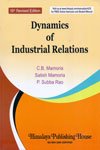
Dynamics of Industrial Relations by C.B. Mamoria, Satish Mamoria and S.V. Gankar
Core
This is the standard Indian text on IR, covering trade unions, disputes, collective bargaining, workers’ participation and the ILO. Read it with the four Labour Codes in mind, because older editions describe the repealed Acts.
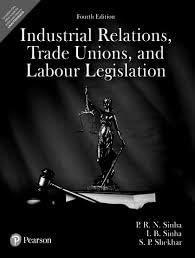
Industrial Relations, Trade Unions and Labour Legislation by P.R.N. Sinha, Indu Bala Sinha and Seema Priyadarshini Shekhar
Alternative
This is a more analytical alternative to Mamoria, strong on how the trade union movement developed in India and on labour law. Use it if you want deeper material for 15- and 20-mark answers.
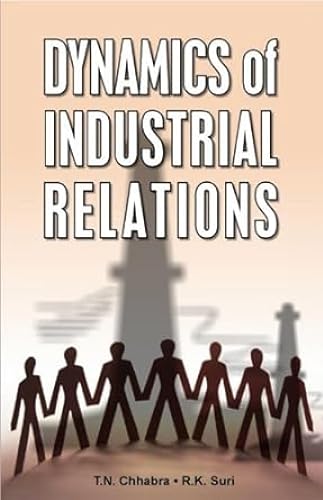
Industrial Relations: Concepts and Issues by T.N. Chhabra and R.K. Suri
Reference
This is a concise book that matches the UPSC topic list closely. Use it for quick revision of absenteeism, labour turnover and IR in public enterprises.
Ministry of Labour and Employment: Labour Codes by Ministry of Labour and Employment, Government of India
Website
All four Labour Codes have been in force since 21 November 2025. Read the Industrial Relations Code here for current rules on trade union recognition, strikes, lockouts and dispute resolution.
International Labour Organization by International Labour Organization
Website
Use the ILO site for its structure, functions, core conventions and recent reports. That is enough for the syllabus topic on the ILO.
How to use this Commerce Optional booklist
- Paper I is mostly numerical, so solve problems every day. Reading worked examples is not the same as being able to reproduce them in the exam hall.
- Make a formula and adjustment sheet for cost accounting, financial management and taxation, and revise it weekly.
- Buy tax books based on the Income-tax Act, 2025 and IR books updated for the Labour Codes. The syllabus wording (VAT, service tax, older labour Acts) has not caught up with these changes.
- If you have done CA, CS or CMA, the ICAI Intermediate modules can replace several Paper I books. Fill the gaps in financial markets and auditing from the books above.
- Paper II is theory-heavy. Keep one main book per section, draw diagrams and models, and trim your notes to a few pages per topic for revision.
- Analyse past papers before you start each section. Many Paper II themes and Paper I problem types come back with small changes.
Some books you find useful may not be on this list. Use them if they fall within the syllabus and help you answer previous year questions – that is the only test that matters. If you spot an outdated edition or a broken link, tell us on the Report an Error page.
FAQs
Which are the best books for Commerce Optional?
Our core picks, section by section – Financial Accounting: Fundamentals of Corporate Accounting (J.R. Monga), Students’ Guide to Accounting Standards (D.S. Rawat); Cost Accounting: Cost Accounting: Theory and Problems (S.N. Maheshwari and S.N. Mittal); Taxation: Systematic Approach to Taxation (Income Tax and GST) (Girish Ahuja and Ravi Gupta); Auditing: Students’ Guide to Auditing and Ethics (Aruna Jha); Financial Management: Financial Management: Theory, Concepts and Problems (R.P. Rustagi); Financial Markets and Institutions: Indian Financial System (M.Y. Khan); Organisation Theory and Organisation Behaviour: Organisation Theory and Behaviour (B.P. Singh and T.N. Chhabra); Human Resources Management: Human Resource and Personnel Management: Text and Cases (K. Aswathappa); Industrial Relations: Dynamics of Industrial Relations (C.B. Mamoria, Satish Mamoria and S.V. Gankar). Each book above is tagged Core, Alternative, Reference, Beginner or Website, so you know what to read first.
Which book should I start Commerce Optional with?
If you are new to the subject, begin with NCERT Accountancy, Classes XI and XII (NCERT), Organisational Behaviour (L.M. Prasad), and then move to the Core books for each section.
Do I need to read every book on this list?
No. Read the Core books fully, choose only one book wherever we list an Alternative, and use Reference books only for specific topics. Keep your sources few and revise them several times.
Where can I find Commerce Optional previous year questions?
All Commerce Optional PYQs are on our topic-wise PYQs page, and full papers are on the year-wise question papers page. The syllabus page breaks each unit into numbered topics.
Last updated: 2 November 2026