
This is our booklist for Philosophy Optional, covering Paper I (History and Problems of Philosophy: Western and Indian) and Paper II (Socio-Political Philosophy and Philosophy of Religion). The syllabus is compact, so a small set of standard books read several times works better than many books read once. Each entry carries a priority tag so you know what to read fully and what to consult.
Use this booklist together with the Philosophy Optional syllabus, the topic-wise PYQs and the year-wise question papers. The previous year questions show you which chapters of these books UPSC actually asks from.
Jump to: Paper I: History and Problems of Philosophy – Western Philosophy · Paper I: History and Problems of Philosophy – Indian Philosophy · Paper II, Section A: Socio-Political Philosophy · Paper II, Section B: Philosophy of Religion
Some links on this page are Amazon affiliate links. If you buy through them, we may earn a small commission at no extra cost to you.
Paper I: History and Problems of Philosophy – Western Philosophy – Best Books
Plato and Aristotle, the rationalists, the empiricists, Kant, Hegel, Moore, Russell, logical positivism, Wittgenstein, phenomenology, existentialism, and Quine and Strawson.
A Critical History of Western Philosophy (Greek, Medieval and Modern) by Y. Masih
Core
This is the main book for Western philosophy and nearly every topper uses it. It covers the philosophers in the syllabus in the order UPSC lists them, with clear treatment of key problems. Read the syllabus chapters several times and make your own concept notes.
A Critical History of Greek Philosophy by W.T. Stace
Reference
Stace is the best short reference for Plato and Aristotle. Read the chapters on Plato’s theory of Forms and Aristotle’s form and matter, causation and actuality–potentiality.
A New History of Western Philosophy by Anthony Kenny
Reference
Kenny is a reliable modern account arranged by problems as well as periods. Consult it for twentieth-century philosophers such as Wittgenstein, Russell, Husserl, Heidegger and Sartre, where Masih is thin.
A History of Philosophy (selected volumes) by Frederick Copleston
Reference
Copleston is the most detailed history available. Do not read it end to end; consult the chapters on a philosopher only when a past question needs more depth.
The Oxford Dictionary of Philosophy by Simon Blackburn
Reference
Keep this on your desk for precise definitions of terms such as a priori, analytic, sense-data and categorical imperative. Accurate definitions improve the opening of most answers in both papers.
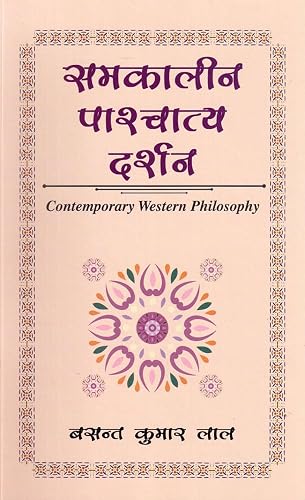
Samkaleen Paschatya Darshan (Contemporary Western Philosophy) – Hindi by B.K. Lal
Reference
For Hindi-medium students, this is the standard book on contemporary Western philosophy. Use it for Moore, Russell, Wittgenstein, logical positivism and existentialism.
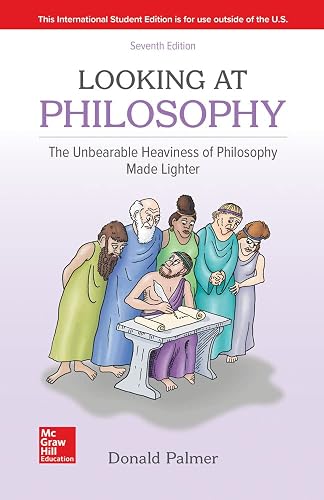
Looking at Philosophy: The Unbearable Heaviness of Philosophy Made Lighter by Donald Palmer
Beginner
If you have never studied philosophy, read this illustrated introduction first. It makes the Western thinkers approachable before you start Masih.
IGNOU MA Philosophy: MPY-002 Western Philosophy, MPYE-003 Epistemology and MPYE-008 Metaphysics by IGNOU School of Interdisciplinary and Trans-disciplinary Studies
Website
These free IGNOU courses explain Western philosophers and core problems such as knowledge, substance and causality in short units. We recommend them as a second source for difficult thinkers.
Stanford Encyclopedia of Philosophy by Stanford University
Website
This free online encyclopedia has authoritative entries on every Western philosopher and concept in the syllabus. Use it to clear doubts and for precise arguments, not as a primary reading source.

Preparing for Prelims too?
Our UPSC Prelims Topic-wise PYQ Book covers every Prelims question with detailed explanations, so you can see exactly where UPSC asks from. Now available as a hard copy and an eBook.
Buy Hard Copy on AmazonBuy eBook (PDF)Paper I: History and Problems of Philosophy – Indian Philosophy – Best Books
Carvaka, Jainism, Buddhism, Nyaya-Vaisesika, Samkhya, Yoga, Mimamsa, Vedanta schools and Sri Aurobindo.
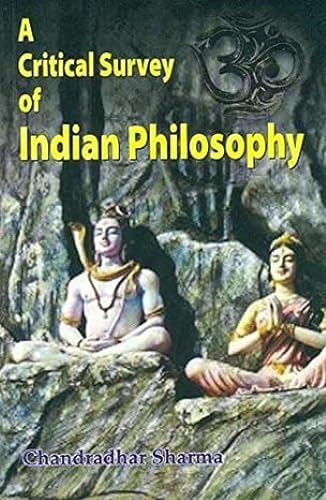
A Critical Survey of Indian Philosophy by C.D. Sharma
Core
This is the main book for Indian philosophy and toppers recommend it consistently. It covers every school in the syllabus with its theories of knowledge, reality and liberation. Read it fully and revise it more than once.
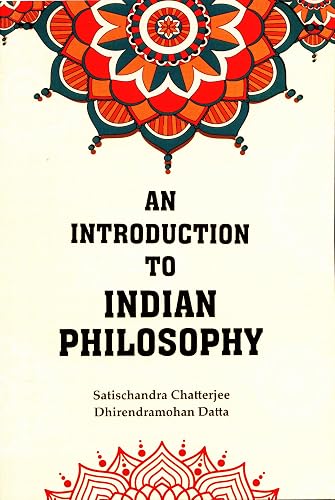
An Introduction to Indian Philosophy by Satischandra Chatterjee and Dhirendramohan Datta
Alternative
Datta and Chatterjee is simpler than C.D. Sharma and a good choice for beginners. Pick it as your main book if you find Sharma heavy, or read its chapters on Nyaya and Mimamsa for clarity.
Outlines of Indian Philosophy by M. Hiriyanna
Reference
Hiriyanna is a compact, scholarly survey. Consult it when you want a sharper explanation of a doctrine, such as satkaryavada or the Buddhist theory of momentariness.
Indian Philosophy (Volumes I and II) by S. Radhakrishnan
Reference
Radhakrishnan’s two volumes are detailed and classic. Use them only for specific doctrines where you need more depth; they are too long to read for the exam.
IGNOU MA Philosophy: MPY-001 Indian Philosophy and MPYE-016 Philosophy of Sri Aurobindo by IGNOU School of Interdisciplinary and Trans-disciplinary Studies
Website
MPY-001 covers the Indian schools and MPYE-016 is a dedicated course on Sri Aurobindo, a topic most textbooks treat briefly. We recommend MPYE-016 in particular for evolution, involution and integral yoga.
Internet Encyclopedia of Philosophy by IEP editors
Website
This free encyclopedia has readable entries on Indian schools and thinkers as well as Western ones. Use it to clear a doubt or check an argument quickly.
Paper II, Section A: Socio-Political Philosophy – Best Books
Social and political ideals, sovereignty, individual and state, forms of government, ideologies, humanism, secularism, multiculturalism, crime and punishment, development and social progress, gender, and caste (Gandhi and Ambedkar).
Social and Political Philosophy by O.P. Gauba
Core
Written with the UPSC syllabus in mind, this is the main book for Section A. It covers equality, justice, liberty, sovereignty, ideologies, democracy, secularism and the other syllabus topics in order. Read it fully and add examples from current affairs.
Political Theory: An Introduction by Rajeev Bhargava and Ashok Acharya (eds.)
Reference
This edited volume has strong chapters on liberty, equality, justice, rights, democracy and citizenship. Read selected chapters to deepen the concepts in Gauba.
Political Ideologies: An Introduction by Andrew Heywood
Reference
Heywood explains liberalism, socialism, Marxism, anarchism and feminism clearly. Consult it for the ideologies topic and for feminist approaches under gender.
Justice: What’s the Right Thing to Do? by Michael J. Sandel
Reference
Sandel explains utilitarian, libertarian, Rawlsian and communitarian views of justice through everyday cases. Read it once for examples you can use in answers on justice and punishment.
Annihilation of Caste (annotated critical edition) by B.R. Ambedkar
Reference
Read Ambedkar’s text directly for the caste discrimination topic, where UPSC compares Gandhi and Ambedkar. The annotations help you place the debate in context.
Hind Swaraj by M.K. Gandhi
Reference
This short book gives you Gandhi’s own critique of modern civilisation and his idea of swaraj. It helps with questions on development, social progress and Gandhi’s political thought.
IGNOU MA Philosophy: MPYE-015 Gandhian Philosophy and MPYE-006 Dalit Philosophy by IGNOU School of Interdisciplinary and Trans-disciplinary Studies
Website
These two IGNOU courses give syllabus-sized material on Gandhi and on Ambedkar and Dalit thought. We recommend them for the caste and development topics.

Strengthen your GS papers
Our UPSC Mains Topic-wise & Year-wise PYQ Book (2013–2026) maps every GS question to the syllabus, so you know what UPSC asks and how often. Now available as a hard copy and an eBook.
Buy Hard Copy on AmazonBuy eBook (PDF)Paper II, Section B: Philosophy of Religion – Best Books
Notions of God, proofs for the existence of God, problem of evil, soul and immortality, reason, revelation and faith, religious experience, religion without God, religion and morality, religious pluralism, and religious language.
Philosophy of Religion by John Hick
Core
Hick is the standard short text for Section B. It covers the arguments for God, the problem of evil, religious experience, religious language and religious pluralism. Read it fully; it is brief but dense.
Introduction to Religious Philosophy by Y. Masih
Alternative
Masih covers the same ground as Hick and adds Indian perspectives on God, liberation and religion without God (Buddhism, Jainism). Many toppers read this alongside or instead of Hick.
Philosophy of Religion: An Introduction by Michael B. Wilkinson and Hugh N. Campbell
Reference
This is a clear modern textbook on the classical arguments and objections. Consult it for the ontological, cosmological and design arguments and for faith and reason.
IGNOU MA Philosophy: MPYE-010 Philosophy of Religion and MPYE-005 World Religions by IGNOU School of Interdisciplinary and Trans-disciplinary Studies
Website
These courses give compact units on arguments for God, religious experience and the major world religions. We recommend them for religious pluralism and religion-without-God questions.
Closer To Truth by Robert Lawrence Kuhn
Website
Toppers have used these interviews with philosophers and theologians for Section B. Watch selected episodes on God, evil and consciousness to understand the arguments, then return to your books.
How to use this Philosophy Optional booklist
- Read Y. Masih and C.D. Sharma for Paper I, and O.P. Gauba and John Hick for Paper II; most toppers clear the subject with these four books and their own notes.
- Make concept-wise notes (substance, causality, pramanas, liberation, justice, evil) and revise them often; Paper I questions test precise understanding of concepts.
- Practise previous years’ questions closely: Philosophy questions repeat themes, and analysing them shows you how deep to go for each thinker.
- Use clear definitions and arguments with objections and replies in every answer, rather than long descriptions.
- For Paper II Section A, add current examples (laws, court judgments, social issues) to the theory; this section has become more dynamic.
- Use IGNOU courses and the online encyclopedias only to clear doubts, not as extra full reads.
Some books you find useful may not be on this list. Use them if they fall within the syllabus and help you answer previous year questions – that is the only test that matters. If you spot an outdated edition or a broken link, tell us on the Report an Error page.
FAQs
Which are the best books for Philosophy Optional?
Our core picks, section by section – History and Problems of Philosophy – Western Philosophy: A Critical History of Western Philosophy (Greek, Medieval and Modern) (Y. Masih); History and Problems of Philosophy – Indian Philosophy: A Critical Survey of Indian Philosophy (C.D. Sharma); Paper II, Section A: Socio-Political Philosophy: Social and Political Philosophy (O.P. Gauba); Paper II, Section B: Philosophy of Religion: Philosophy of Religion (John Hick). Each book above is tagged Core, Alternative, Reference, Beginner or Website, so you know what to read first.
Which book should I start Philosophy Optional with?
If you are new to the subject, begin with Looking at Philosophy: The Unbearable Heaviness of Philosophy Made Lighter (Donald Palmer), and then move to the Core books for each section.
Do I need to read every book on this list?
No. Read the Core books fully, choose only one book wherever we list an Alternative, and use Reference books only for specific topics. Keep your sources few and revise them several times.
Where can I find Philosophy Optional previous year questions?
All Philosophy Optional PYQs are on our topic-wise PYQs page, and full papers are on the year-wise question papers page. The syllabus page breaks each unit into numbered topics.
Last updated: 2 November 2026