
This is our booklist for Psychology Optional, covering Paper I (Foundations of Psychology) and Paper II (Psychology: Issues and Applications). Paper I rewards one standard textbook read well, while Paper II needs an applied book plus examples from Indian society. Each entry carries a priority tag so you know what to read fully and what to consult.
Use this booklist together with the Psychology Optional syllabus, the topic-wise PYQs and the year-wise question papers. The previous year questions show you which chapters of these books UPSC actually asks from.
Jump to: Paper I: Foundations of Psychology – Core Concepts · Paper I: Foundations of Psychology – Methods, Research and Statistics · Paper II: Psychology – Issues and Applications
Some links on this page are Amazon affiliate links. If you buy through them, we may earn a small commission at no extra cost to you.
Paper I: Foundations of Psychology – Core Concepts – Best Books
Introduction, development of human behaviour, sensation and perception, learning, memory, thinking, motivation and emotion, intelligence, personality, attitudes, language and contemporary issues.
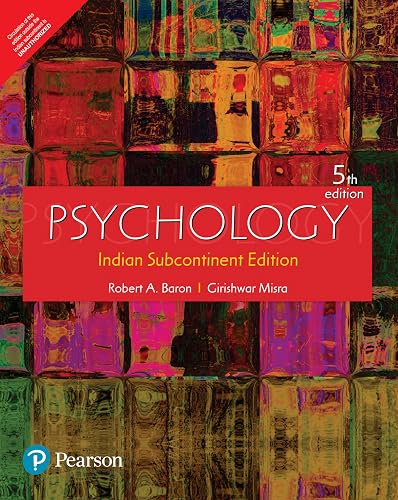
Psychology by Robert A. Baron and Girishwar Misra
Core
This is the standard Paper I textbook used by most toppers, and the Indian adaptation adds Indian research and examples. We recommend reading it cover to cover and making notes against each syllabus unit.
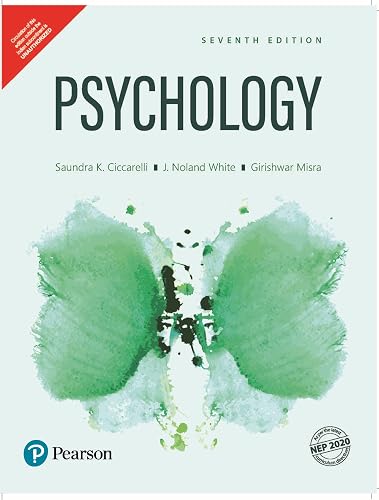
Psychology by Saundra K. Ciccarelli and J. Noland White
Alternative
Ciccarelli is easier to read than Baron, with clear diagrams and summaries. Pick it as your main book if Baron feels heavy, or read its chapters on memory, cognition and consciousness alongside Baron.
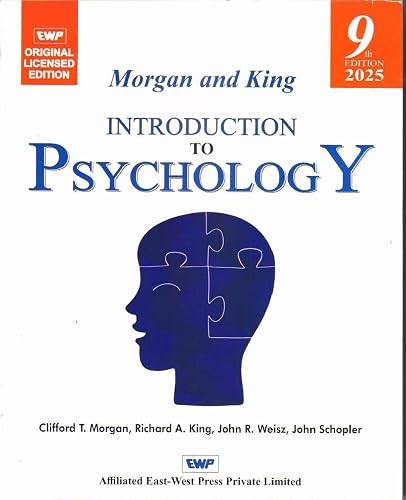
Introduction to Psychology by Clifford T. Morgan, Richard A. King, John R. Weisz and John Schopler
Reference
Morgan and King is the classic older text with depth on theories. Consult selected chapters, such as intelligence, attitudes, motivation and perception, when you need more detail than Baron gives.
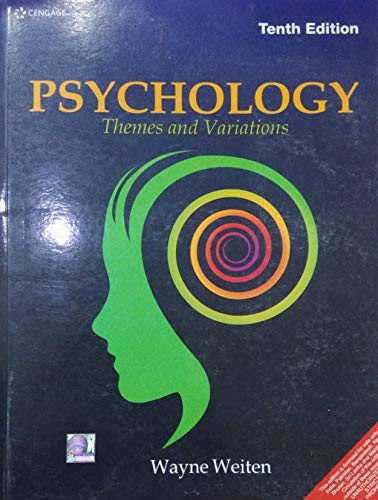
Psychology: Themes and Variations by Wayne Weiten
Reference
Weiten is useful for recent research and for topics such as consciousness, stress and development. Use it to update your notes on a few chapters rather than as a second full read.
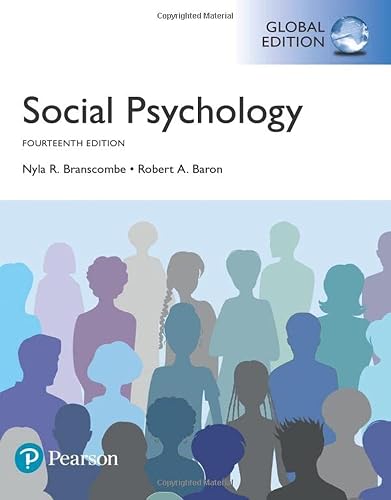
Social Psychology by Robert A. Baron, Nyla R. Branscombe, Donn Byrne and Gopa Bhardwaj
Reference
Use this for attitudes, prejudice, social influence and group behaviour. It helps in Paper I unit on attitudes and values and again in Paper II topics on social integration.
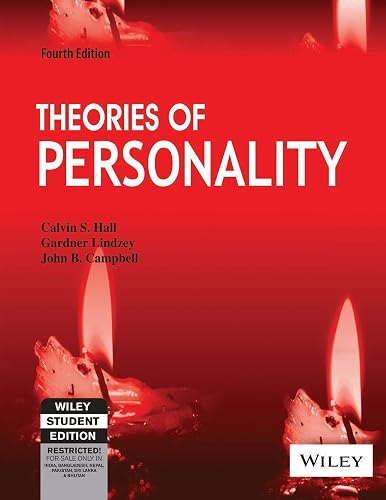
Theories of Personality by Calvin S. Hall, Gardner Lindzey and John B. Campbell
Reference
Consult this for personality theories in depth (Freud, Jung, Adler, Rogers, Allport, Cattell, Eysenck and others). Read only the theorists the syllabus and past questions point to.
NCERT Psychology: Class XI (Introduction to Psychology) and Class XII (Psychology) by NCERT
Beginner
If you do not have a psychology background, read both NCERTs first. They give you clear basics and Indian examples that fit well in both papers.
IGNOU MA Psychology (MAPC): MPC-001 to MPC-004 by IGNOU School of Social Sciences
Website
MPC-001 (Cognitive Psychology, Learning and Memory), MPC-002 (Life Span Psychology), MPC-003 (Personality: Theories and Assessment) and MPC-004 (Advanced Social Psychology) are free and well matched to Paper I. We recommend them for topics where you want concise, syllabus-shaped notes.
Crash Course Psychology by Crash Course
Website
This short video series is a quick way to understand difficult topics before you read them. Use it as a supplement in the first months, not as a source for answers.

Preparing for Prelims too?
Our UPSC Prelims Topic-wise PYQ Book covers every Prelims question with detailed explanations, so you can see exactly where UPSC asks from. Now available as a hard copy and an eBook.
Buy Hard Copy on AmazonBuy eBook (PDF)Paper I: Foundations of Psychology – Methods, Research and Statistics – Best Books
Methods of psychology, research methods and analysis, hypothesis testing, statistics and psychological measurement.
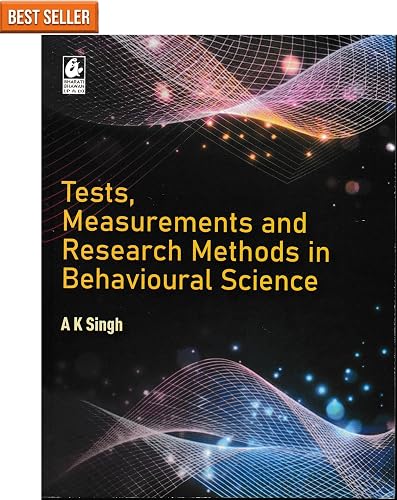
Tests, Measurements and Research Methods in Behavioural Sciences by A.K. Singh
Core
This is the standard Indian text for research methods and testing. Read the chapters on research designs, sampling, experimental and non-experimental methods, reliability and validity, and test construction.
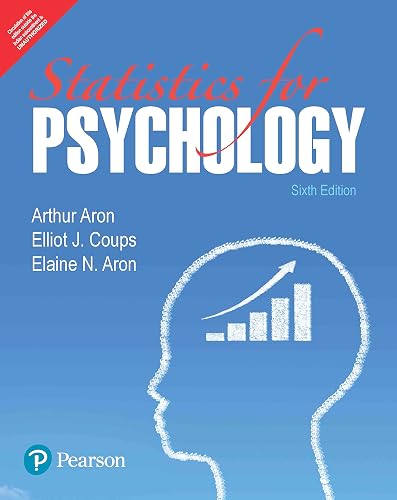
Statistics for Psychology by Arthur Aron, Elaine N. Aron and Elliot J. Coups
Reference
Consult this for statistical concepts such as t-test, ANOVA, correlation, regression and non-parametric tests. Focus on understanding when each test is used, which is what UPSC asks.
Psychological Testing by Anne Anastasi and Susana Urbina
Reference
Anastasi is the classic reference on test construction and types of tests. Use it for Paper I measurement topics and for Paper II’s unit on measuring individual differences.
IGNOU MAPC: MPC-005 Research Methods and MPC-006 Statistics in Psychology by IGNOU School of Social Sciences
Website
These two IGNOU courses explain research methods and statistics in short, clear units. We recommend them if you find the textbooks too technical.

Strengthen your GS papers
Our UPSC Mains Topic-wise & Year-wise PYQ Book (2013–2026) maps every GS question to the syllabus, so you know what UPSC asks and how often. Now available as a hard copy and an eBook.
Buy Hard Copy on AmazonBuy eBook (PDF)Paper II: Psychology – Issues and Applications – Best Books
Measurement of individual differences, well-being and mental disorders, therapies, work and organisational psychology, education, community, rehabilitation, disadvantaged groups, social integration, IT and media, economic development, environment, other fields and gender.
Applied Psychology by Smarak Swain
Core
Written specifically for Paper II, this is the main source almost every topper names. Read it fully; it covers each applied unit with Indian examples, diagrams and flowcharts you can reuse in answers.
Abnormal Psychology by James N. Butcher, Jill M. Hooley and Susan Mineka
Reference
This is the current edition of the classic Coleman and Carson text. Use it for causes and symptoms of mental disorders and for the therapy chapters.
Organizational Behavior by Stephen P. Robbins, Timothy A. Judge and Neharika Vohra
Reference
Consult this for the work psychology unit: motivation at work, leadership, job stress, personnel selection and organisational change. The Indian edition adds Indian cases.
Positive Psychology: The Scientific and Practical Explorations of Human Strengths by C.R. Snyder, Shane J. Lopez and Jennifer Teramoto Pedrotti
Reference
Use this for well-being, resilience, happiness and positive health. Positive psychology now appears regularly in both papers, so read the core chapters once.
Health Psychology by Shelley E. Taylor
Reference
Consult this for stress, coping, health behaviour and illness. It helps with well-being questions and with applications of psychology to health.
Advanced Educational Psychology by S.K. Mangal
Reference
Use this for the education unit: learning in schools, gifted and learning-disabled children, motivation and teacher effectiveness. Read the chapters that map to the syllabus.
The Inner World: A Psycho-analytic Study of Childhood and Society in India by Sudhir Kakar
Reference
Kakar gives you an Indian lens on family, childhood and identity. Read it once for examples and arguments on socialisation, gender and Indian society.
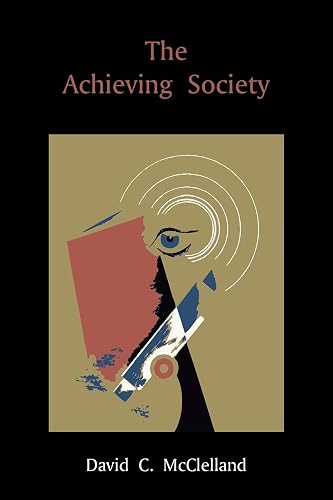
The Achieving Society by David C. McClelland
Reference
This is the original work on achievement motivation and economic growth. You only need its key ideas for the psychology and economic development unit; a chapter summary is enough.
IGNOU MAPC: MPCE-011, MPCE-013, MPCE-021 and MPCE-031 by IGNOU School of Social Sciences
Website
The MAPC electives MPCE-011 (Psychopathology), MPCE-013 (Psychotherapeutic Methods), MPCE-021 (Counselling Psychology) and MPCE-031 (Organisational Behaviour) cover the clinical and work units of Paper II. We recommend them for concise notes on disorders and therapies.
Simply Psychology by Saul McLeod and contributors
Website
This site has short, reliable explainers on theories and classic studies. Use it to revise a theory quickly or to check a study you want to cite.
How to use this Psychology Optional booklist
- Read the two NCERTs first, then pick one main Paper I textbook (Baron or Ciccarelli) and read it fully before touching references.
- Make syllabus-wise notes for Paper I and add studies and researcher names; UPSC rewards accurate references to theories and experiments.
- For Paper II, read Smarak Swain fully and add Indian examples from news, government schemes and surveys to every unit.
- Draw and practise diagrams and flowcharts (models of memory, motivation, stress, therapy) so you can use them under time pressure.
- Link the papers: use Paper I theories to explain Paper II applications, for example learning theories in education or motivation theories at work.
- Practise previous years’ questions unit by unit; Paper II questions are often case-like, so write structured, applied answers.
Some books you find useful may not be on this list. Use them if they fall within the syllabus and help you answer previous year questions – that is the only test that matters. If you spot an outdated edition or a broken link, tell us on the Report an Error page.
FAQs
Which are the best books for Psychology Optional?
Our core picks, section by section – Foundations of Psychology – Core Concepts: Psychology (Robert A. Baron and Girishwar Misra); Foundations of Psychology – Methods, Research and Statistics: Tests, Measurements and Research Methods in Behavioural Sciences (A.K. Singh); Psychology – Issues and Applications: Applied Psychology (Smarak Swain). Each book above is tagged Core, Alternative, Reference, Beginner or Website, so you know what to read first.
Which book should I start Psychology Optional with?
If you are new to the subject, begin with NCERT Psychology: Class XI (Introduction to Psychology) and Class XII (Psychology) (NCERT), and then move to the Core books for each section.
Do I need to read every book on this list?
No. Read the Core books fully, choose only one book wherever we list an Alternative, and use Reference books only for specific topics. Keep your sources few and revise them several times.
Where can I find Psychology Optional previous year questions?
All Psychology Optional PYQs are on our topic-wise PYQs page, and full papers are on the year-wise question papers page. The syllabus page breaks each unit into numbered topics.
Last updated: 2 November 2026